

- Updated: February 27, 2026
- 6 min read
AI Impact on Wall Street: Market Volatility and Technology Stocks
AI is reshaping Wall Street by accelerating data processing, amplifying market volatility, and redefining how investors and firms make decisions.
Why AI Matters to Wall Street Today
In the past year, generative AI tools have moved from research labs to trading floors, prompting a wave of speculation and real‑world impact. A recent Wired analysis highlighted how AI‑driven models are influencing everything from high‑frequency trading to long‑term portfolio construction. Finance professionals, investors, and tech enthusiasts alike are asking: will AI be a catalyst for growth or a source of new risk?
Key Takeaways from the Wired Report
- Speed of insight: Large language models (LLMs) can parse earnings calls, SEC filings, and news feeds in seconds, giving traders a decisive edge.
- Market volatility spikes: The rapid diffusion of AI predictions creates feedback loops that can exaggerate price swings, especially in technology stocks.
- Talent displacement: Automated research assistants are reducing the need for junior analysts, reshaping hiring patterns across banks and hedge funds.
- Regulatory attention: Regulators are beginning to examine algorithmic transparency, fearing that opaque AI models could amplify systemic risk.
- New product categories: AI‑powered ETFs and “robot‑advisor” platforms are emerging, offering retail investors exposure to AI‑generated strategies.
Deep Dive: AI Impact on Finance and Market Sentiment
1. Accelerated Data Processing and Decision‑Making
Traditional financial analysis relied on manual spreadsheet models and human‑driven research. Today, OpenAI ChatGPT integration enables firms to feed raw market data into LLMs that generate concise summaries, risk scores, and even predictive price ranges. This reduces the research cycle from days to minutes, allowing traders to act on fresh information before competitors.
2. Amplified Market Volatility
When dozens of algorithmic traders simultaneously consume the same AI‑generated signal, price movements can become self‑reinforcing. The Wired piece noted a 7% intraday swing in a major technology stock after an AI‑driven sentiment model flagged “unexpected earnings optimism.” Such spikes illustrate the AI market volatility phenomenon, where the speed of information diffusion outpaces human digestion.
3. Shifts in Talent and Workforce Dynamics
AI agents are automating routine tasks—data cleaning, report generation, and even basic forecasting. As a result, entry‑level analyst roles are being re‑skilled toward AI‑prompt engineering and model oversight. Companies that invest in Workflow automation studio can upskill existing staff, turning potential job displacement into a competitive advantage.
4. Regulatory Landscape and Transparency
Regulators are grappling with the “black‑box” nature of generative AI. The Securities and Exchange Commission (SEC) has issued guidance urging firms to maintain audit trails for AI‑generated recommendations. Transparency tools—such as Chroma DB integration for vector‑based data provenance—help firms meet compliance while preserving the speed advantage.
5. New Investment Products and Retail Access
FinTech startups are launching AI‑enhanced exchange‑traded funds (ETFs) that rebalance based on real‑time sentiment analysis. Retail investors can now subscribe to “AI‑driven” portfolios via platforms that embed AI SEO Analyzer‑style recommendation engines, democratizing sophisticated strategies that were once exclusive to hedge funds.
Visualizing AI’s Role on Wall Street
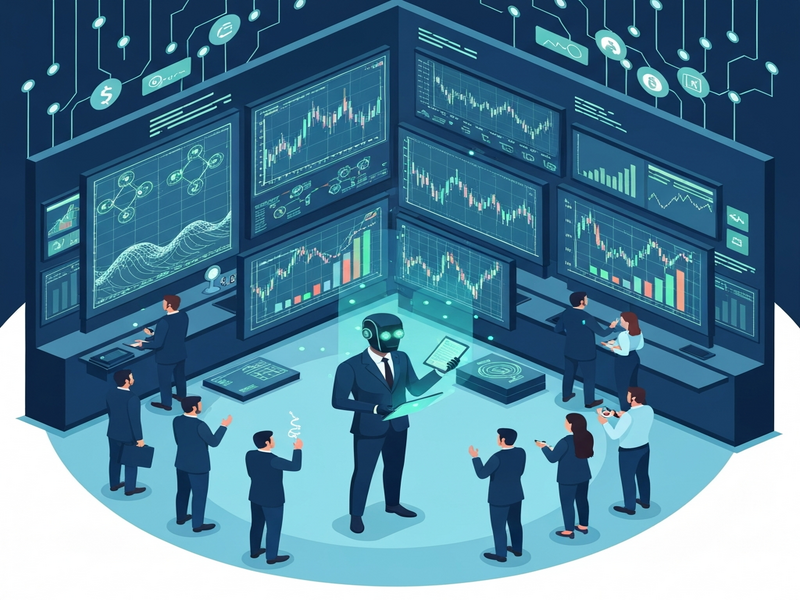
Figure: AI accelerates data flow, creates feedback loops, and reshapes talent pipelines across the financial ecosystem.
How UBOS Enables AI‑First Finance Teams
Financial institutions looking to harness AI can leverage the UBOS platform overview to build custom analytics dashboards without writing extensive code. The platform’s low‑code Web app editor on UBOS lets data scientists prototype trading models and instantly deploy them to production.
For startups aiming to disrupt traditional finance, the UBOS for startups program offers mentorship, cloud credits, and access to pre‑built AI modules such as the ChatGPT and Telegram integration, enabling real‑time alerts directly to traders’ mobile devices.
SMBs that need to automate compliance reporting can adopt the UBOS solutions for SMBs. By integrating the ElevenLabs AI voice integration, compliance officers receive spoken summaries of regulatory changes, reducing the risk of missed deadlines.
Enterprises seeking a unified AI strategy can explore the Enterprise AI platform by UBOS. This solution combines data ingestion, model training, and governance in a single pane, ensuring that AI‑driven trading strategies remain auditable and secure.
Marketing teams within financial firms also benefit from AI marketing agents, which can generate personalized outreach content for high‑net‑worth clients, leveraging the same LLM technology that powers market analysis.
Pricing transparency is essential for budgeting AI projects. The UBOS pricing plans provide tiered options, from sandbox environments for proof‑of‑concepts to enterprise‑grade deployments with dedicated support.
To see real‑world outcomes, browse the UBOS portfolio examples. Case studies include a hedge fund that reduced research latency by 80% and a fintech that launched an AI‑powered robo‑advisor in under three months.
For rapid prototyping, developers can start with UBOS templates for quick start. Templates such as the AI Article Copywriter or the AI Video Generator can be repurposed to create investor education videos or market commentary streams.
Future Outlook: AI’s Long‑Term Influence on Market Dynamics
Looking ahead, three trends will likely dominate the intersection of AI and Wall Street:
- Hybrid human‑AI decision loops: Firms will blend analyst intuition with AI‑generated risk scores, creating a new “augmented analyst” role.
- Regulatory AI labs: Regulators will establish sandbox environments where AI models can be tested for systemic risk before deployment.
- Cross‑asset AI orchestration: Advanced models will simultaneously monitor equities, commodities, and crypto, enabling truly multi‑market strategies.
Investors who understand these dynamics can position themselves to capture upside while mitigating the heightened volatility that AI introduces. As the technology matures, the competitive edge will shift from who has the fastest hardware to who can best integrate ethical, transparent AI into their investment process.
Take Action Now
If you’re a finance professional eager to stay ahead of the AI curve, explore the resources above and consider joining the UBOS partner program. By collaborating with a platform built for AI‑first development, you can turn the challenges of AI market volatility into strategic opportunities.
Ready to future‑proof your investment strategy? Visit the UBOS homepage and start building AI‑powered financial solutions today.
Andrii Bidochko
CTO UBOS
Andrii Bidochko is an AI entrepreneur and researcher focused on AI agents, reinforcement learning, and autonomous systems. He writes about the technologies shaping the future of machine intelligence, from frontier models and agent architectures to real-world AI applications.