

- Updated: January 17, 2026
- 7 min read
AI Code Assistant Agent-of-Empires: Claude and OpenCode Power New Developer Tool
Agent‑of‑Empires (AoE) is a Rust‑based terminal session manager that lets developers run AI coding agents such as Claude and OpenCode inside isolated tmux workspaces, providing a powerful AI code assistant for modern development workflows.
What Is the Agent‑of‑Empires Project?
Released under the permissive MIT license, Agent‑of‑Empires (often abbreviated as AoE) combines the flexibility of its open‑source repository with the robustness of tmux and Docker to create a seamless environment for AI‑driven coding sessions. The project targets software developers, DevOps engineers, and tech enthusiasts who need a reliable developer tool to harness the power of large language models (LLMs) like Claude and the emerging OpenCode framework.
Project Overview and Core Purpose
At its heart, AoE is a thin wrapper around tmux, the popular terminal multiplexer. Each AI coding session you launch becomes a dedicated tmux session, allowing you to:
- Run multiple AI agents in parallel without interference.
- Persist sessions across SSH connections, reboots, or local terminal closures.
- Sandbox agents in Docker containers for security and reproducibility.
- Organize workspaces with Git worktrees, enabling clean branching for each project.
These capabilities turn AoE into a true AI code assistant that can be invoked from a TUI dashboard or a simple CLI command, making it ideal for both solo developers and teams that need consistent, reproducible AI‑assisted development environments.
Key Features That Differentiate AoE
TUI Dashboard
The built‑in Text‑User Interface provides a visual overview of all active AI sessions, grouped by project or client. You can start, attach, detach, or terminate sessions with a single keystroke.
Multi‑Profile Support
Profiles let you maintain separate configurations for “work”, “personal”, or “client‑XYZ” contexts. Each profile stores its own sessions.json and groups.json, ensuring total isolation.
Docker Sandbox Integration
When you need a clean environment, AoE can spin up a Docker container for each agent, preventing dependency clashes and protecting host resources.
Git Worktree Management
AoE automates the creation and cleanup of Git worktrees, allowing you to test AI‑generated code in isolated branches without manual git plumbing.
Additional capabilities include automatic status detection for both Claude and OpenCode agents, quick‑start CLI commands (aoe add /path/to/project), and comprehensive logging stored under ~/.agent-of-empires/logs/.
Underlying Technologies: Claude, OpenCode, and Rust
Agent‑of‑Empires is written in Rust, giving it memory safety, zero‑cost abstractions, and excellent performance on both Linux and macOS. The two primary AI back‑ends it supports are:
Claude – Anthropic’s Coding Model
Claude excels at understanding intent and generating syntactically correct code snippets. AoE integrates Claude through a lightweight wrapper that streams responses directly into a tmux pane, enabling real‑time interaction. The integration also includes automatic scroll mode handling, a known requirement for Claude’s output format.
OpenCode – The Emerging Open‑Source LLM
OpenCode is a community‑driven model that focuses on code generation and debugging. AoE’s opencode driver runs the model inside a Docker container, ensuring that the heavy inference workload stays isolated from the host system. This design makes it easy to swap versions or experiment with custom fine‑tuned checkpoints.
Both agents benefit from AoE’s session persistence—once a session is launched, the underlying tmux process continues to run even if you close the TUI, guaranteeing that long‑running code generation or analysis tasks never get interrupted.
Why Agent‑of‑Empires Matters for AI Agents and Developer Tools
In the rapidly evolving landscape of AI‑augmented development, the line between a “tool” and an “agent” is blurring. AoE embodies this convergence by treating each LLM as a first‑class citizen within a developer’s workflow. Here’s how it aligns with the broader AI agents ecosystem:
- Scalability: Multiple agents can run side‑by‑side, each in its own tmux window, enabling comparative testing of Claude vs. OpenCode.
- Extensibility: The developer tools architecture of AoE allows you to plug in additional LLMs or custom scripts with minimal code changes.
- Observability: Session logs are automatically captured, making it easy to audit AI‑generated code for security or compliance purposes.
- Productivity Boost: By integrating directly with Git worktrees, AoE reduces context‑switching, letting developers focus on code rather than environment management.
For teams already leveraging the Enterprise AI platform by UBOS, AoE can serve as a lightweight, on‑premise complement that brings AI code assistance to the command line without sacrificing security or control.
Visual Overview of Agent‑of‑Empires Architecture
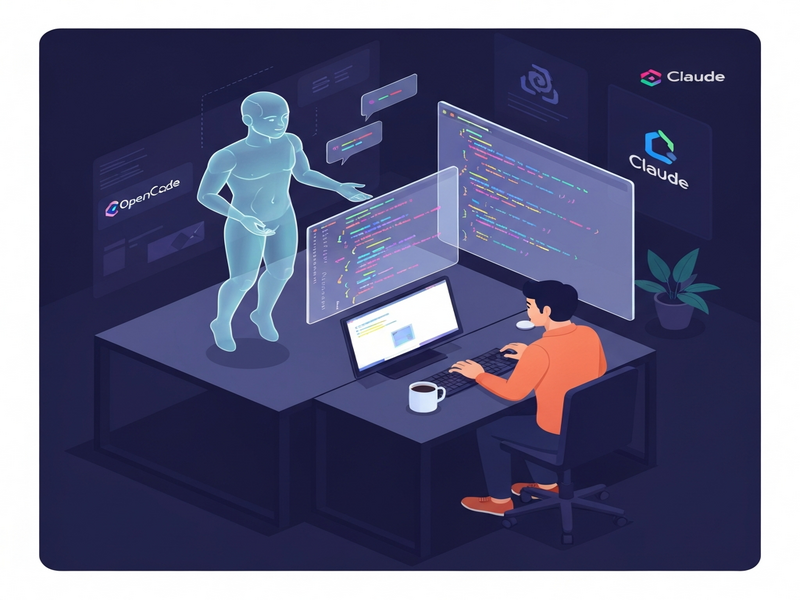
The diagram above illustrates how AoE sits between the developer’s terminal, tmux, Docker containers, and the AI back‑ends (Claude and OpenCode). The flow is simple:
- User launches an AoE session via CLI or TUI.
- AoE creates a tmux window and optionally a Docker sandbox.
- The selected AI agent receives the prompt and streams code back into the tmux pane.
- Developers edit, test, and commit the generated code using the associated Git worktree.
How to Get Started with Agent‑of‑Empires
Getting up and running takes just a few commands. Below is a quick‑start guide that also showcases several UBOS templates for quick start you can adapt to your own projects.
# Quick install (Linux/macOS)
curl -fsSL https://raw.githubusercontent.com/njbrake/agent-of-empires/main/scripts/install.sh | bash

# Or via Homebrew
brew install njbrake/aoe/aoe

# Launch the TUI
aoe

# Add a session from the CLI
aoe add /path/to/your/project
For macOS users who prefer a package manager, the Homebrew formula ensures you always have the latest stable release. Windows developers can run AoE inside WSL2, enjoying the same tmux‑based experience.
Once a session is active, you can switch between agents with a simple command:
# Start a Claude session
aoe add --agent claude /my/project

# Start an OpenCode session
aoe add --agent opencode /my/project
All session metadata lives under ~/.agent-of-empires/, mirroring the layout used by other UBOS platform overview tools, which makes migration between UBOS services and AoE seamless.
Related UBOS Solutions That Complement AoE
While AoE focuses on the terminal experience, UBOS offers a suite of cloud‑native services that can extend its capabilities:
- AI marketing agents – Deploy AI‑driven marketing bots that can be triggered from the same Docker images used by AoE.
- Web app editor on UBOS – Build a UI front‑end for your AoE sessions, turning terminal interactions into a web dashboard.
- Workflow automation studio – Automate post‑generation steps such as code linting, testing, and deployment.
- UBOS partner program – Join a community of developers who contribute plugins and extensions for tools like AoE.
- UBOS pricing plans – Explore cost‑effective options for scaling AI workloads in production.
These integrations illustrate how a robust developer tool ecosystem can be built around a single, well‑engineered component like Agent‑of‑Empires.
Boost Your Workflow with UBOS Template Marketplace
UBOS’s marketplace hosts dozens of ready‑made AI applications that can be launched from AoE with a single command. A few standout templates include:
- AI SEO Analyzer – Instantly audit website SEO using LLM insights.
- AI Article Copywriter – Generate long‑form content directly from the terminal.
- GPT‑Powered Telegram Bot – Combine AoE’s Docker sandbox with the Telegram integration on UBOS for real‑time code assistance.
- AI Video Generator – Create video assets from code snippets, useful for documentation.
By pulling these templates into an AoE session, you can prototype complex AI‑driven workflows without writing boilerplate code.
Conclusion: Embrace AI‑Powered Coding with Agent‑of‑Empires
Agent‑of‑Empires delivers a pragmatic, open‑source solution for developers who want to embed AI code assistants like Claude and OpenCode directly into their development pipelines. Its tmux‑based architecture guarantees session persistence, while Docker sandboxing and Git worktree support keep environments clean and reproducible.
If you’re looking to accelerate your coding workflow, reduce context‑switching, and experiment with cutting‑edge LLMs, give AoE a try today. Combine it with UBOS’s broader AI ecosystem—such as the AI agents suite and the developer tools—to build a fully integrated, AI‑first development stack.
Ready to start? Clone the repository, spin up your first session, and experience the future of AI‑augmented coding.
Andrii Bidochko
CTO UBOS
Andrii Bidochko is an AI entrepreneur and researcher focused on AI agents, reinforcement learning, and autonomous systems. He writes about the technologies shaping the future of machine intelligence, from frontier models and agent architectures to real-world AI applications.