

- Updated: November 14, 2025
- 3 min read
AI Boom Drives Chip Networking Revolution with Photonic Interconnects Boosting Data Center Performance
AI Boom Drives New Chip Networking Solutions and Photonic Interconnects to Boost Data Center Performance
The AI boom is transforming industries worldwide, and one of the most profound impacts is on data center demand. As artificial intelligence continues to evolve, the need for robust and efficient data centers has skyrocketed. This surge in demand has led to significant innovations in chip networking and the emergence of photonic interconnects, which promise to enhance data center performance.
The Challenge of Traditional Electrical Chip Networking
Traditional electrical chip networking has long been the backbone of data centers, facilitating communication between chips and server racks. However, as AI workloads grow exponentially, these traditional methods face limitations. The reliance on electrons for data transfer is becoming a bottleneck, unable to keep pace with the high-bandwidth requirements of modern AI applications.
Rise of Photonic Interconnects: How They Work and Why They Matter
Enter photonic interconnects, a revolutionary technology that leverages light to transmit data. Unlike traditional electrical signals, photonic interconnects use photons, allowing for faster and more efficient data transfer. This technology is gaining traction because it addresses the limitations of electrical networking, offering a solution that can handle the massive data throughput required by AI-driven workloads.
Key Players and Startups Highlighted in the Wired Article
According to a Wired article, several key players and startups are at the forefront of this technological shift. Companies like Lightmatter, Celestial AI, and PsiQuantum are pioneering the use of optical technology to accelerate high-speed computing. These startups are attracting significant investment as venture capitalists and institutional investors recognize the potential of photonic interconnects to revolutionize data centers.
Investment Trends and Market Outlook
The investment landscape is rapidly evolving, with billions of dollars being funneled into startups developing photonic technology. This trend is driven by the growing realization that traditional interconnect technology cannot meet the demands of modern AI workloads. As a result, investors are eager to support companies that are innovating in this space, hoping to capitalize on the next wave of chip networking solutions.
How Photonic Tech Improves Data Center Performance
Photonic technology offers several advantages that significantly improve data center performance. By utilizing light for data transmission, photonic interconnects reduce latency and increase bandwidth, enabling faster and more efficient communication between chips. This capability is crucial for AI applications that require rapid data processing and real-time decision-making.
Furthermore, photonic technology is inherently more energy-efficient than traditional electrical networking. This efficiency not only reduces operational costs but also aligns with the growing emphasis on sustainability in data center operations.
Internal Links to UBOS Resources
For those interested in exploring the potential of AI-driven networking solutions, the AI infrastructure at UBOS offers a comprehensive platform for developing and deploying AI applications. Additionally, the photonic technology resources at UBOS provide insights into the cutting-edge advancements in this field.
Conclusion: Future Outlook for AI-Driven Networking
The future of AI-driven networking is bright, with photonic interconnects leading the charge in revolutionizing data centers. As the demand for AI applications continues to grow, the need for innovative networking solutions will only increase. Photonic technology is poised to play a pivotal role in meeting these demands, offering a scalable and efficient solution for the data centers of tomorrow.
In conclusion, the AI boom is driving significant advancements in chip networking and photonic interconnects. These innovations are set to transform data center performance, paving the way for a new era of AI-driven computing.
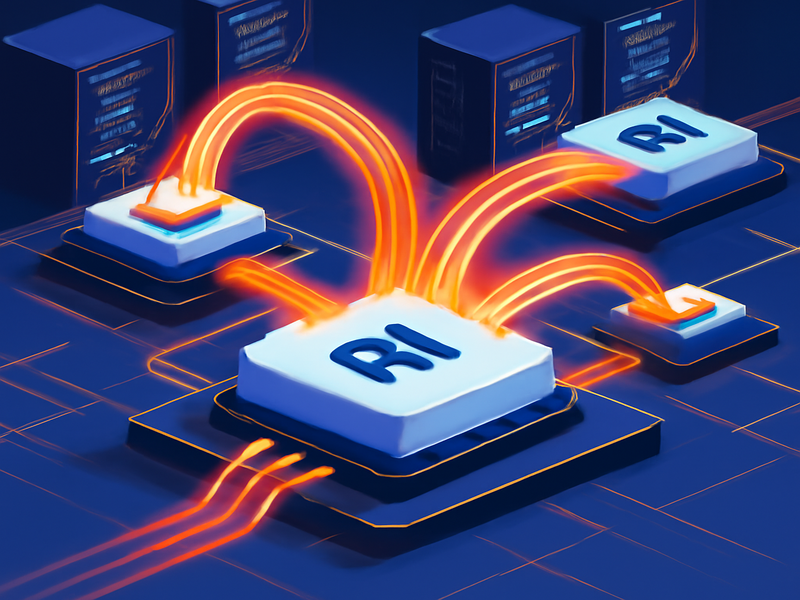
Image Caption: An illustration of AI and photonic technology revolutionizing data centers.
Andrii Bidochko
CTO UBOS
Andrii Bidochko is an AI entrepreneur and researcher focused on AI agents, reinforcement learning, and autonomous systems. He writes about the technologies shaping the future of machine intelligence, from frontier models and agent architectures to real-world AI applications.