

- Updated: February 15, 2026
- 6 min read
AI‑Generated Video Game Worlds Transform the Gaming Industry
AI‑generated video game worlds are still experimental; Google’s Project Genie demonstrates the first glimpse of text‑to‑world generation, but today’s technology cannot yet replace the depth, interactivity, and polish of human‑crafted game environments.
How Generative AI Is Shaping the Future of Video Game Worlds
Since the rise of procedural generation in classics like Rogue and modern sandbox hits such as Minecraft, developers have relied on algorithms to create endless landscapes. The next evolution—generative AI—promises to let creators describe a world in plain language and watch it materialize instantly. This shift could cut development cycles, democratize content creation, and open new gameplay possibilities.
In February 2026, Google unveiled Project Genie, an early research prototype that turns text or image prompts into 60‑second, explorable 3‑D environments. While the demo sparked excitement, it also highlighted the technical and ethical hurdles that still stand between AI‑generated worlds and blockbuster titles.
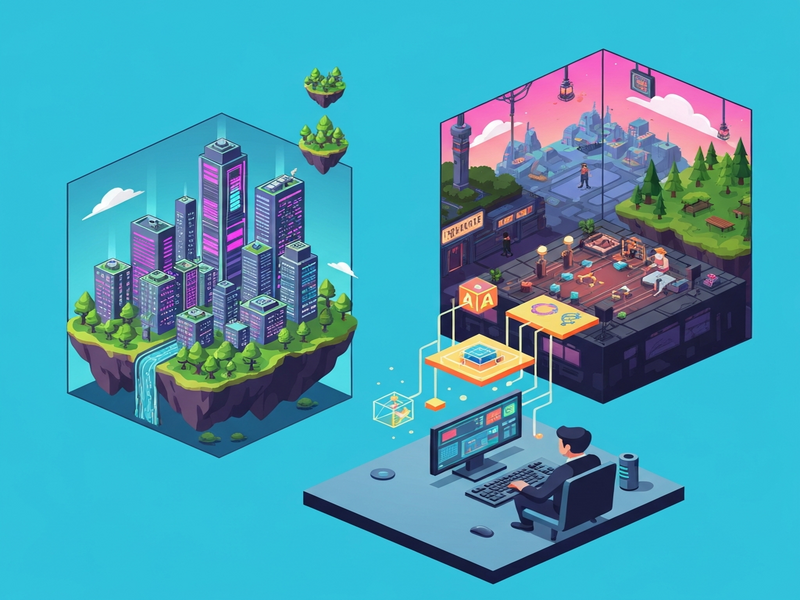
Project Genie: Google’s First Step Toward AI‑Built Worlds
Project Genie is powered by Google’s Genie 3 world model, which the company markets as a “key stepping stone on the path to AGI.” The prototype is currently limited to users of Google’s $249.99‑per‑month AI Ultra plan and is only available in the United States.
Key features of the demo include:
- Text‑or‑image prompts that generate a sandbox environment.
- 60 seconds of free navigation using arrow keys.
- One‑click download of a short video recording of the session.
Despite the novelty, the worlds felt “rudimentary” – static lighting, simplistic physics, and a lack of interactive objects. The experience resembled a “procedurally generated interactive video” more than a playable game, echoing Take‑Two’s CEO Karl Slatoff’s assessment during an earnings call.
Nevertheless, the prototype is a proof‑of‑concept that AI can interpret natural language and render a 3‑D scene in real time, a capability that could eventually be integrated into existing game engines.
Industry Reactions and Core Challenges
Big Studios Embrace, Yet Remain Cautious
Major publishers are already experimenting with generative AI:
- UBOS partner program – a growing ecosystem where studios can plug AI‑driven assets directly into their pipelines.
- Krafton’s “AI‑First” strategy, aiming to automate level design and NPC dialogue.
- EA’s partnership with Stability AI for “transformative” content‑creation tools.
- Ubisoft’s pledge to accelerate player‑facing generative AI features.
While these announcements signal enthusiasm, executives repeatedly stress that AI is an “assistant,” not a replacement for human creativity. The risk of job displacement remains a hot topic, especially as development budgets continue to swell.
Technical Hurdles Still Loom Large
Current AI models struggle with several fundamental aspects of game design:
- Interactivity: Worlds must respond to player actions, not just present static scenery.
- Consistency: Generated assets need to follow a coherent visual and narrative style.
- Performance: Real‑time rendering of AI‑crafted geometry must meet console and mobile hardware limits.
- Intellectual property: Early demos, like Genie’s “unauthorized Nintendo knockoffs,” raise copyright concerns.
These challenges mean that, for now, AI‑generated worlds are best suited for rapid prototyping, concept art, or “dream‑mode” experiences rather than full‑scale releases.
Future Outlook: From Prototypes to Playable Worlds
Emerging Platforms and UBOS’s Role
Beyond Google, several AI‑centric platforms are positioning themselves as the backbone for next‑gen game creation:
- UBOS platform overview – offers a low‑code environment where developers can embed AI models (e.g., OpenAI ChatGPT integration) directly into gameplay loops.
- Workflow automation studio – automates asset pipelines, turning AI‑generated textures into optimized game‑ready files.
- Web app editor on UBOS – lets designers prototype interactive scenes without writing code.
- Enterprise AI platform by UBOS – scales AI inference across studios of any size, from indie teams to AAA pipelines.
These tools enable a “design‑first” workflow: a developer writes a prompt, the AI generates terrain, textures, and even basic quest logic, and the UBOS engine stitches everything together for immediate testing.
Practical Use Cases on the Horizon
While fully autonomous game worlds may still be years away, several near‑term applications are already viable:
- Rapid prototyping: Teams can generate multiple level concepts in minutes, accelerating iteration cycles.
- Dynamic content updates: Live‑service games could use AI to refresh environments based on player feedback.
- Personalized experiences: AI could tailor world aesthetics to individual player preferences, a vision echoed by Elon Musk’s claim of “real‑time, high‑quality video games customized to the individual.”
- Accessibility tools: AI‑driven narration and voice synthesis (e.g., ElevenLabs AI voice integration) can make worlds more inclusive.
Marketplace Templates Accelerating Adoption
UBOS’s template marketplace already hosts AI‑centric starter kits that can be repurposed for game development:
- AI Video Generator – create cinematic cutscenes from text prompts.
- AI Image Generator – produce concept art for environments and characters.
- AI SEO Analyzer – optimize in‑game web portals and community pages for discoverability.
By leveraging these ready‑made assets, studios can focus on gameplay mechanics while AI handles the visual scaffolding.
Conclusion: Embrace the Tools, Not the Hype
Generative AI is undeniably reshaping how video game worlds are imagined and built. Project Genie proved that a text prompt can become a navigable 3‑D space, yet the experience still feels like a polished demo rather than a finished game. The real power lies in using AI as a collaborative partner—speeding up prototyping, enriching content pipelines, and opening doors for personalization.
Developers ready to experiment should explore platforms that already integrate AI responsibly. Start with the UBOS homepage to discover a suite of tools designed for creators of all sizes. Whether you’re a startup looking for a quick proof‑of‑concept (UBOS for startups) or an enterprise seeking scalable AI infrastructure (Enterprise AI platform by UBOS), the ecosystem is ready to help you turn imagination into interactive reality.
Stay ahead of the curve: experiment with the UBOS templates for quick start, join the UBOS partner program, and keep an eye on upcoming releases from Google, Meta, and emerging AI startups. The next generation of video game worlds may still be in the lab, but the tools to shape them are already in your hands.
Ready to build your own AI‑enhanced game world? Explore UBOS pricing plans and start creating today.