

- Updated: January 31, 2026
- 5 min read
AI‑Generated Ads Surge in 2026: Balancing Automation with Human Creativity
AI‑generated advertising is exploding across TV, digital, and social channels, but the surge is also flooding the market with low‑quality “slop” that threatens human creativity and brand trust.
The State of AI in Advertising
In 2026, generative AI tools have become as common in ad studios as Photoshop was a decade ago. Brands are leveraging models that can spin up videos, copy, and even entire campaigns in minutes, cutting production budgets from six‑figures to a few thousand dollars. According to a recent original story on The Verge, more than half of surveyed marketers already use AI in at least one creative asset, and the trend shows no sign of slowing.
While the efficiency gains are undeniable, the flood of AI‑crafted ads has sparked a backlash among consumers and creators who notice a growing sameness and a loss of the human touch that once defined memorable campaigns.
Rapid Adoption – By the Numbers
- 90 % of advertisers plan to use generative AI for video ads by the end of 2025 (IAB study).
- 40 % of all ad impressions are expected to be AI‑generated by 2026.
- Brands report up to a 70 % reduction in production time when using AI tools.
- Consumer detection rates for AI‑created media hover around 50 % (ACM research).
Key Findings: The Rise of AI‑Generated “Slop”
The Verge’s investigation highlights several recurring problems that turn fast‑produced AI ads into what many call “slop” – content that is cheap, generic, and sometimes unsettling.
- Visual Inconsistencies: Faces that morph mid‑scene, lighting that defies physics, and backgrounds that flicker like a low‑budget CGI experiment.
- Copy That Misses the Mark: Taglines generated without cultural context, resulting in awkward phrasing or outright errors.
- Over‑Polished Aesthetics: A hyper‑smooth look that erodes brand personality, making ads feel like stock footage from a robot’s dream.
- Ethical Red Flags: Undisclosed AI usage, deep‑fake concerns, and the environmental cost of massive model training.
These issues are not merely aesthetic; they affect brand equity, consumer trust, and long‑term ROI.
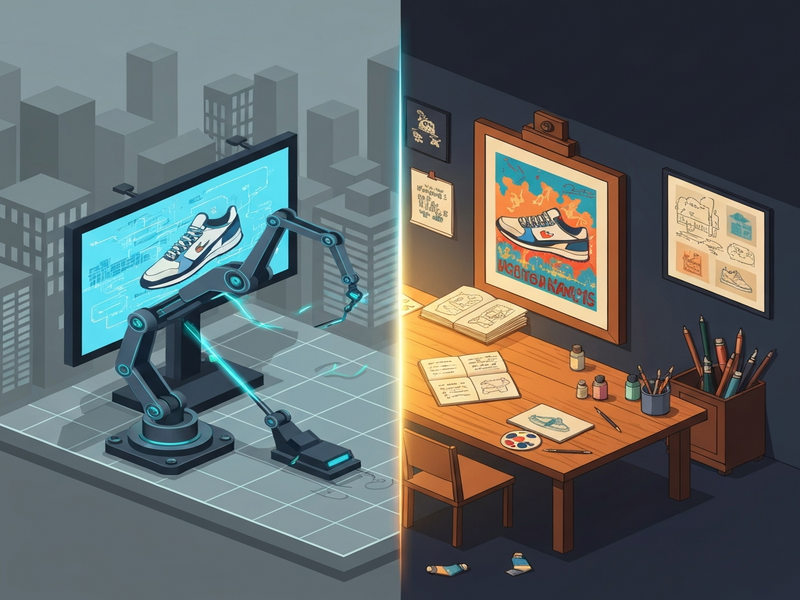
Illustration: The clash between AI‑generated ad “slop” and authentic human creativity.
Ethical Concerns and Consumer Reactions
Beyond the visual glitches, AI advertising raises profound ethical questions that marketers can no longer ignore.
Primary Concerns
- Transparency: Audiences demand clear disclosure when an ad is AI‑generated.
- Data Privacy: Training data often includes copyrighted material, risking legal exposure.
- Environmental Impact: Large language models consume significant energy, contradicting sustainability pledges.
- Job Displacement: Automation threatens traditional creative roles, prompting industry pushback.
What Consumers Are Saying
Social listening tools reveal a split sentiment:
- ~45 % of users express annoyance at “unnatural” visuals.
- ~30 % appreciate the novelty and speed of AI‑crafted messages.
- ~25 % actively avoid brands that overtly rely on AI, citing authenticity concerns.
Communities such as r/AiSlopAds have emerged, turning criticism into a viral meme that can either harm or, paradoxically, increase brand recall.
Future Outlook: Advertising in an AI‑Driven World
Despite the backlash, AI will remain a cornerstone of ad production. The next wave will likely focus on hybrid models that blend machine speed with human nuance.
Emerging Strategies
- Human‑in‑the‑Loop (HITL): Creatives review and refine AI drafts, preserving brand voice while cutting costs.
- AI‑Assisted Personalization: Real‑time data feeds generate micro‑segments, delivering hyper‑relevant ads without sacrificing quality.
- Analog‑Inspired Campaigns: Brands deliberately adopt hand‑drawn, imperfect aesthetics to signal authenticity (e.g., Polaroid’s “AI can’t generate sand”).
- Ethical Frameworks: Industry groups are drafting standards for disclosure, data usage, and carbon accounting.
Companies that invest in these balanced approaches will likely outperform those that chase pure automation.
What Marketers Can Do Right Now
- Audit your current ad inventory for undisclosed AI content.
- Implement a clear “Powered by AI” badge on all generative assets.
- Pair AI tools with a creative review board to catch visual or copy anomalies.
- Leverage AI for data‑heavy tasks (e.g., audience segmentation) while keeping storytelling human‑centric.
- Explore sustainable AI providers that publish carbon‑footprint metrics.
How UBOS Helps You Navigate the AI‑Ad Landscape
UBOS offers a suite of tools that let you harness AI’s speed without sacrificing creativity:
- Start with the UBOS homepage to explore the platform.
- Learn about the About UBOS and its mission to blend AI with human insight.
- Get a holistic view via the UBOS platform overview, which includes AI‑driven workflow automation.
- Deploy the Workflow automation studio to set up human‑in‑the‑loop review pipelines.
- Use the Web app editor on UBOS for rapid prototyping of ad landing pages.
- Boost copy quality with the AI Article Copywriter template, then refine manually.
- Analyze SEO impact with the AI SEO Analyzer before publishing.
- Experiment with visual AI using the AI Image Generator while keeping a human designer on standby.
- Integrate conversational AI into campaigns via the OpenAI ChatGPT integration for dynamic ad copy.
- Leverage the AI marketing agents to automate audience segmentation.
- Join the UBOS partner program to co‑create ethical AI ad solutions.
- Review pricing options via the UBOS pricing plans to find a tier that fits your budget.
- Explore real‑world case studies in the UBOS portfolio examples for inspiration.
- Kick‑start projects with ready‑made assets from the UBOS templates for quick start.
By combining these resources, marketers can produce high‑impact ads that retain a human spark while enjoying AI’s efficiency.
Conclusion
AI‑generated advertising is here to stay, but its unchecked proliferation creates “slop” that erodes brand trust and creative distinction. The path forward lies in hybrid workflows, transparent practices, and tools that empower—rather than replace—human imagination. Leveraging platforms like UBOS, which blend AI automation with human oversight, can help brands stay ahead of the curve while preserving the authenticity that consumers still crave.
Stay informed, stay ethical, and let the best of both worlds shape the next generation of ads.