

- Updated: March 4, 2026
- 5 min read
Agentic Engineering Patterns: A Comprehensive Overview
Agentic Engineering Patterns are a concise set of best‑practice guidelines for designing, orchestrating, testing, and maintaining AI agents that generate code, such as Claude, OpenAI Codex, or ChatGPT.
Why Simon Willison’s Guide Matters for Modern Developers
In a world where “code‑as‑a‑service” is becoming mainstream, developers need a reliable playbook to avoid the pitfalls of treating AI agents like black‑box scripts. Simon Willison’s original guide on Agentic Engineering Patterns delivers exactly that—a pragmatic, battle‑tested framework that turns experimental prompts into production‑grade pipelines. This article distills the core concepts, expands on each pattern, and shows how the UBOS homepage can help you implement them at scale.
Agentic Engineering Patterns: An Overview
Agentic Engineering Patterns (AEP) are organized around four pillars:
- Orchestration: How multiple agents collaborate, share state, and trigger downstream actions.
- Coding Principles: Guidelines for prompt design, modularity, and deterministic output.
- Testing Practices: Strategies for unit‑testing, regression, and red/green TDD with AI‑generated code.
- Chronological Timeline: A step‑by‑step workflow that mirrors traditional software development cycles.
By treating AI agents as first‑class components, teams can reap the same reliability benefits that conventional micro‑services enjoy. The patterns also align perfectly with the UBOS platform overview, which offers built‑in orchestration, version control, and automated testing for AI‑driven workloads.
1️⃣ Orchestration: Turning Agents into a Cohesive System
Orchestration is the glue that binds isolated agents into a purposeful workflow. Willison recommends a “pipeline‑first” mindset: define the end‑to‑end data flow before writing any prompts. This approach enables:
- Clear input/output contracts for each agent.
- Parallel execution where possible, reducing latency.
- Graceful error handling via fallback agents.
The Workflow automation studio provides a visual canvas to model these pipelines, letting you drag‑and‑drop agents, set triggers, and monitor execution in real time. For teams that need a low‑code entry point, the Web app editor on UBOS lets you embed orchestration logic directly into custom dashboards.
2️⃣ Coding Principles: Prompt Modularity & Determinism
Writing prompts is now a core development skill. Willison’s coding principles focus on three ideas:
- Write cheap code first: Generate a minimal, testable snippet before asking for optimizations.
- Hoard reusable patterns: Store prompt templates in a version‑controlled library (UBOS UBOS templates for quick start).
- Linear walkthroughs: Structure prompts as step‑by‑step instructions, making the agent’s reasoning transparent.
A concrete example is the AI Article Copywriter template, which splits content generation into outline, headline, and body phases. Each phase is a separate prompt, allowing you to test and iterate independently. When you need voice output, the AI Voice Assistant can be chained after the copywriter, demonstrating modular orchestration in practice.
3️⃣ Testing Practices: Red/Green TDD for AI‑Generated Code
Traditional test‑driven development (TDD) assumes deterministic code. AI agents, however, can produce nondeterministic output. Willison proposes a “Red/Green” loop adapted for AI:
- Red: Write a failing test that captures the desired contract (e.g., a unit test asserting that a generated function returns a specific type).
- Green: Prompt the agent to produce code that satisfies the test.
- Refactor: Use a second prompt to clean up the code while preserving test success.
The Enterprise AI platform by UBOS integrates CI/CD pipelines that automatically run these tests on every agent iteration. For startups, the UBOS for startups plan includes a sandboxed environment where you can experiment with TDD without affecting production workloads.
4️⃣ Chronological Timeline: From Idea to Production
Willison maps the agentic workflow onto a familiar software timeline:
| Phase | Key Activities |
|---|---|
| Discovery | Define problem, collect data, sketch high‑level agent graph. |
| Prototype | Write cheap prompts, generate minimal code, run quick sanity checks. |
| Orchestrate | Connect agents in the Workflow automation studio, set triggers, handle errors. |
| Test & Refine | Apply Red/Green TDD, add regression suites, iterate prompts. |
| Deploy | Version the agent bundle, expose via API, monitor with observability tools. |
| Maintain | Update prompts, retrain models, evolve orchestration as requirements shift. |
Each stage maps to a UBOS feature set. For example, the UBOS pricing plans include a “Testing” tier that gives you unlimited test runs, while the “Enterprise” tier adds advanced monitoring and role‑based access control.
Visualizing the Patterns
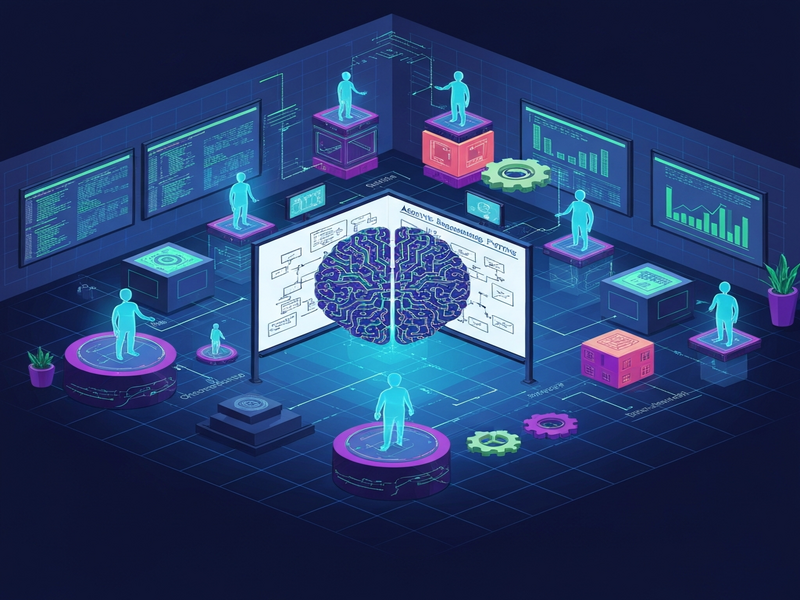
The diagram below captures the flow from discovery to maintenance, highlighting where orchestration, prompt modularity, and testing intersect. It was generated using UBOS’s AI‑enhanced graphics engine and illustrates how a single “Code Generator” agent can be wrapped with validation, logging, and fallback agents.
From Theory to Practice: UBOS Templates That Embody AEP
UBOS’s marketplace offers ready‑made applications that already follow Agentic Engineering Patterns. Below are a few that showcase the principles in action:
- Talk with Claude AI app – Demonstrates prompt modularity by separating intent detection from response generation.
- AI SEO Analyzer – Uses orchestration to chain a keyword extractor, content generator, and performance validator.
- AI Chatbot template – Implements Red/Green TDD for each conversational branch.
- GPT-Powered Telegram Bot – Shows how Telegram integration on UBOS can be combined with ChatGPT and Telegram integration for real‑time code assistance.
Key Integrations That Amplify Agentic Workflows
To fully exploit AEP, you often need external AI services. UBOS provides first‑class connectors for the most popular models and data stores:
- OpenAI ChatGPT integration – Enables high‑quality code generation and natural‑language debugging.
- Chroma DB integration – Stores vector embeddings of generated code for fast similarity search.
- ElevenLabs AI voice integration – Turns generated documentation into spoken tutorials.
Take the Next Step with UBOS
Whether you’re a solo developer, a fast‑growing startup, or an enterprise looking to institutionalize AI‑driven development, UBOS gives you the tools to apply Agentic Engineering Patterns without reinventing the wheel. Explore the UBOS partner program for co‑marketing opportunities, or dive into the UBOS portfolio examples to see real‑world success stories.
Ready to turn AI agents into reliable code factories? Visit the UBOS homepage today and start building with confidence.
Andrii Bidochko
CTO UBOS
Andrii Bidochko is an AI entrepreneur and researcher focused on AI agents, reinforcement learning, and autonomous systems. He writes about the technologies shaping the future of machine intelligence, from frontier models and agent architectures to real-world AI applications.