

- Updated: May 25, 2025
- 3 min read
A Comprehensive Guide on AI Terminology
Understanding AI Terminology: A Comprehensive Guide
In the rapidly evolving world of artificial intelligence, understanding the terminology is crucial for tech enthusiasts, AI researchers, and professionals. This guide aims to demystify key AI concepts, providing a clearer picture of the technologies shaping our future.
Overview of Key AI Concepts
Artificial intelligence encompasses a wide range of technologies and methodologies. Some of the most important concepts include:
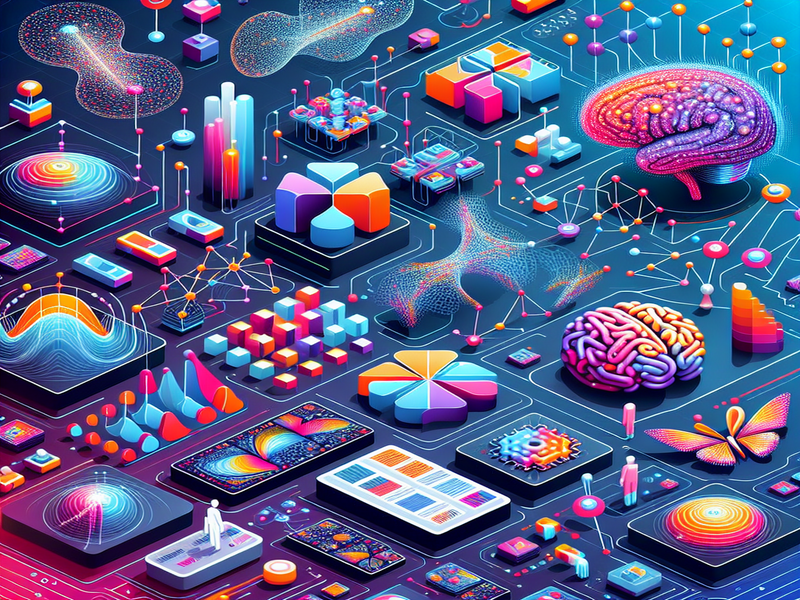
- Neural Networks: These are multi-layered algorithmic structures inspired by the human brain’s interconnected pathways. They form the backbone of deep learning and are crucial for the development of large language models (LLMs).
- Generative Adversarial Networks (GANs): GANs are a type of machine learning framework that involves two neural networks competing against each other, with one generating data and the other evaluating it. This competition helps improve the realism of the generated data.
- Large Language Models (LLMs): LLMs, such as OpenAI’s GPT, are deep neural networks that process and generate human-like text by learning from vast amounts of data.
AI Agents and Large Language Models
AI agents are tools that utilize AI technologies to perform complex tasks autonomously. They extend beyond basic chatbots by handling multi-step processes, such as booking reservations or managing code. The AI agents for enterprises are increasingly becoming integral to business operations.
Large language models, like those used in best AI chatbot solutions on UBOS, are central to AI agents. These models leverage the power of neural networks to understand and generate text, enabling them to perform tasks that require language comprehension.
AI Training and Fine-Tuning
Training AI models involves feeding them large datasets to learn patterns and generate accurate outputs. This process is crucial for developing models capable of performing specific tasks. Fine-tuning further optimizes these models by introducing task-specific data, enhancing their performance in targeted areas.
The Using Chroma DB with UBOS for RAG AI apps exemplifies how fine-tuning can be used to tailor AI models for specific applications, such as retrieval-augmented generation (RAG) AI applications.
Future Prospects in AI
The future of AI is promising, with ongoing advancements in technology and methodologies. As AI continues to evolve, it will play an increasingly significant role in various industries. The Enterprise AI platform by UBOS is designed to support businesses in harnessing the full potential of AI.
AI’s future will likely see the development of more specialized models, reducing the risk of hallucinations and improving the accuracy of AI-generated information. As AI models become more sophisticated, they will be better equipped to address complex problems and drive innovation across sectors.
Conclusion
Understanding AI terminology is essential for navigating the complex landscape of artificial intelligence. By familiarizing yourself with key concepts and technologies, you can better appreciate the advancements in AI and their implications for the future.
For more insights into AI developments, visit the UBOS homepage and explore their range of AI solutions, including the generative AI agents for businesses.
Andrii Bidochko
CTO UBOS
Andrii Bidochko is an AI entrepreneur and researcher focused on AI agents, reinforcement learning, and autonomous systems. He writes about the technologies shaping the future of machine intelligence, from frontier models and agent architectures to real-world AI applications.