

- Updated: March 14, 2026
- 6 min read
2026 Tech Layoffs Surge to 45,000 as AI and Automation Drive Cuts
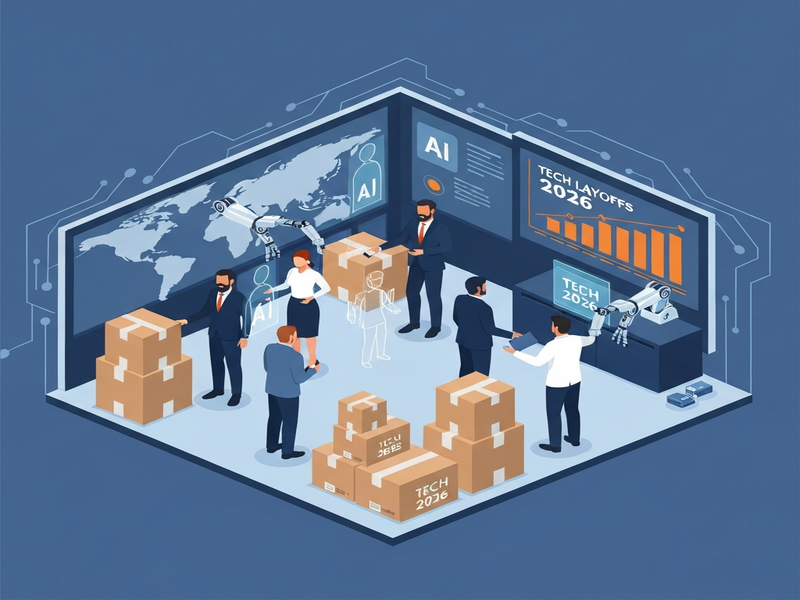
In March 2026, the tech sector announced roughly 45,000 global job cuts, with about 9,200 of those layoffs directly attributed to AI and automation initiatives.
<!– –>
Why AI and Automation Are Redrawing the Tech Employment Map
The rapid diffusion of generative AI, large‑language models, and intelligent workflow tools is forcing companies to rethink how work gets done. Executives cite three core reasons for AI‑driven reductions:
- Productivity gains: AI can write code, generate product descriptions, and triage support tickets faster than a human team.
- Cost efficiency: Automating repetitive tasks reduces overhead, especially in high‑margin SaaS businesses.
- Strategic repositioning: Firms are shifting from legacy platforms to AI‑first product roadmaps, which demand new skill sets.
Overall Layoff Numbers – A MECE Breakdown
According to RationalFX data, the total global tech layoffs recorded from January 1 to March 31 2026 amount to 45,363 positions. The following table separates AI‑related cuts from the broader reduction pool:
| Category | Jobs Affected | % of Total |
|---|---|---|
| AI & Automation‑Driven | 9,238 | 20.3% |
| Other Restructuring | 36,125 | 79.7% |
Key Takeaway
AI‑related cuts are not isolated events; they represent a strategic pivot that is reshaping the entire tech talent landscape.
Companies Leading the AI‑Driven Workforce Reductions
Five firms account for the majority of AI‑linked layoffs. Their public statements illustrate how AI is being positioned as a growth lever.
- Block – 4,000 jobs eliminated as the firm consolidates its workforce from 10,000 to 6,000 to focus on AI‑powered financial services. CEO Jack Dorsey emphasized that the move is “driven by the expanding capabilities of AI tools.”
- WiseTech Global – 2,000 positions cut in a sweeping AI‑centric restructuring of its logistics platform. Executives argue that generative AI can now write and maintain code faster than traditional development teams.
- Livspace – 1,000 roles removed to accelerate AI adoption across its interior‑design marketplace, aiming for hyper‑personalized customer experiences.
- eBay – 800 layoffs as the e‑commerce giant leans on AI for automated product listings, dynamic pricing, and self‑service support.
- Pinterest – 675 cuts (≈15% of its workforce) to prioritize AI‑first product teams and reduce overhead in sales and office space.
These cuts are complemented by smaller reductions at firms such as ANGI Homeservices (350), Oracle (254), and MercadoLibre (119), all citing AI efficiency gains.
Regional Impact – Where the Cuts Are Felt Most
Geography matters. The United States remains the epicenter, but other tech hubs are not immune.
North America
Seattle leads with 16,590 layoffs, followed by San Francisco’s 9,395. These numbers reflect the concentration of large‑scale AI projects at Amazon, Microsoft, and other cloud providers.
Australia & Oceania
Sydney’s tech sector saw a sharp dip after WiseTech Global’s 2,000‑job reduction, representing the bulk of Australian tech layoffs this year.
Europe
Stockholm (Ericsson) and Veldhoven (ASML) together account for 3,600 cuts, underscoring that AI‑driven restructuring is a global phenomenon.
Expert Commentary – AI as a Structural Force
Alan Cohen, senior analyst at RationalFX, observes:
“Even as companies post record revenues in 2026, the tech sector continues to be fundamentally reshaped by AI. Firms such as Block and Amazon have explicitly tied workforce reductions to AI and automation as they reorganize around more efficient, technology‑driven workflows.”
Cohen warns that if the current pace persists, “unemployment pressure could rise across the sector, especially for entry‑level roles that AI now automates.”
What This Means for Talent and the Future of Work
For HR leaders and job seekers, the data points to three actionable trends:
- Reskilling is no longer optional: Companies are investing in AI‑focused upskilling programs, but the speed of change often outpaces internal training.
- AI fluency becomes a hiring prerequisite: Roles that combine domain expertise with prompt engineering or model fine‑tuning are in high demand.
- New job categories will emerge: While 9,200 positions disappear, AI also creates roles in data annotation, model governance, and AI‑augmented product management.
How UBOS Helps Organizations Navigate AI‑Driven Change
Businesses looking to balance automation with workforce stability can leverage the UBOS homepage for an integrated AI platform. Our UBOS platform overview showcases how AI can be embedded without wholesale staff reductions.
Startups benefit from rapid prototyping using the UBOS templates for quick start, such as the AI SEO Analyzer and AI Article Copywriter. These tools accelerate time‑to‑market while preserving core talent.
For midsize firms, the UBOS solutions for SMBs combine the Web app editor on UBOS with the Workflow automation studio, enabling teams to automate repetitive processes without large layoffs.
Enterprises seeking a full‑scale AI transformation can explore the Enterprise AI platform by UBOS. It integrates advanced services like OpenAI ChatGPT integration, Chroma DB integration, and ElevenLabs AI voice integration to create intelligent assistants that augment, rather than replace, human workers.
Our AI marketing agents illustrate how automation can boost productivity while preserving creative talent, a model that many of the companies in this article could emulate.
For a deeper look at real‑world implementations, see the UBOS portfolio examples, which highlight successful AI‑first transformations across finance, e‑commerce, and logistics.
Pricing Transparency
Understanding cost is critical when adopting AI at scale. The UBOS pricing plans are designed to align with growth stages—from startup bundles to enterprise‑grade subscriptions—ensuring that automation investments deliver measurable ROI.
Looking Ahead: 2026 and Beyond
If the current trajectory holds, analysts project that total tech layoffs could exceed 260,000 by year‑end, surpassing 2025’s figures. However, the same AI momentum that drives cuts also promises new opportunities:
- AI‑enhanced product development cycles could shorten time‑to‑revenue.
- Automation of data‑intensive tasks may free engineers to focus on innovation.
- Emerging AI governance roles will create high‑value, compliance‑focused careers.
Companies that adopt a balanced approach—leveraging AI for efficiency while investing in human talent—are likely to emerge as the next wave of industry leaders.
Original Source
For the full data set and original reporting, see the article on Technode.
Take Action Today
Whether you’re a tech executive, an HR leader, or a job seeker, the message is clear: AI is reshaping the talent landscape, and proactive upskilling is essential. Explore UBOS’s AI‑centric solutions, start with a free trial of the Talk with Claude AI app, and position your organization at the forefront of the AI‑first era.
Andrii Bidochko
CTO UBOS
Andrii Bidochko is an AI entrepreneur and researcher focused on AI agents, reinforcement learning, and autonomous systems. He writes about the technologies shaping the future of machine intelligence, from frontier models and agent architectures to real-world AI applications.