

- Updated: February 14, 2026
- 5 min read
AI Fashion Meets IBM and Fiducia AI at NYFW: Kate Barton Designer Collaboration
Kate Barton’s NYFW showcase merges AI fashion, IBM’s Watsonx, and Fiducia AI to deliver a multilingual AI agent, photorealistic virtual try‑ons, and a new way for audiences to interact with runway collections.
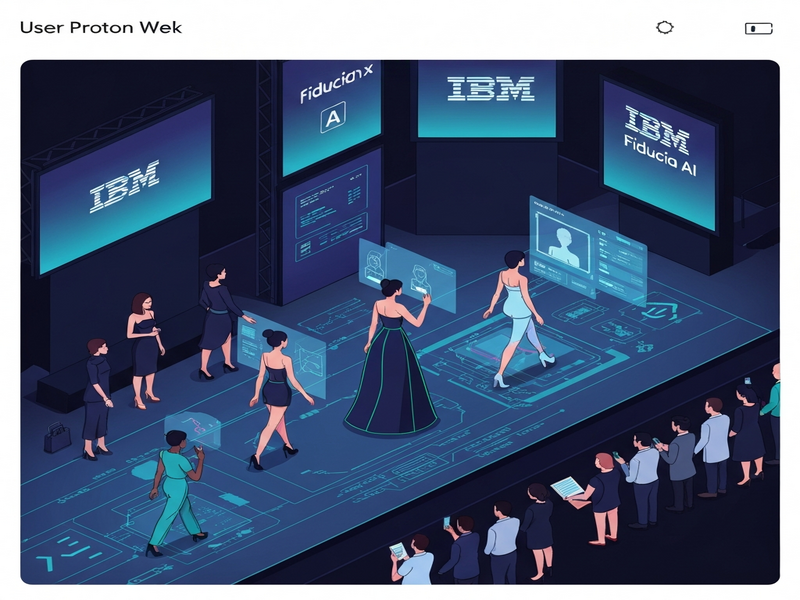
Designer Collaboration Redefines NYFW with AI Fashion, IBM, and Fiducia AI
On February 14, 2026, British designer Kate Barton unveiled a groundbreaking collection at New York Fashion Week (NYFW) that blended high‑end couture with cutting‑edge AI fashion technology. Partnering with IBM and the startup Fiducia AI, Barton introduced a multilingual AI runway assistant powered by IBM Watsonx and a suite of virtual try‑on experiences that let guests explore garments in real time.
Why AI Fashion Is the Next Big Wave
AI‑driven design and retail have moved from experimental labs to mainstream runways over the past three years. According to a McKinsey report, 62 % of luxury brands now use AI for trend forecasting, while 48 % employ generative models for fabric simulation.
- Design acceleration: AI can generate thousands of pattern variations in minutes.
- Personalized shopping: Virtual try‑ons reduce return rates by up to 30 %.
- Sustainability gains: AI‑optimized material usage cuts waste by an estimated 15 %.
These metrics set the stage for Barton’s collaboration, which aims to showcase not just a collection but an entire experience powered by intelligent agents.
Inside the NYFW Show: Multilingual AI Agent & Virtual Try‑Ons
The centerpiece of the show was a Visual AI lens built on IBM watsonx that could recognize each garment as it walked the runway. Guests could ask the AI, in any language, for details about fabric, fit, or styling tips, receiving answers via voice or text.
Key Features
- Multilingual support: The agent understands 12 languages, enabling global audiences to interact seamlessly.
- Photorealistic virtual try‑ons: Attendees used AR‑enabled tablets to see themselves wearing the pieces in real time.
- Data‑driven storytelling: Each garment’s backstory, sourced from Barton’s design notes, was narrated by the AI, creating a “portal into the collection’s world.”
“Technology is baked into how I think. I like playing with the real and the unreal, and using AI as a set design, a portal, not just AI for AI’s sake,” Barton told TechCrunch.
“The hardest work wasn’t model tuning; it was orchestration,” explained Ganesh Harinath, founder of Fiducia AI. “We had to stitch together Watsonx, Cloud Object Storage, and a real‑time UI that could answer in any language.”
Impact and Industry Reactions
Fashion editors, tech journalists, and investors converged on the runway to gauge the commercial viability of AI‑enhanced shows.
- Positive buzz: Vogue called the experience “a glimpse of the future where couture meets code.”
- Investor interest: Venture capitalists noted the potential for scaling the AI layer to e‑commerce platforms.
- Skepticism: Some critics warned that AI could become a gimmick if not tied to tangible sustainability outcomes.
Despite mixed opinions, the consensus is clear: AI fashion is moving from novelty to necessity.
How IBM and Fiducia AI Are Shaping the Future of Fashion
IBM’s Watsonx provides the backbone for large‑scale model training, while Fiducia AI specializes in orchestration and real‑time inference. Their combined stack enables:
- Scalable multilingual NLP: Seamless translation and contextual understanding across markets.
- Edge‑ready visual recognition: Low‑latency garment detection even on mobile devices.
- Secure data handling: IBM Cloud Object Storage ensures that proprietary design data remains encrypted and compliant.
Dee Waddell, Global Head of Consumer, Travel and Transportation Industries at IBM Consulting, summed it up: “When inspiration, product intelligence, and engagement are connected in real time, AI moves from being a feature to becoming a growth engine that drives measurable competitive advantage.”
Explore More AI‑Powered Solutions on UBOS
For brands looking to replicate Barton’s success, UBOS offers a suite of tools that simplify AI integration:
- UBOS homepage – Your gateway to an end‑to‑end AI platform.
- UBOS platform overview – Learn how to build AI agents without writing code.
- AI marketing agents – Automate personalized campaigns that speak the language of your customers.
- UBOS pricing plans – Flexible pricing for startups to enterprises.
- UBOS templates for quick start – Jump‑start projects with pre‑built AI fashion templates.
Ready to bring AI to your runway? Join the UBOS partner program and get dedicated support for integrating visual AI, multilingual agents, and virtual try‑ons.
Conclusion: The Future Is Already on the Runway
Kate Barton’s collaboration with IBM and Fiducia AI proves that AI fashion is no longer a side project—it’s a core component of storytelling, customer engagement, and brand differentiation. As the technology matures, we can expect AI‑enhanced shows to become the norm rather than the exception, with platforms like UBOS making the integration process faster, more secure, and accessible to designers of all sizes.
For fashion technologists, emerging designers, and AI professionals, the message is clear: embrace AI as a creative partner, not a replacement, and watch your runway—and your business—elevate to new heights.