

- Updated: April 2, 2026
- 8 min read
Solar Balcony Kits Surge Across Europe – A Sustainable Housing Revolution
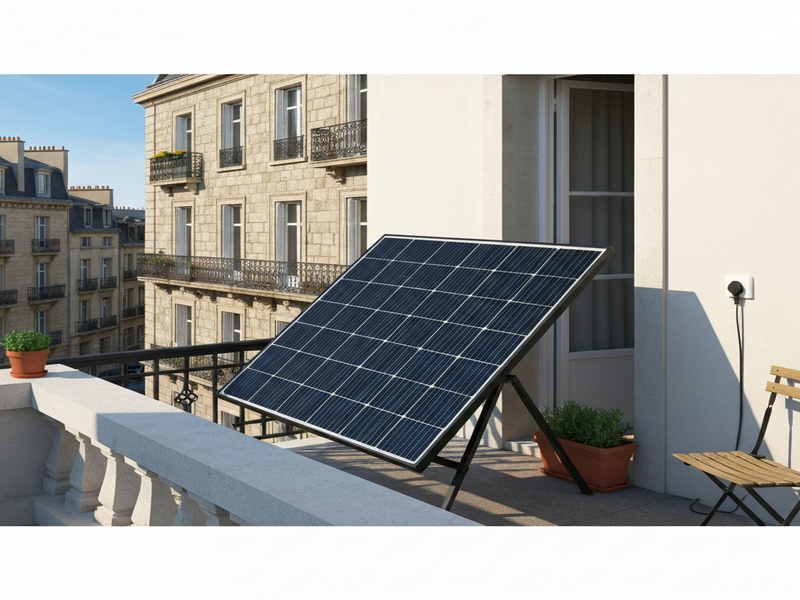
Solar balconies are the fastest‑growing renewable‑energy solution in Europe, letting renters and homeowners generate clean power with a simple plug‑in kit that fits on a balcony rail and feeds electricity directly into a household socket.
Solar Balconies Sweep Europe: A DIY Path to Sustainable Housing
Why balcony solar matters now
Energy prices across the continent have surged, and climate‑focused policies are pushing every household toward lower‑carbon footprints. Traditional rooftop PV remains out of reach for many city dwellers who rent apartments or live in historic buildings with strict façade rules. The solar balcony model solves this gap by offering a compact, plug‑and‑play photovoltaic (PV) system that can be mounted on a balcony rail, a window ledge, or any outdoor slab without drilling or permanent wiring.
According to the original Hackaday story, more than 1.2 million balcony kits have been installed across Germany, Spain, France, and the Benelux region in just the past two years. This rapid adoption is reshaping the renewable‑energy market and creating new opportunities for tech platforms that can automate installation, monitoring, and grid interaction.
From “Balkonkraftwerk” to a European Phenomenon
The concept originated in Germany under the nickname balkonkraftwerk (“balcony power plant”) in the early 2010s. Initial kits were modest 300‑W panels paired with a tiny micro‑inverter that could be plugged directly into a Schuko socket. Early adopters were hobbyists and eco‑conscious renters who wanted a taste of solar without the bureaucracy of a full roof installation.
- 2015 – German government introduced a 600‑W feed‑in limit, making plug‑in systems legal.
- 2018 – The limit was raised to 800 W, and the EU’s “low‑voltage directive” recognized these kits as safe consumer products.
- 2021 – Spain and France adopted similar regulations, allowing up to 1 kW per balcony unit.
- 2024 – Belgium and the Netherlands reported a combined 350 kW of installed balcony capacity.
The growth curve is exponential: a 2023 market analysis showed a 250 % year‑over‑year increase in sales of balcony kits, driven by falling panel prices (now under €0.20 /W) and the rise of “plug‑and‑play” certifications. The trend is now spilling into the UK, where the upcoming “plug‑in solar” legislation will legalise the practice by the end of 2026.
Technology Overview: What’s Inside a Balcony Solar Kit?
A typical balcony kit consists of three core components:
- Photovoltaic panels – Usually monocrystalline cells, 300‑600 W total, pre‑wired with MC4 connectors.
- Micro‑inverter – A certified “grid‑interactive” inverter that converts DC to AC, includes anti‑islanding protection, and limits export to the legal 800 W (or 1 kW) threshold.
- Mounting hardware – Adjustable brackets that clamp onto balcony railings, often with a built‑in cable‑management channel.
The inverter plugs directly into a standard household socket. When the grid is up, excess power is automatically fed back through the socket, and the inverter’s internal sensor ensures it never exceeds the permitted export limit. When the grid goes down, the inverter shuts off (anti‑islanding), protecting line workers and complying with safety standards.
Advanced kits now integrate Chroma DB integration for real‑time performance logging, and some even pair with ChatGPT and Telegram integration to send daily generation reports to your phone.
Regulations Across Key European Markets
While the EU provides a harmonised safety framework, each country defines its own feed‑in limits and certification pathways. Below is a quick reference:
| Country | Max Export Power | Key Certification |
|---|---|---|
| Germany | 800 W | TÜV‑approved “Plug‑in PV” |
| France | 1 kW | CE‑Mark + NF‑C15‑100 |
| Spain | 1 kW | UNE‑EN‑IEC 61730 |
| Netherlands | 800 W | NEN‑EN‑IEC 61730 |
| United Kingdom | 800 W (pending) | BS 7671 compliance |
Most jurisdictions require the inverter to be “grid‑interactive” (anti‑islanding) and to carry a CE mark. Homeowners should also verify that their building’s wiring can handle the additional 3 A load without over‑loading the circuit. In many cases, a dedicated 16 A circuit is recommended, especially in older apartments.
Who Gains the Most? Renters, Homeowners, and the Grid
Renters
- No permanent alterations – the kit can be removed when the lease ends.
- Immediate reduction in monthly electricity bills (average 15‑20 % savings).
- Potential eligibility for local “green‑rental” incentives.
Homeowners
- Supplemental power for high‑consumption appliances (e.g., fridge, washing machine).
- Increased property value – eco‑features are a strong selling point.
- Ability to combine with battery storage for night‑time autonomy.
Grid Operators
- Distributed generation reduces peak‑load stress.
- Fine‑grained, low‑capacity feed‑in simplifies net‑metering administration.
- Data from thousands of micro‑inverters can improve demand‑response forecasting.
Step‑by‑Step Installation Guide
- Check building rules. Verify that your lease or condo association permits external attachments.
- Assess sunlight exposure. Use a smartphone app (e.g., Sun Surveyor) to confirm at least 4 hours of direct sun per day.
- Choose a certified kit. Look for TÜV, CE, or local equivalent markings. The UBOS portfolio examples showcase compliant kits.
- Mount the brackets. Clamp the hardware onto the balcony rail, ensuring a 10‑cm gap for airflow.
- Connect the panels. Use the supplied MC4 cables; avoid splicing.
- Plug the inverter. Insert the inverter into a dedicated socket on a dedicated circuit. If you lack a spare socket, install a new Schuko outlet with a qualified electrician.
- Activate monitoring. Pair the inverter with a mobile app or with Telegram integration on UBOS for real‑time alerts.
- Register with the utility. In most countries, a simple online form is enough to declare the feed‑in capacity.
Safety checklist: Verify that the inverter’s anti‑islanding function is active, use RCD‑protected sockets, and never overload the circuit. If you notice any unusual heating of cables, disconnect immediately and consult a certified electrician.
What Holds the Market Back?
Despite the hype, balcony solar faces several practical constraints:
- Limited roof‑angle optimization. Balconies often have sub‑optimal tilt, reducing peak output by 10‑20 % compared with roof‑mounted systems.
- Export caps. The 800 W‑1 kW ceiling means most kits cannot fully offset a household’s consumption.
- Building‑code friction. Historic districts may forbid any external attachments, even temporary ones.
- Grid‑interaction complexity. Some utilities still lack automated net‑metering for low‑capacity feeds, requiring manual paperwork.
- Weather durability. Panels exposed to wind‑driven rain need robust mounting; otherwise, warranty claims may be void.
Addressing these issues requires coordinated policy updates, smarter inverter designs (e.g., MPPT that adapts to sub‑optimal angles), and platforms that simplify compliance.
The Road Ahead: How UBOS Is Shaping the Balcony Solar Ecosystem
The next wave of balcony solar will be defined by integration, automation, and data‑driven optimization. UBOS, a leading UBOS homepage AI platform, is already building the infrastructure to make this vision a reality.
Key initiatives:
- Enterprise AI platform by UBOS – provides a unified data lake for thousands of micro‑inverters, enabling predictive maintenance and grid‑balancing algorithms.
- Workflow automation studio – lets installers create one‑click deployment scripts that register new kits with local utilities automatically.
- AI marketing agents – generate personalized outreach for renters, highlighting potential savings based on their local electricity tariffs.
- UBOS templates for quick start – include pre‑built dashboards for “Solar Balcony Performance” that can be embedded in property‑management portals.
- UBOS pricing plans – offer a freemium tier for hobbyists and a scalable SaaS model for utilities.
By coupling balcony hardware with UBOS’s low‑code Web app editor on UBOS, developers can spin up custom energy‑monitoring apps in minutes. For example, a startup could launch a “Solar Balcony Marketplace” that matches kit owners with local installers, leveraging the UBOS for startups program.
The platform also supports advanced AI services such as the OpenAI ChatGPT integration, enabling conversational queries like “How much energy did my balcony generate last week?” This level of interactivity turns raw PV data into actionable insights for everyday users.
Ready to Turn Your Balcony into a Power Plant?
Whether you’re a renter looking for instant bill relief, a homeowner eager to boost property value, or a tech entrepreneur hunting the next green SaaS opportunity, the balcony solar market is ripe for innovation.
- Explore certified kits on the UBOS portfolio examples page.
- Start building your own monitoring dashboard with the Web app editor on UBOS.
- Join the UBOS partner program to get early access to API keys for the ElevenLabs AI voice integration and create voice‑enabled solar reports.
- Try the AI SEO Analyzer to optimize your own balcony‑solar blog and attract organic traffic.
- Leverage the AI Video Generator to produce quick demo videos for social media.
The future of sustainable housing is already on your balcony. Take the first step today and let UBOS power your green journey.
Andrii Bidochko
CTO UBOS
Andrii Bidochko is an AI entrepreneur and researcher focused on AI agents, reinforcement learning, and autonomous systems. He writes about the technologies shaping the future of machine intelligence, from frontier models and agent architectures to real-world AI applications.