

- Updated: April 1, 2026
- 6 min read
Mercor Cyberattack Highlights AI Recruiting Startup Risks from LiteLLM Breach
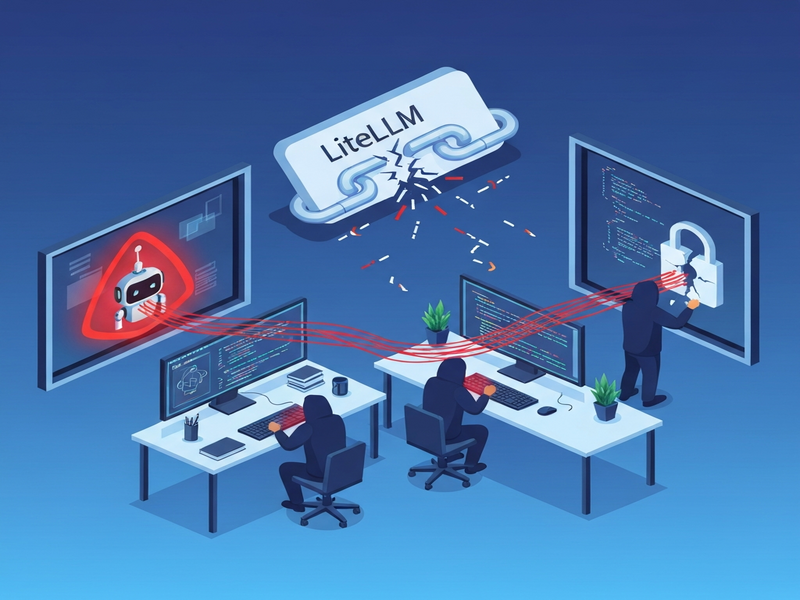
Mercor was hit by a supply‑chain cyberattack that exploited a compromised version of the open‑source https://ubos.tech/open-source-llm LiteLLM library, exposing data from its AI‑driven recruiting platform.
Key facts at a glance
- Incident disclosed on 31 March 2026 after a supply‑chain breach of the LiteLLM open‑source project.
- Mercor, an AI recruiting startup valued at $10 billion, confirmed that “thousands of companies” were potentially affected.
- The breach is linked to the hacking group TeamPCP; a separate extortion claim was made by Lapsus$.
- Mercor’s response includes third‑party forensic analysis, customer notifications, and a hardening of its software supply chain.
- Industry experts warn that the incident highlights systemic risks in the rapidly expanding AI‑tool ecosystem.
Mercor’s AI recruiting platform – a quick overview
Founded in 2023, Mercor built a marketplace that connects enterprises with domain experts—scientists, physicians, lawyers, and other specialists—to train large language models (LLMs) for niche tasks. By automating the sourcing, vetting, and payment of these experts, Mercor claims to facilitate more than $2 million in daily payouts and to have processed contracts for leading AI labs such as OpenAI and Anthropic.
The platform’s core architecture relies on a micro‑service stack that pulls in third‑party libraries for LLM orchestration, data preprocessing, and cost‑optimization. One of the most widely adopted components is OpenAI ChatGPT integration, which enables Mercor’s recruiters to generate interview scripts and skill‑assessment quizzes on the fly.
Mercor’s rapid growth attracted a $350 million Series C round in October 2025, led by Felicis Ventures, pushing its valuation to $10 billion. The company markets itself as the “AI‑first talent pipeline” for the next generation of AI products.
How the LiteLLM supply‑chain breach unfolded
The attack originated from a malicious code injection into the Chroma DB integration package that ships with LiteLLM. Security firm Snyk discovered the payload on 24 March 2026 and reported that the compromised package had been downloaded millions of times in the preceding 48 hours.
TeamPCP, a well‑known financially motivated hacking group, is believed to have inserted a backdoor that exfiltrated API keys, environment variables, and limited user data from any downstream application that imported the tainted library. Because LiteLLM is a foundational dependency for many AI‑centric SaaS products—including Mercor’s recruitment engine—the backdoor propagated silently across a large portion of the AI startup ecosystem.
In parallel, the extortion gang Lapsus$ posted a data dump on its leak site, claiming to have accessed “Slack conversations, ticketing logs, and video recordings of AI‑contractor interactions” from Mercor. While the authenticity of the Lapsus$ samples remains under investigation, the overlap with the LiteLLM breach suggests a possible secondary exploitation path.
“The supply‑chain nature of this attack means that any organization that relied on the compromised LiteLLM version—without pinning a specific release—could have been exposed,” said a senior analyst at a leading cyber‑risk firm.
Official statements
Mercor spokesperson Heidi Hagberg told TechCrunch: “We moved promptly to contain and remediate the incident. Our forensic partners are conducting a thorough investigation, and we will keep our customers and contractors informed as we resolve the matter.”
Hagberg declined to confirm whether the Lapsus$ claim was directly linked to the LiteLLM compromise, but emphasized that “no evidence at this time suggests that customer‑level data was exfiltrated in a way that could be weaponized.”
LiteLLM maintainers issued a public advisory on 26 March 2026, stating that the malicious code was removed within hours of detection and that they have migrated their compliance processes from Delve to Vanta for stricter supply‑chain verification. The project’s GitHub repository now includes a signed release policy and a mandatory code‑review checklist for all contributors.
Ripple effects across the AI community
The breach has immediate and long‑term implications for three stakeholder groups:
- Mercor’s enterprise clients – Companies that rely on Mercor for talent sourcing now face potential exposure of contract terms, payment details, and proprietary prompts used to train LLMs. Many have initiated their own security audits and are demanding proof of remediation.
- Independent contractors – The leaked videos and Slack excerpts suggest that some freelancers may have had private communications intercepted. While no direct financial loss has been reported, the breach erodes trust in the platform’s confidentiality guarantees.
- The wider AI SaaS ecosystem – Over 2 million daily downloads of LiteLLM mean that dozens of AI‑powered products could be silently compromised. The incident has reignited calls for a “software‑bill‑of‑materials” (SBOM) standard for AI libraries, similar to the recent push in the DevSecOps community.
In response, several AI startups have begun to adopt AI security best practices, such as runtime integrity checks, dependency pinning, and automated vulnerability scanning.
What organizations can do now – actionable security checklist
Based on the Mercor incident, security teams should prioritize the following steps:
- Implement strict dependency management. Use lockfiles, SBOMs, and automated alerts for any new version of a third‑party library.
- Adopt runtime monitoring. Deploy tools that detect anomalous outbound traffic or unexpected API key usage.
- Conduct regular third‑party risk assessments. Verify the security posture of open‑source projects, especially those that handle authentication tokens.
- Enforce least‑privilege credentials. Rotate API keys frequently and limit their scope to only the services required.
- Prepare an incident response playbook. Include supply‑chain breach scenarios, communication templates, and forensic partner contacts.
- Educate developers. Provide training on secure coding practices for open‑source contributions and dependency updates.
For teams looking for a ready‑made solution, the Workflow automation studio offers pre‑built security orchestration flows that can automatically quarantine compromised packages and trigger alerts.
Looking ahead
The Mercor cyberattack underscores the fragility of today’s AI supply chain. As more startups embed open‑source LLM tooling into mission‑critical workflows, the industry must shift from “react‑and‑patch” to “design‑for‑security‑by‑default.”
For a deeper dive into how AI startups can safeguard their products, explore the Enterprise AI platform by UBOS and the AI marketing agents that automate threat‑intelligence gathering.
Read the original TechCrunch coverage for full details: Mercor says it was hit by cyberattack tied to compromise of open‑source LiteLLM project.
Additional resources that may help your organization:
- UBOS for startups – a guide to building secure AI products from day one.
- UBOS solutions for SMBs – affordable security stacks for smaller teams.
- UBOS pricing plans – transparent pricing for security‑focused AI platforms.
- UBOS templates for quick start – pre‑configured templates for secure AI workflow deployment.
By learning from Mercor’s experience and adopting a proactive security posture, AI innovators can protect both their data and the trust of the customers who rely on them.
Andrii Bidochko
CTO UBOS
Andrii Bidochko is an AI entrepreneur and researcher focused on AI agents, reinforcement learning, and autonomous systems. He writes about the technologies shaping the future of machine intelligence, from frontier models and agent architectures to real-world AI applications.