

- Updated: March 30, 2026
- 5 min read
Apple II: The Birth of Personal Computing – A Deep Dive
Apple II: The Vintage Computer That Sparked the Personal‑Computer Revolution
The Apple II, launched in 1977, was the first mass‑market personal computer that turned a hobbyist pastime into a mainstream industry and laid the foundation for today’s tech ecosystem.
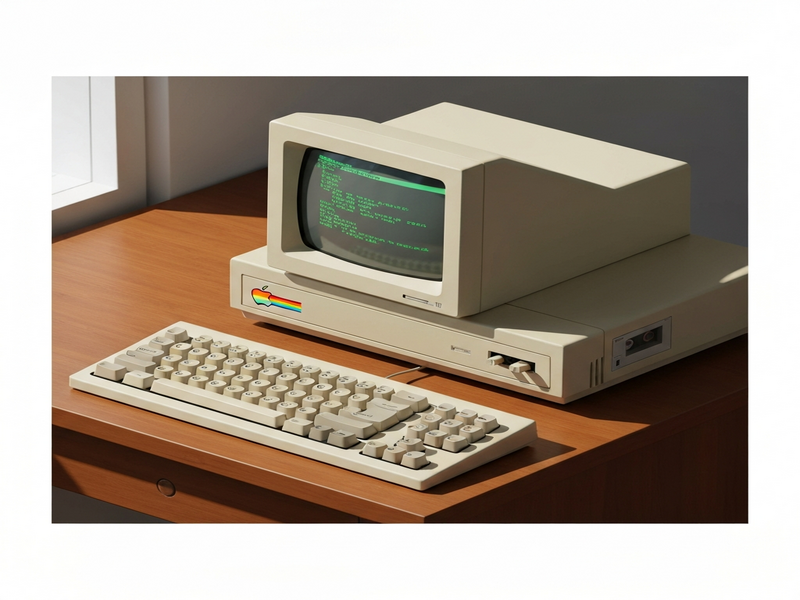
Why the Apple II Still Matters to Tech Enthusiasts
When you picture Apple today, you likely think of iPhones, Macs, or the sleek Apple Watch. Yet the company’s 50‑year dominance began with a beige plastic box that cost $1,298 in 1977—a price that would be roughly $7,000 today. That machine, the Apple II, was more than a product; it was a cultural catalyst that turned “computers” from garage‑built curiosities into household tools.
For vintage‑computer collectors, the Apple II represents a tangible piece of tech nostalgia. For modern developers, it offers a blueprint of how hardware, software, and community can combine to create a lasting platform.
Historical Background of the Apple II
In the mid‑1970s, personal computers were sold as kits. Hobbyists bought a circuit board, sourced chips, and assembled the machine themselves. Steve Wozniak’s Apple I was the quintessential kit—just a board that required a user‑provided case, keyboard, and monitor.
Everything changed when About UBOS’s founder, Steve Jobs, realized that a pre‑assembled computer could reach a far broader audience. He pushed Wozniak to design a machine with a built‑in keyboard, a plastic case, and color graphics—features unheard of in 1976.
The result was the Apple II, released in July 1977. It shipped with a built‑in BASIC interpreter, a cassette interface for program storage, and an optional 5.25‑inch floppy drive that Wozniak engineered to be the cheapest on the market. This combination of affordability, expandability, and out‑of‑the‑box usability made the Apple II the first true personal computer.
Development Milestones and Market Impact
From Cassette to Floppy
Early Apple II owners loaded software from audio cassettes—a slow, error‑prone process. In 1978, Apple introduced the Disk II floppy drive, cutting load times from minutes to seconds. This breakthrough unlocked a thriving software ecosystem, from games like Oregon Trail to business tools such as VisiCalc, the first spreadsheet.
VisiCalc: The Killer App
VisiCalc, released exclusively for the Apple II in 1979, turned the computer into a productivity tool for accountants and small businesses. Sales of the Apple II surged tenfold, and the machine became a staple in classrooms across the United States.
The Expansion Family
Apple kept the platform alive with the Apple II Plus (1979), the Apple IIe (1983), the compact Apple IIc (1984), and the hybrid Apple IIgs (1986). Each iteration added features—uppercase/lowercase support, more RAM, and graphical enhancements—while preserving backward compatibility.
Community and Third‑Party Innovation
Because the Apple II was open enough for hobbyists yet polished enough for schools, a vibrant community emerged. Developers created utilities, games, and educational software that were sold on floppy disks in local computer stores. This ecosystem demonstrated the power of a platform that encourages third‑party innovation—a principle that still drives modern SaaS ecosystems.
Today, you can recreate that spirit using the Web app editor on UBOS. The low‑code environment lets you build interactive demos that mimic classic Apple II applications, proving that the platform’s DNA lives on in modern development tools.
Legacy and Modern Relevance
The Apple II’s influence can be traced through three major threads:
- Hardware‑Software Integration: Apple’s decision to control both hardware and operating system set a precedent for integrated ecosystems like the iPhone and the Enterprise AI platform by UBOS.
- Developer Communities: The early Apple II user groups foreshadowed modern developer forums, open‑source projects, and SaaS marketplaces such as the UBOS templates for quick start.
- Education First: The Apple II’s penetration into schools created the first generation of coders, a legacy that continues with today’s AI‑driven learning tools like the AI YouTube Comment Analysis tool and the AI Survey Generator.
For businesses looking to harness AI, the same principles apply: a unified platform, a thriving ecosystem, and an emphasis on user empowerment. UBOS exemplifies this with its AI marketing agents, which automate campaign creation while allowing marketers to customize messaging—much like the Apple II allowed users to write their own BASIC programs.
Developers interested in voice‑enabled experiences can explore the ElevenLabs AI voice integration or the Chroma DB integration for semantic search, echoing the Apple II’s early forays into data storage and retrieval.
Even the modern chatbot renaissance has roots in the Apple II’s BASIC interpreter. Today you can spin up a GPT‑Powered Telegram Bot or a AI Chatbot template in minutes, thanks to the low‑code pipelines pioneered by early personal computers.
What You Can Do Next
If you’re a vintage‑computer collector, consider adding an Apple II to your shelf and explore its original manuals—many are now digitized on the UBOS vintage computers page.
If you’re a developer or marketer, try building a retro‑style demo with the Workflow automation studio and publish it using the UBOS portfolio examples. You’ll see firsthand how a modern low‑code platform can echo the simplicity that made the Apple II a success.
Ready to experiment with AI? Start with the AI Article Copywriter or the AI Image Generator and watch your productivity soar—just as the Apple II once did for a generation of programmers.
Finally, stay updated on the latest AI trends and vintage tech stories by visiting the UBOS tech news hub.
Further Reading
For a deep dive into the Apple II’s cultural impact, see the original article on The Verge: Apple II: The Personal Computer That Changed Everything.
Andrii Bidochko
CTO UBOS
Andrii Bidochko is an AI entrepreneur and researcher focused on AI agents, reinforcement learning, and autonomous systems. He writes about the technologies shaping the future of machine intelligence, from frontier models and agent architectures to real-world AI applications.