

- Updated: March 27, 2026
- 6 min read
Trump Mobile T1 Phone FCC Certification – UBOS News
The Trump Mobile T1 phone has received FCC certification, confirming that a device bearing the “T1” trade name passed U.S. regulatory testing, although its commercial release date and final specifications remain unconfirmed.
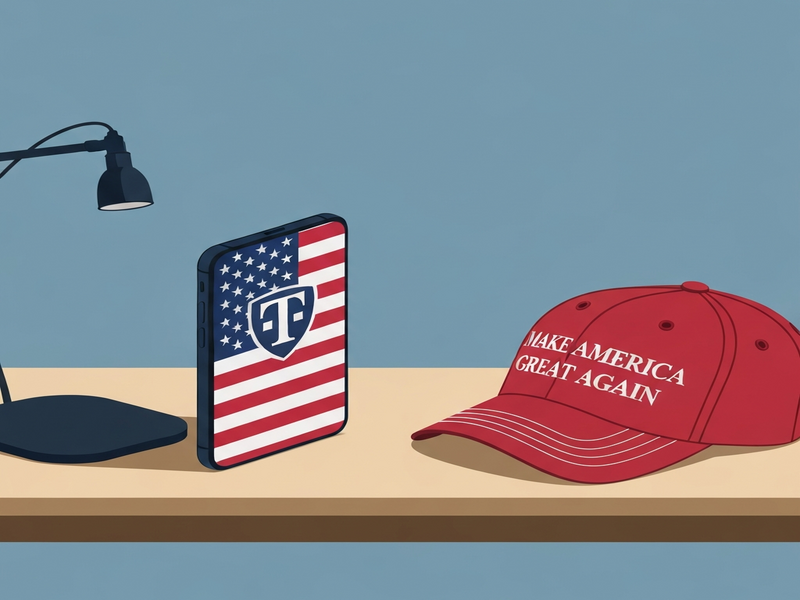
Why the Trump Mobile T1 phone matters to tech‑savvy readers
When a smartphone linked to a former president surfaces in FCC records, it instantly becomes a flashpoint for both gadget enthusiasts and political observers. The Trump Mobile T1 phone is more than a novelty; it represents a convergence of branding, regulatory compliance, and the growing trend of niche carriers targeting specific audiences. In this article we unpack the phone’s technical claims, the FCC certification process, the public’s reaction, and what the episode reveals about the broader political tech landscape.
Summary of Trump Mobile T1 phone details
According to the FCC’s public database, the device listed under the trade name “T1” was tested in late 2025 and granted certification in January 2026. While the filing omits visual assets, it does disclose a handful of technical parameters:
- Bluetooth 5.3 support
- Wi‑Fi 6E compatibility
- Standard LTE bands for U.S. carriers
- Compliance with SAR limits for radiofrequency exposure
The documentation does not reference “Trump Mobile” or “Liberty Mobile,” the brand that has publicly claimed ownership of the phone. Instead, the filing lists Smart Gadgets Global, LLC as the applicant, a company previously linked to the same executives who promoted the Trump phone.
Understanding the FCC certification process
The Federal Communications Commission (FCC) requires every wireless device sold in the United States to undergo rigorous testing for radiofrequency emissions, interoperability, and safety. Certification is a prerequisite for any carrier to market a handset, but it does not guarantee that the device will ever reach retail shelves.
Key steps in the certification pipeline
- Design submission: Manufacturers submit schematics, component lists, and a prototype to an FCC‑approved test lab.
- Laboratory testing: Independent labs (e.g., Eurofins) evaluate the device against Part 15 and Part 22 rules.
- Document review: The FCC reviews test reports, redacts sensitive data, and issues an ID number.
- Public filing: The certification record becomes searchable on the FCC website, where enthusiasts can verify compliance.
For the T1 phone, the public record shows a test lab reference to Eurofins, confirming that the device passed the required emissions tests. However, the filing’s redactions hide the exact model number and any branding, which is typical for commercial submissions.
Public reaction and political context
Since the first rumors of a “Trump phone” emerged in 2024, the tech community has been divided. Some view it as a marketing gimmick, while others see it as a legitimate attempt to create a carrier‑specific ecosystem for a politically aligned audience.
“If the phone ever ships, it could become a rallying point for a segment of voters who want a device that reflects their values,” wrote a commentator on X (formerly Twitter) in February 2026.
Social media chatter spiked after the FCC filing was discovered, with hashtags like #TrumpPhone and #T1Launch trending briefly. Critics argue that the phone could be used to push partisan messaging through pre‑installed apps, while supporters claim it offers a “choice” in a market dominated by a few major brands.
Implications for the tech and political landscape
The emergence of a politically branded smartphone raises several strategic questions for both the industry and regulators:
- Brand differentiation: Can a political affiliation serve as a sustainable USP in a crowded handset market?
- Regulatory scrutiny: Will the FCC or FTC impose additional oversight on devices that may embed political content?
- Supply‑chain transparency: The involvement of overseas manufacturers (e.g., Shenzhen‑based Smart Gadgets Ltd.) highlights the need for clear provenance.
- Consumer data privacy: A device tied to a political brand may collect data that could be leveraged for targeted messaging.
How UBOS can help innovators navigate similar regulatory hurdles
For startups and SMBs looking to launch niche hardware or AI‑driven services, the UBOS platform overview offers a low‑code environment that streamlines product development, compliance documentation, and rapid deployment.
Key UBOS capabilities that align with the challenges faced by the Trump Mobile team include:
- Workflow automation studio: Automate the generation of FCC‑ready test reports and maintain version‑controlled documentation. (Workflow automation studio)
- Web app editor on UBOS: Build companion web portals for device management without writing extensive code. (Web app editor on UBOS)
- AI marketing agents: Deploy AI‑powered campaigns that respect user privacy while delivering personalized content. (AI marketing agents)
- UBOS pricing plans: Flexible pricing that scales from startups to enterprise deployments. (UBOS pricing plans)
Moreover, the UBOS templates for quick start library includes ready‑made solutions such as the AI SEO Analyzer and the AI Article Copywriter, which can accelerate content creation for product launches, press releases, and compliance documentation.
For companies targeting niche markets—whether political, cultural, or industry‑specific—the UBOS partner program offers co‑marketing opportunities and technical support, ensuring that regulatory milestones like FCC certification are met without sacrificing speed to market.
Relevant UBOS resources for hardware innovators
| Resource | Benefit |
|---|---|
| Enterprise AI platform by UBOS | Scalable AI pipelines for device analytics and compliance monitoring. |
| UBOS solutions for SMBs | Cost‑effective tools for small teams building custom hardware. |
| UBOS for startups | Accelerated prototyping and go‑to‑market strategies. |
Conclusion: What’s next for the Trump Mobile T1 phone?
The FCC certification confirms that a device named “T1” has cleared a major regulatory hurdle, but the path from certification to consumer shelves is still uncertain. Stakeholders should watch for:
- Official branding announcements from Trump Mobile or Liberty Mobile.
- Supply‑chain updates from Smart Gadgets Global and its Shenzhen partners.
- Potential regulatory commentary from the FCC regarding political branding on consumer devices.
For tech‑savvy readers who want to stay ahead of similar developments, the About UBOS page offers insight into how our AI‑driven platform can help you navigate compliance, accelerate development, and launch products that stand out—whether they’re political, cultural, or purely technological.
Ready to turn your next hardware idea into a market‑ready product? Explore the UBOS portfolio examples for inspiration, and start building today with our UBOS homepage.
For the original reporting on the FCC filing, see the original Verge article.
Andrii Bidochko
CTO UBOS
Andrii Bidochko is an AI entrepreneur and researcher focused on AI agents, reinforcement learning, and autonomous systems. He writes about the technologies shaping the future of machine intelligence, from frontier models and agent architectures to real-world AI applications.