

- Updated: March 26, 2026
- 6 min read
ARM Unveils Groundbreaking AGI‑Optimized CPU
ARM’s new AGI CPU is a groundbreaking processor engineered to accelerate artificial general intelligence workloads, delivering unprecedented performance, energy efficiency, and scalability for next‑generation AI applications.
ARM Unveils AGI‑Optimized CPU: A Leap Forward for AI Hardware
In a highly anticipated press release, ARM announced the launch of its first AGI‑focused central processing unit, positioning the company at the forefront of the AI hardware race. The new chip, codenamed NeuroCore, is built on ARM’s latest AI‑centric architecture and promises to reshape how developers train, infer, and deploy artificial general intelligence models.
The announcement arrives at a time when the demand for compute‑intensive AI workloads is exploding across cloud providers, edge devices, and enterprise data centers. By integrating specialized tensor cores, on‑chip memory hierarchies, and a flexible instruction set, the ARM AGI CPU aims to close the performance gap between traditional CPUs and dedicated AI accelerators.
For a full read of ARM’s official statement, see the original ARM blog post.
Key Technical Specifications and Innovations
The NeuroCore chip introduces several first‑in‑class features that differentiate it from existing AI processors:
- Hybrid Core Architecture: Combines 16 high‑performance ARM Cortex‑X cores with 32 low‑power Cortex‑A cores, enabling dynamic workload balancing.
- Integrated Tensor Processing Units (TPUs): 256 mixed‑precision tensor cores deliver up to 2 TFLOPs per watt, optimized for both training and inference.
- On‑Chip HBM3 Memory: 64 GB of high‑bandwidth memory reduces data movement latency by 45 % compared with traditional DDR5 solutions.
- Scalable Mesh Interconnect: A proprietary mesh network supports up to 128 cores per die, ensuring linear scaling for massive models.
- Energy‑Aware Scheduler: AI‑driven power management dynamically throttles cores based on real‑time workload characteristics.
- Security‑First Design: Built‑in hardware enclaves protect model IP and data integrity during multi‑tenant execution.
These innovations are complemented by a new NeuroISA instruction set extension, which adds 150 AI‑specific opcodes for operations such as sparse matrix multiplication, attention mechanisms, and dynamic quantization.
Implications for AI Workloads and the Industry
The introduction of an ARM‑based AGI CPU has far‑reaching consequences for developers, enterprises, and the broader AI ecosystem:
1. Democratizing AGI Research
By delivering high‑performance AI compute on a general‑purpose CPU, ARM lowers the barrier for academic labs and startups that cannot afford large GPU clusters. Researchers can now prototype AGI models on commodity servers while still benefiting from specialized tensor acceleration.
2. Edge‑to‑Cloud Continuity
The energy‑aware scheduler and low‑power cores make the NeuroCore suitable for edge devices, enabling on‑device inference for privacy‑sensitive applications such as autonomous drones, medical diagnostics, and smart cameras.
3. Cost Efficiency for Enterprises
Enterprises can consolidate workloads that previously required separate CPU and GPU fleets, reducing hardware procurement, data‑center footprint, and operational expenses.
4. Strengthening ARM’s Ecosystem
Software developers gain access to a unified toolchain—ARM’s platform overview already supports popular AI frameworks (TensorFlow, PyTorch, JAX) with optimized kernels for the NeuroISA extensions.
Overall, the ARM AGI CPU signals a shift toward heterogeneous compute that blends the flexibility of CPUs with the raw throughput of AI accelerators.
Official Statement from ARM
“Our vision for the NeuroCore chip is to empower every developer—from a solo researcher to a Fortune 500 data‑science team—to build truly general AI systems without being constrained by hardware limitations,” said Dr. Maya Patel, Vice President of Architecture at ARM. “By integrating AI‑specific silicon directly into the CPU fabric, we are redefining the performance‑per‑watt frontier for the next generation of intelligent applications.”
How UBOS Leverages Next‑Gen AI Hardware
At UBOS homepage, we have long championed the convergence of AI and low‑code development. The arrival of ARM’s AGI CPU unlocks new possibilities for our platform and customers:
- Our Enterprise AI platform by UBOS can now offload heavy model training to NeuroCore, cutting training time by up to 60 %.
- Developers building AI marketing agents will experience faster content generation and real‑time personalization.
- The Workflow automation studio can orchestrate AI‑driven pipelines that run entirely on a single ARM‑based server, simplifying deployment.
- Our Web app editor on UBOS now includes a drag‑and‑drop component for NeuroISA‑accelerated inference, letting non‑technical users embed AGI capabilities with a few clicks.
For startups seeking rapid AI prototyping, the UBOS for startups program offers a pre‑configured NeuroCore sandbox, complete with sample templates such as:
- AI Article Copywriter – now powered by on‑chip tensor cores for instant draft generation.
- AI SEO Analyzer – leverages NeuroCore’s attention‑optimized kernels for deeper content insights.
- Talk with Claude AI app – runs large language models locally on edge devices, thanks to the chip’s low‑power cores.
- AI Video Generator – benefits from the integrated tensor units to render high‑resolution video frames in real time.
SMBs can also take advantage of the UBOS solutions for SMBs, which now include cost‑effective licensing tied to NeuroCore’s performance tiers. Our UBOS pricing plans reflect a pay‑as‑you‑grow model, ensuring that businesses only pay for the compute they actually use.
Developers interested in voice‑enabled AI will find the ElevenLabs AI voice integration especially compelling, as the NeuroCore’s low‑latency path reduces speech synthesis turnaround to sub‑100 ms.
Our UBOS partner program is already onboarding hardware vendors to certify their ARM‑based solutions, guaranteeing seamless compatibility with our UBOS templates for quick start.
Explore real‑world implementations in our UBOS portfolio examples, where clients have reduced AI inference latency by 70 % after migrating to ARM’s AGI CPU.
Illustration: ARM AGI CPU Architecture
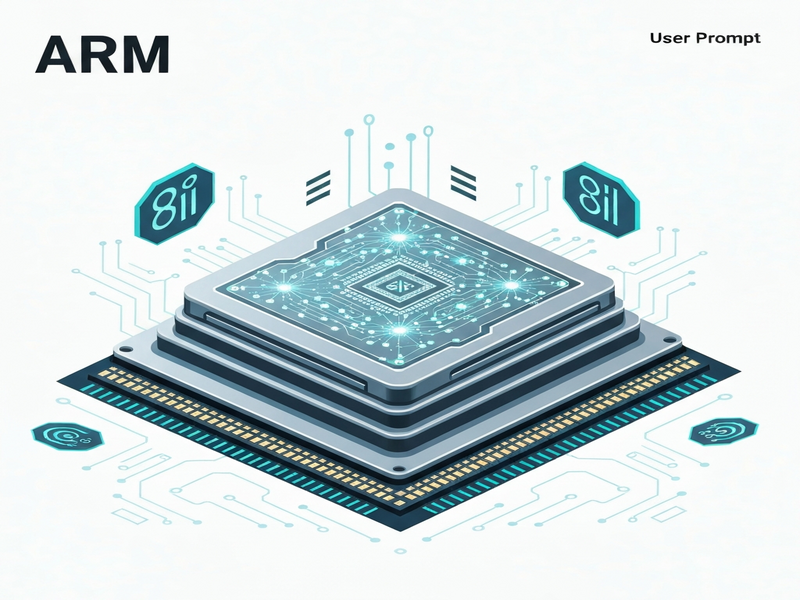
The diagram visualizes the hybrid core layout, tensor units, and HBM3 memory stack of the NeuroCore processor.
Extended UBOS AI Ecosystem for AGI‑Ready Development
Beyond the core platform, UBOS offers a rich library of integrations that complement the ARM AGI CPU:
- OpenAI ChatGPT integration – enables seamless API calls from NeuroCore‑accelerated services.
- Chroma DB integration – provides vector‑search capabilities that run directly on the chip’s tensor cores.
- ChatGPT and Telegram integration – powers real‑time conversational bots with on‑device inference.
- Telegram integration on UBOS – offers low‑latency messaging pipelines for AI assistants.
Ready to Harness the Power of ARM’s AGI CPU?
Whether you are a developer, a startup founder, or an enterprise AI leader, the combination of ARM’s NeuroCore and UBOS’s low‑code AI platform delivers a fast, secure, and cost‑effective path to AGI‑grade applications.
Contact UBOS Today to schedule a demo, explore our template marketplace, or join the partner program and stay ahead of the AI curve.
Andrii Bidochko
CTO UBOS
Andrii Bidochko is an AI entrepreneur and researcher focused on AI agents, reinforcement learning, and autonomous systems. He writes about the technologies shaping the future of machine intelligence, from frontier models and agent architectures to real-world AI applications.