

- Updated: March 26, 2026
- 5 min read
Meta Ordered to Pay $375 Million for Child‑Safety Violations After Jury Finds Unfair Practices
Meta has been ordered by a New Mexico jury to pay a $375 million fine for misleading users about the safety of its platforms for children.
Why the $375 million Meta court order matters
When a state court slaps a tech giant with a six‑figure penalty, the ripple effects reach far beyond the balance sheet. The Meta court order not only signals a new era of social media regulation but also forces the industry to confront a long‑standing blind spot: online safety for children. For tech‑savvy professionals tracking the evolving legal landscape, this verdict is a watershed moment that could reshape product roadmaps, advertising strategies, and compliance budgets.
Read the original BBC coverage for full details: Meta told to pay $375m for misleading users over child safety.
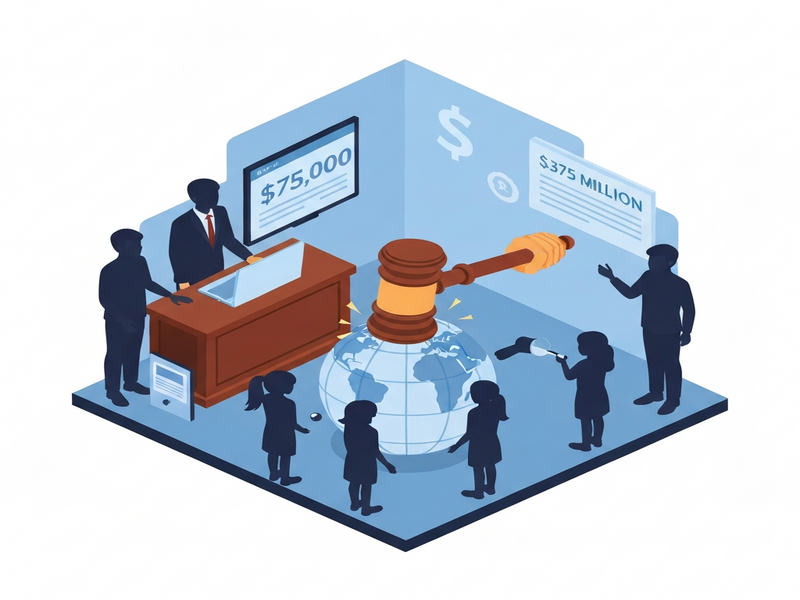
Court ruling in a nutshell
- The New Mexico jury found Meta liable under the Unfair Practices Act for deceptive claims about child safety on Facebook, Instagram, and WhatsApp.
- Each violation carried a maximum civil penalty of $5,000; thousands of violations added up to a total of $375 million.
- Evidence included internal documents, whistle‑blower testimony, and research showing that a significant share of under‑18 users were exposed to sexualized content.
- Meta has announced its intention to appeal, maintaining that it “works hard to keep people safe” on its platforms.
What the jury heard: violations and proof
The trial, which lasted seven weeks, painted a stark picture of systemic neglect:
- Algorithmic steering: Internal research revealed that Meta’s recommendation engine routinely pushed sexualized or exploitative material to teenage accounts.
- Whistle‑blower revelations: Former engineering leader Arturo Béjar testified that his own daughter was propositioned on Instagram, and that experiments showed under‑age users were served explicit content at alarming rates.
- Statistical evidence: Prosecutors presented data indicating that in a single week, 16 % of Instagram users reported unwanted nudity or sexual activity.
- Policy gaps: Despite launching “Teen Accounts” and parental alerts in 2024, the jury concluded that Meta’s safeguards were insufficient and that the company continued to mislead the public about their effectiveness.
These findings underscore why the Unfair Practices Act was invoked: Meta’s public statements painted a safer picture than the internal reality.
Implications for Meta, its users, and the broader tech ecosystem
Financial and operational impact
The $375 million fine will likely be absorbed into Meta’s legal reserve, but the real cost may be reputational. Advertisers could demand stricter brand‑safety guarantees, and investors may push for accelerated safety‑feature rollouts.
Regulatory ripple effect
State attorneys general are watching closely. The verdict sets a precedent that could inspire similar lawsuits in California, Texas, and beyond, accelerating the push for a federal online safety framework.
User‑experience changes
Expect tighter content filters, more transparent age‑verification mechanisms, and expanded parental‑control dashboards. Meta may also accelerate the rollout of AI‑driven moderation tools to reduce exposure to harmful material.
Industry‑wide lessons
Other platforms—TikTok, Snap, YouTube—will likely revisit their own safety claims. The verdict reinforces that “safety” can no longer be a marketing tagline; it must be demonstrable, auditable, and compliant with state statutes.
Expert perspective
“The Meta judgment is a clear signal that courts will hold platforms accountable for the promises they make to parents and regulators. Companies must move from reactive moderation to proactive, AI‑powered safety architectures,” says Dr. Lena Ortiz, senior fellow at the Center for Digital Policy.
Dr. Ortiz’s assessment aligns with the growing consensus that AI‑driven safety solutions—like those showcased on the Enterprise AI platform by UBOS—are essential for scaling moderation without sacrificing user experience.
AI tools that can prevent the next $375 million fine
Modern AI suites offer a toolbox for building safer social experiences:
- AI SEO Analyzer – ensures that safety‑related content is discoverable and correctly labeled.
- AI marketing agents – can automatically audit ad copy for compliance with child‑protection policies.
- Workflow automation studio – streamlines the escalation of flagged content to human reviewers.
- Web app editor on UBOS – lets developers prototype new parental‑control dashboards without writing extensive code.
By integrating these capabilities, platforms can shift from a “react‑only” stance to a proactive safety posture that satisfies both regulators and users.
What you can do next
Whether you’re a product manager, compliance officer, or a concerned parent, staying ahead of regulatory trends is crucial. Here are three immediate steps:
- Audit your platform’s safety claims against actual data—use tools like the AI SEO Analyzer to surface gaps.
- Implement AI‑driven moderation pipelines with the Workflow automation studio to reduce manual review bottlenecks.
- Explore partnership opportunities through the UBOS partner program to leverage cutting‑edge safety technology.
For a deeper dive into how AI can safeguard your digital products, visit the UBOS homepage and explore the UBOS platform overview. The Meta court order is a stark reminder: safety is no longer optional—it’s a legal imperative.
Stay informed, stay compliant, and stay ahead of the curve.
Andrii Bidochko
CTO UBOS
Andrii Bidochko is an AI entrepreneur and researcher focused on AI agents, reinforcement learning, and autonomous systems. He writes about the technologies shaping the future of machine intelligence, from frontier models and agent architectures to real-world AI applications.