

- Updated: March 26, 2026
- 5 min read
OpenAI Sora App Shutdown Highlights Shifts in AI Video Generation
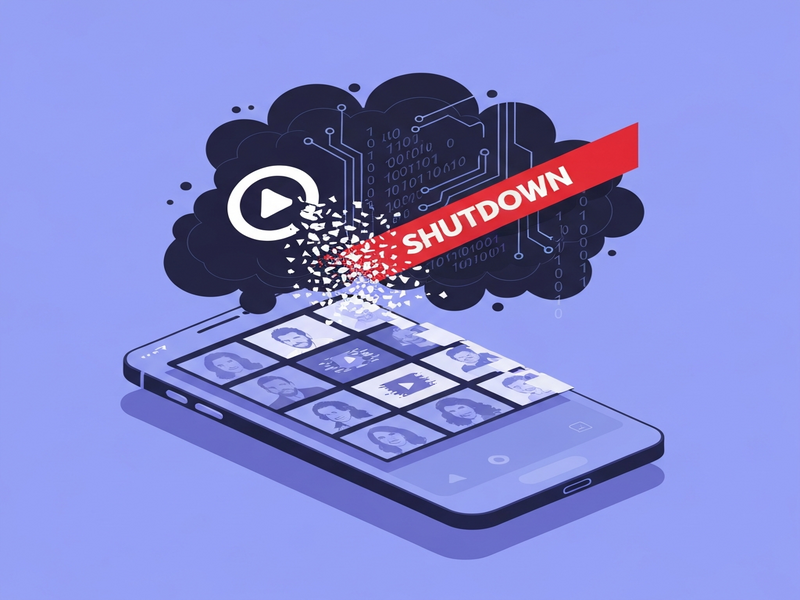
Answer: OpenAI has officially discontinued Sora, its TikTok‑style AI video and audio generation app, just six months after launch, citing a sharp drop in user adoption, mounting legal risks, and the heavy computational load of its underlying Sora 2 model.
Sora’s Core Capabilities: Video & Audio Generation
Sora was marketed as an “AI‑first” social feed where users could create short‑form vertical videos without any manual editing. The app leveraged the Sora 2 multimodal model, which combined state‑of‑the‑art video synthesis with high‑fidelity audio generation.
AI‑Powered Video Creation
The video engine could transform a simple text prompt into a 15‑second clip, complete with realistic motion, lighting, and background details. Users could also upload a single image and watch the model animate it, a feature that quickly became a viral sensation on social platforms.
Audio Synthesis & “Characters” Feature
Originally called “cameos,” the feature let users scan their faces and generate lifelike deep‑fake avatars that spoke in the user’s voice. After a trademark dispute with the existing Cameo service, OpenAI renamed it “characters.” The audio synthesis could mimic a wide range of vocal tones, enabling creators to add narration or dialogue without recording.
Both video and audio pipelines ran on high‑end GPUs in OpenAI’s data centers, consuming significant compute resources for each generation request.
User Reception & Controversy Highlights
While the technology dazzled early adopters, the community quickly split over ethical and legal concerns.
- Deep‑fake videos of public figures (e.g., Sam Altman, Martin Luther King Jr., Robin Williams) circulated despite OpenAI’s guardrails, prompting backlash from families and advocacy groups.
- Copyright‑infringing content featuring Disney, Marvel, and Nintendo characters emerged, raising the specter of massive litigation.
- Viral “creepy” clips—such as a hyper‑realistic Altman walking through a pig farm—sparked media coverage and fueled the perception that Sora was a “creepy app on your phone.”
- Despite a peak of 3.33 million downloads in November 2025, the user base fell to 1.13 million by February 2026, a steep decline compared with ChatGPT’s 900 million weekly active users.
These issues were amplified by the TechCrunch report, which documented the rapid rise and fall of the platform.
Why OpenAI Pulled the Plug
OpenAI never disclosed a single reason for the shutdown, but data points suggest a convergence of three pressures:
1. Declining Adoption & Revenue
Appfigures estimates Sora generated roughly $2.1 million in in‑app purchases over its lifespan—insufficient to offset the massive GPU costs required for real‑time video rendering.
2. Legal & Ethical Risks
The proliferation of unauthorized deep‑fakes and copyrighted character clips exposed OpenAI to potential lawsuits from families, studios, and trademark owners. The failed $1 billion Disney licensing deal underscored the fragility of such partnerships.
3. Compute Overhead
Each 15‑second video demanded several seconds of GPU time, translating into high operational expenses. With a shrinking user base, the cost‑to‑revenue ratio became untenable.
Broader Implications for the Generative AI Landscape
The Sora shutdown sends a clear signal to the AI community: powerful generative models are only viable when paired with robust moderation, sustainable economics, and clear IP frameworks.
Developers looking to embed video generation into products can still access the OpenAI ChatGPT integration on the UBOS platform overview, which offers the Sora 2 model behind a paywall, but with stricter usage policies.
For enterprises, the Enterprise AI platform by UBOS provides a managed environment that balances compute cost with compliance, making it a safer alternative for large‑scale deployments.
What This Means for Developers and Marketers
Marketers who were excited about “instant video ads” must now pivot to more controlled solutions. UBOS offers several ready‑to‑use templates that can accelerate content creation without the legal exposure of open‑ended deep‑fakes.
- AI Video Generator – a template that produces brand‑compliant videos from scripts.
- AI SEO Analyzer – ensures your video metadata is optimized for search.
- AI Image Generator – creates thumbnail assets that respect copyright.
- AI Article Copywriter – pairs written content with generated visuals for holistic campaigns.
- AI Chatbot template – adds conversational support to landing pages without video.
These tools integrate seamlessly with the Web app editor on UBOS and the Workflow automation studio, allowing you to chain video generation, SEO analysis, and publishing in a single automated flow.
For startups, the UBOS for startups program offers discounted access to these templates, while SMBs can explore the UBOS solutions for SMBs to keep costs predictable.
Call to Action: Stay Ahead with Responsible AI
If you’re ready to harness generative AI without the pitfalls that plagued Sora, explore the AI news hub for the latest compliance updates, and dive into the generative AI resource center for best‑practice guides.
Visit the UBOS homepage to learn how our platform can power your next AI‑driven campaign, and consider joining the UBOS partner program to co‑create innovative solutions.
Whether you’re a marketer, developer, or business leader, the future of AI video lies in responsible, scalable, and legally sound implementations. Leverage UBOS’s suite of tools, stay informed through our About UBOS page, and keep your brand ahead of the curve.
Further Reading & Resources
- UBOS pricing plans – transparent pricing for AI services.
- UBOS templates for quick start – jump‑start your projects.
- UBOS portfolio examples – see real‑world AI deployments.
- AI marketing agents – automate copy, targeting, and analytics.
Andrii Bidochko
CTO UBOS
Andrii Bidochko is an AI entrepreneur and researcher focused on AI agents, reinforcement learning, and autonomous systems. He writes about the technologies shaping the future of machine intelligence, from frontier models and agent architectures to real-world AI applications.