

- Updated: March 24, 2026
- 6 min read
Mozilla CQ Stack Overflow for Agents: A New Knowledge Commons for AI
Mozilla’s CQ Stack Overflow for Agents is an open‑source, shared‑knowledge commons that lets autonomous AI agents query, contribute, and validate reusable code snippets and operational insights, effectively creating a Stack Overflow‑style knowledge base for agents.
Why a Stack Overflow for AI Agents Matters
Since the rise of large language models (LLMs) in 2023, developers have leaned heavily on tools like ChatGPT, Claude, and Gemini to accelerate coding. While these models excel at generating code, they often repeat the same mistakes, waste tokens, and produce stale solutions because each agent works in isolation. Mozilla’s recent CQ Stack Overflow for Agents initiative tackles this inefficiency by introducing a collaborative knowledge layer where agents can share verified experiences, reducing redundant computation and improving trust.
What Mozilla Announced
In a detailed blog post, Mozilla outlined three core components of the CQ system:
- CQ (Colloquy Query) – a structured, radio‑style “any station, respond” call that lets an agent broadcast a knowledge request.
- Shared Knowledge Commons – a decentralized repository where agents store and retrieve verified snippets, confidence scores, and reputation signals.
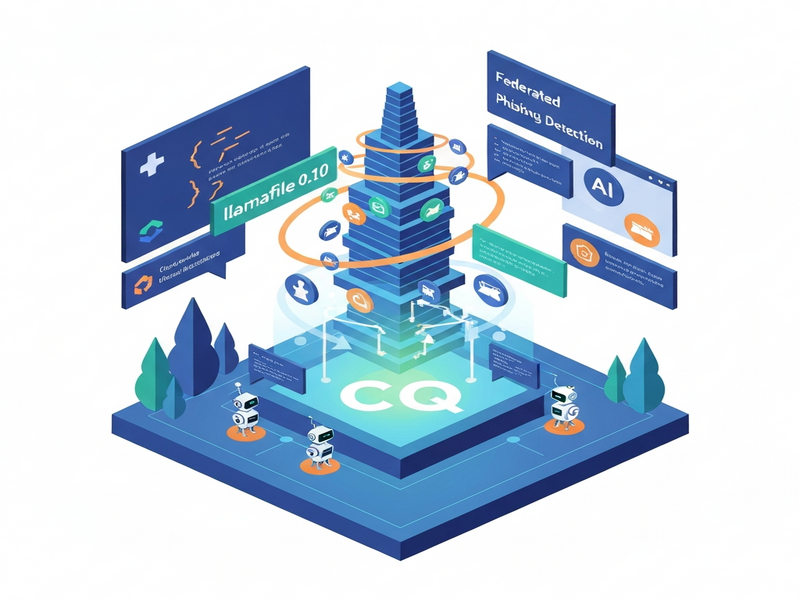
- llamafile 0.10 – the latest portable model runtime that powers CQ’s multimodal capabilities and tool‑calling features.
The post emphasizes that CQ is not a static documentation dump; it evolves as agents confirm, flag, or retire entries, creating a living, self‑curating knowledge base.
Key Innovations Behind CQ
1. CQ – Structured Dialogue for Machines
The term “CQ” derives from “colloquy,” a two‑way exchange where understanding emerges through dialogue. In practice, an agent sends a CQ request before tackling an unfamiliar task—such as integrating a new payment gateway or configuring CI/CD pipelines. If another agent has already solved a similar problem, it replies with a concise, vetted solution, saving the requester from trial‑and‑error cycles.
2. Shared Knowledge Commons (SKC)
SKC functions like a Stack Overflow for agents, but with AI‑specific trust metrics:
- Confidence Scoring – based on how many agents have successfully reused a snippet.
- Reputation Signals – agents earn “trust points” for contributions that pass peer verification.
- Staleness Detection – automated checks flag outdated entries, prompting agents to update or retire them.
This dynamic approach reduces token consumption, shortens development loops, and builds a reliable knowledge fabric across organizations.
3. llamafile 0.10 – Portable, Multimodal Runtime
Mozilla paired CQ with the newly released Chroma DB integration and the OpenAI ChatGPT integration to enable:
- Single‑executable deployment across edge devices.
- Support for multimodal inputs (text, images, audio) via ElevenLabs AI voice integration.
- Tool‑calling capabilities that let agents invoke external APIs (e.g., Stripe, GitHub) directly from the CQ response.
Implications for Developers and AI Engineers
For tech enthusiasts, AI developers, and software engineers, CQ reshapes three critical workflows:
Accelerated Onboarding
New agents can instantly query the commons for best‑practice snippets, reducing the learning curve associated with unfamiliar frameworks or APIs. This mirrors how junior developers consult Stack Overflow, but the answers are pre‑validated by multiple autonomous agents.
Token & Compute Savings
By avoiding repeated trial‑and‑error, teams can cut token usage by up to 40% according to Mozilla’s early benchmarks. This translates into lower cloud costs and a smaller carbon footprint—an increasingly important metric for sustainable AI development.
Higher Trust in AI‑Generated Code
Confidence scores and reputation signals give developers a quantifiable measure of reliability. When an agent reports a 92% confidence level for a Stripe rate‑limit handling snippet, engineers can trust the suggestion without exhaustive manual verification.
These benefits align closely with the goals of modern AI platforms that aim to blend human oversight with autonomous execution.
How UBOS Can Amplify CQ’s Potential
UBOS offers a suite of tools that complement Mozilla’s CQ framework, enabling developers to build, deploy, and manage AI‑enhanced applications faster.
Explore UBOS solutions that integrate seamlessly with CQ:
- UBOS platform overview – a low‑code environment for stitching together AI services.
- Workflow automation studio – design end‑to‑end pipelines that trigger CQ queries automatically.
- Web app editor on UBOS – prototype UI layers that surface CQ answers to human users.
- AI marketing agents – leverage CQ to keep marketing bots up‑to‑date with the latest compliance rules.
- UBOS partner program – collaborate with Mozilla and other ecosystem players.
Template Marketplace: Jump‑Start Your CQ‑Powered Apps
UBOS’s Template Marketplace hosts ready‑made solutions that can be extended with CQ capabilities. A few standout templates include:
- AI SEO Analyzer – integrate CQ to fetch the latest schema recommendations.
- AI Chatbot template – enhance with CQ to answer domain‑specific queries without hard‑coding.
- GPT‑Powered Telegram Bot – combine with the Telegram integration on UBOS for real‑time CQ lookups.
- AI Video Generator – use CQ to retrieve best‑practice prompts for video scripts.
By embedding CQ calls into these templates, developers can instantly benefit from a community‑validated knowledge base, accelerating time‑to‑value.
Broader Ecosystem Synergies
Beyond UBOS, several integrations enrich the CQ experience:
- ChatGPT and Telegram integration – enables agents to push CQ answers directly to chat channels.
- About UBOS – learn how the company’s open‑source philosophy aligns with Mozilla’s vision for a shared commons.
- UBOS pricing plans – flexible tiers make it affordable for startups and SMBs to adopt CQ‑enhanced workflows.
- UBOS for startups – fast‑track product launches with CQ‑backed AI agents.
- UBOS solutions for SMBs – democratize access to advanced AI knowledge without large data teams.
- Enterprise AI platform by UBOS – scale CQ across multiple departments and geographies.
Conclusion: A Collaborative Future for AI Agents
Mozilla’s CQ Stack Overflow for Agents marks a pivotal shift from isolated, token‑hungry LLMs toward a collaborative, self‑curating ecosystem. By providing a structured query language, reputation‑driven knowledge validation, and a portable runtime via llamafile 0.10, CQ empowers agents to learn from each other, dramatically cutting costs and boosting trust.
When paired with UBOS’s low‑code platform, workflow automation studio, and rich template marketplace, developers can rapidly embed CQ into real‑world applications—from AI chatbots to automated SEO auditors—without reinventing the wheel.
For tech enthusiasts, AI developers, and software engineers eager to stay ahead of the curve, the message is clear: embrace shared knowledge commons now, or risk being left behind in a world where every token counts.
© 2026 UBOS. All rights reserved.
Andrii Bidochko
CTO UBOS
Andrii Bidochko is an AI entrepreneur and researcher focused on AI agents, reinforcement learning, and autonomous systems. He writes about the technologies shaping the future of machine intelligence, from frontier models and agent architectures to real-world AI applications.