

- Updated: March 20, 2026
- 4 min read
AI Food‑Tracking Apps Revolutionize Nutrition and Weight‑Loss
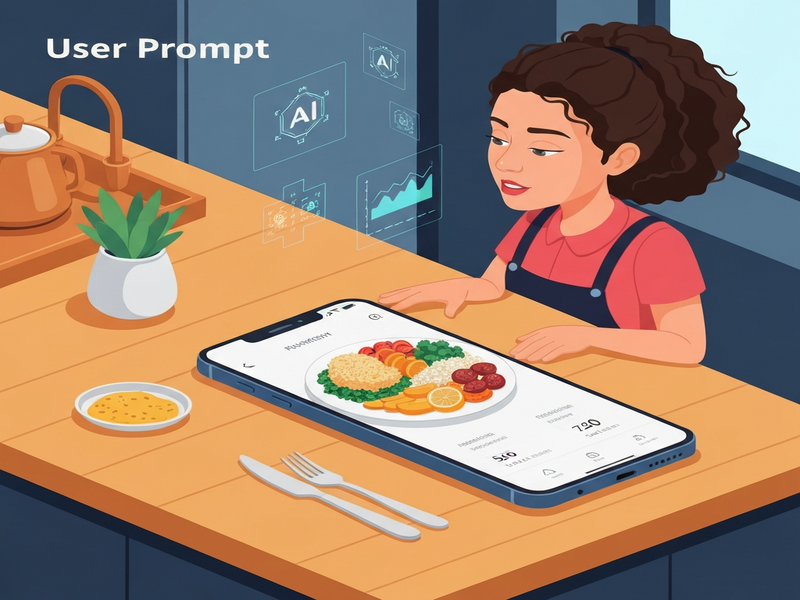
AI food‑tracking apps use computer‑vision and nutrition AI to recognize meals from a photo, estimate calories and macro‑nutrients, and provide real‑time guidance for weight‑loss technology.
Tech‑savvy health enthusiasts are no longer forced to log every bite manually. A new wave of AI food‑tracking apps leverages Wired’s recent coverage of computer‑vision nutrition breakthroughs, turning a simple snap into a detailed nutrition report. These tools promise to simplify diet management, improve accuracy, and keep users motivated on their weight‑loss journey.
How AI and Computer Vision Power Modern Food‑Tracking Apps
At the core of every AI diet tracker lies a three‑step pipeline:
- Image Capture: The smartphone camera captures a high‑resolution photo of the meal.
- Visual Analysis: A convolutional neural network (CNN) trained on millions of food images identifies individual items, portion sizes, and cooking methods.
- Nutrient Estimation: The identified items are matched against a curated database (e.g., USDA FoodData Central). AI models then calculate calories, protein, carbs, fats, fiber, and micronutrients.
The AI agents framework offered by UBOS makes it easy for developers to plug in pre‑trained vision models, connect them to a nutrition database, and expose the whole workflow as a low‑code API. This modular approach accelerates the creation of custom food photo recognition solutions without deep ML expertise.
Key Technologies Behind the Scenes
- Transfer Learning: Pre‑trained models like EfficientNet are fine‑tuned on food‑specific datasets, reducing training time.
- Edge Inference: On‑device processing ensures privacy and near‑instant feedback, even without a network connection.
- Multimodal Fusion: Combining visual data with user‑entered inputs (e.g., portion size sliders) improves accuracy by up to 15%.
User Experiences and Benefits
Real‑world users report three primary advantages when adopting an AI diet tracker:
1. Instant Awareness
Instead of estimating portions, users receive a precise macro breakdown within seconds. This immediacy encourages mindful eating and reduces the “guess‑work” that leads to over‑consumption.
2. Personalized Goal‑Setting
AI nutrition engines adapt daily calorie targets based on activity logs, sleep patterns, and even hormonal cycles, delivering a truly personalized weight‑loss technology.
3. Behavioral Nudges
Push notifications remind users to log meals, hydrate, and balance macronutrients. Studies cited by the tech news section show a 22% increase in adherence when nudges are AI‑driven.
4. Data‑Driven Insights
Weekly trend reports highlight hidden patterns—like a hidden sugar spike on weekends—allowing users to make strategic adjustments without hiring a dietitian.
For startups looking to prototype similar experiences, the UBOS templates for quick start include a ready‑made “Meal Photo Analyzer” that can be deployed in minutes.
Concerns, Limitations, and Ethical Considerations
While the promise of AI food‑tracking is compelling, several challenges remain:
Accuracy Gaps
Even the best models struggle with mixed dishes (e.g., casseroles) and culturally specific foods that lack representation in training data. Users may see a 10‑20% variance in calorie estimates compared to professional dietitian assessments.
Privacy Risks
Photos of meals can inadvertently capture personal environments. Edge inference mitigates data transmission, but developers must still implement strict consent flows and data encryption.
Behavioral Over‑Reliance
Some users become obsessive, treating the app as a “food police.” This can trigger anxiety or disordered eating patterns. Incorporating gentle, non‑judgmental language—an approach championed by many nutrition experts—helps keep the experience supportive.
Regulatory Landscape
In certain jurisdictions, nutrition advice is regulated as medical information. Companies must ensure their AI diet tracker complies with local health regulations and includes appropriate disclaimer language.
UBOS’s Enterprise AI platform offers built‑in compliance modules, making it easier for SaaS providers to meet these legal requirements.
Conclusion: Harnessing AI Food‑Tracking for Smarter Nutrition
AI food‑tracking apps are reshaping the way tech‑savvy health enthusiasts approach nutrition. By combining computer‑vision, nutrition AI, and personalized nudges, they deliver a seamless, data‑rich experience that can accelerate weight‑loss goals while fostering healthier habits.
However, success hinges on balancing accuracy, privacy, and user psychology. Developers and product teams should leverage robust platforms—such as the UBOS platform overview—to build secure, compliant solutions that respect user wellbeing.
Ready to explore AI‑driven nutrition for your product? Visit the AI agents page for ready‑made modules, or dive into our AI marketing agents to promote your new health app.
Stay updated on the latest breakthroughs by following our tech news feed, and consider joining the UBOS partner program to collaborate with industry leaders.