

- Updated: March 19, 2026
- 5 min read
Fitbit AI Health Coach Can Access Medical Records – What It Means for Users
Fitbit’s new AI health coach can now read your medical records, delivering personalized wellness advice while safeguarding your privacy.
Fitbit AI Health Coach: A Game‑Changing Upgrade
Google’s recent rollout gives US Fitbit users the ability to link their electronic medical records directly to the Fitbit AI health coach. By combining wearable data—heart rate, sleep patterns, activity levels—with lab results, medication lists, and visit histories, the coach can generate “safer, more relevant and more personalized” recommendations. This move places Fitbit alongside rivals such as Amazon, OpenAI, and Microsoft, all of which are betting that consumers will trade sensitive health data for hyper‑personalized guidance.
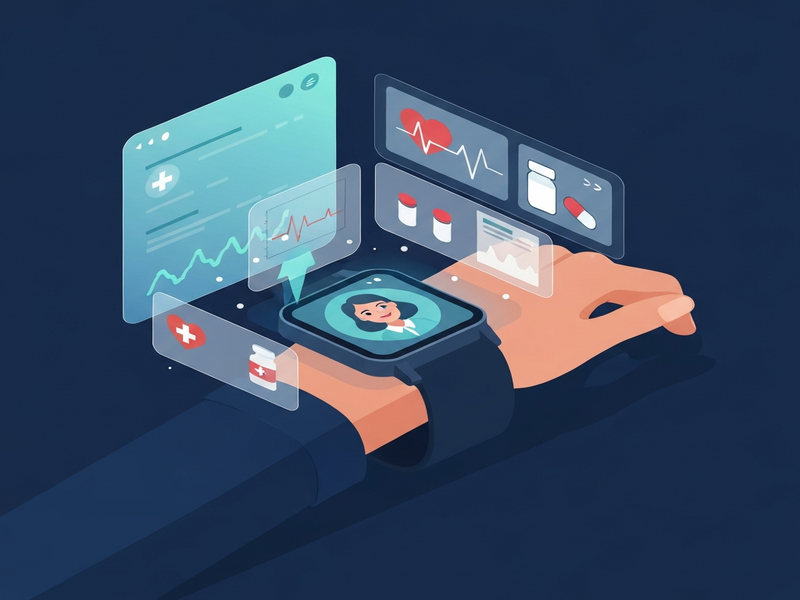
Overview of Fitbit’s AI Health Coach Feature
The AI health coach is powered by Google’s Gemini model, which has been fine‑tuned for health‑focused conversations. In its preview phase, the coach can answer natural‑language queries such as “How can I improve my cholesterol?” and then pull the latest cholesterol labs from the linked medical record, highlight trends, and suggest lifestyle tweaks that align with the user’s wearable‑derived activity data.
Key capabilities include:
- Real‑time synthesis of wearable metrics and clinical data.
- Context‑aware suggestions for nutrition, exercise, and sleep.
- Secure sharing of AI‑generated summaries via QR code or link.
- Automatic updates as new lab results or prescriptions are added.
For developers and health‑tech innovators, the UBOS platform overview offers a low‑code environment to build complementary AI agents that can ingest similar data streams, extending the ecosystem beyond Fitbit.
How It Reads Medical Records and Privacy Safeguards
Fitbit leverages a secure OAuth‑based connection to major electronic health record (EHR) providers. Users grant explicit permission for the app to read specific data categories—lab results, medication lists, and visit summaries—while retaining full control over what is shared.
Data Types and Integration Flow
The integration follows a three‑step pipeline:
- Authorization: Users authenticate with their health‑system portal, selecting which record types to expose.
- Normalization: Fitbit’s backend maps disparate EHR schemas into a unified health‑profile model.
- AI Consumption: Gemini accesses the normalized profile on demand, generating answers without storing raw records long‑term.
Privacy‑First Design
Google emphasizes that medical data will never be used for advertising. Users can revoke access at any time, and all data transmissions are encrypted end‑to‑end. A dedicated privacy dashboard lets users view, export, or delete their linked records.
These safeguards echo the principles highlighted in the About UBOS page, where data sovereignty and compliance are core tenets of every AI solution.
Regulatory Landscape
Because the coach does not claim to diagnose, treat, or monitor disease, it sidesteps FDA medical‑device classification. Nevertheless, the product must comply with HIPAA in the United States and GDPR in Europe. Google’s disclaimer—“Fitbit is not intended to use your medical records to diagnose, treat, cure, prevent, or monitor any disease or condition”—mirrors the cautious language used by many AI health startups, including those showcased in the Enterprise AI platform by UBOS.
Benefits for Users
By merging clinical data with everyday activity metrics, Fitbit’s AI coach unlocks several tangible advantages:
- Hyper‑personalized guidance: Recommendations reflect both your lab values and real‑world behavior.
- Proactive health monitoring: Early alerts when trends (e.g., rising HbA1c) suggest a need for intervention.
- Streamlined communication: One‑click sharing of AI summaries with doctors or family members via secure links.
- Time savings: No need to manually cross‑reference wearable data with medical records.
- Motivation boost: Seeing concrete, data‑backed progress encourages adherence to wellness plans.
For tech‑savvy health enthusiasts, the AI marketing agents on UBOS demonstrate how similar AI‑driven personalization can be applied to other domains, such as nutrition coaching or mental‑wellness bots.
Future Updates and Industry Implications
Google has hinted at additional capabilities slated for the next 12 months, including:
- Integration with OpenAI ChatGPT integration for multi‑model reasoning.
- Voice‑enabled coaching via the ElevenLabs AI voice integration, allowing hands‑free queries.
- Predictive analytics that forecast risk trajectories based on longitudinal data.
- Expanded support for European EHR standards to comply with GDPR.
These enhancements will likely accelerate the broader trend of “AI‑augmented health ecosystems.” Competitors such as Oura and Woop already offer chatbot‑driven insights, but Fitbit’s massive user base and Google’s AI infrastructure give it a distinct advantage.
From a market perspective, the move underscores the convergence of three megatrends:
- Consumer demand for data‑driven wellness.
- Regulatory clarity around non‑diagnostic AI tools.
- Rapid maturation of large‑language models for domain‑specific tasks.
Startups looking to ride this wave can leverage the UBOS for startups program, which provides access to pre‑built AI pipelines, including the UBOS templates for quick start. For example, the “AI SEO Analyzer” template shows how to ingest structured data and surface actionable insights—exactly the pattern Fitbit is applying to health data.
Meanwhile, the UBOS partner program invites technology providers to co‑create integrations, potentially opening doors for new EHR partners or specialty‑care APIs.
Conclusion & Call to Action
Fitbit’s AI health coach marks a pivotal step toward truly personalized wellness, merging the granularity of clinical records with the immediacy of wearable data. While privacy safeguards and regulatory compliance remain paramount, the potential for proactive, data‑rich guidance is undeniable.
If you’re a health‑conscious tech enthusiast eager to explore AI‑driven wellness, now is the perfect time to experiment with Fitbit’s new feature and consider how similar capabilities could be built on platforms like Web app editor on UBOS or the Workflow automation studio. Dive into the UBOS portfolio examples for inspiration, and explore ready‑made solutions such as the AI Article Copywriter or the AI Video Generator to communicate your health insights effectively.
Stay informed, stay secure, and let AI help you turn data into better health outcomes.
Read the full story on the original Verge article.
Andrii Bidochko
CTO UBOS
Andrii Bidochko is an AI entrepreneur and researcher focused on AI agents, reinforcement learning, and autonomous systems. He writes about the technologies shaping the future of machine intelligence, from frontier models and agent architectures to real-world AI applications.