

- Updated: March 17, 2026
- 5 min read
Samsung Galaxy Z TriFold Discontinued After Three Months – What It Means for Foldable Phones
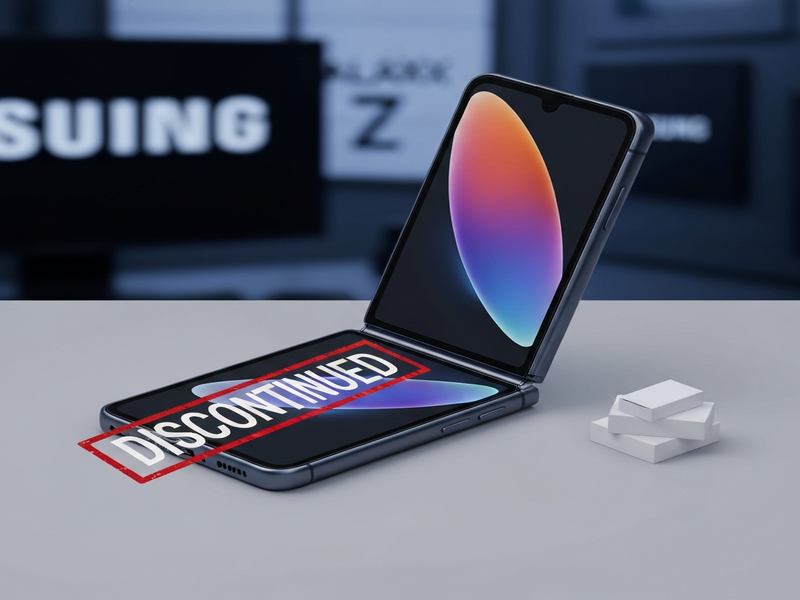
Samsung has officially discontinued the Galaxy Z TriFold, ending production just three months after its launch.
Why the Galaxy Z TriFold’s Exit Matters
Early adopters and foldable‑phone enthusiasts were stunned when Samsung announced that the premium $2,899 Galaxy Z TriFold would vanish from shelves by the end of March 2026. The decision, confirmed by a Bloomberg source, marks the shortest lifecycle for any Samsung flagship in recent memory. For a full rundown of the original report, see the Verge article.
Key Facts at a Glance
- Launch date: 12 December 2025 (South Korea) and 1 January 2026 (U.S.).
- Units produced: roughly 6,000 devices for the Korean market; global production capped at ~12,000.
- Pricing: $2,899 USD, positioning it as Samsung’s most expensive consumer phone.
- Inventory status: “Sold out” on Samsung.com in the U.S.; final domestic restock scheduled for 17 March 2026.
- Future availability: No restocks planned; remaining units will be sold through third‑party marketplaces.
Why Samsung Pulled the Plug
Several intertwined factors forced Samsung’s hand:
- Escalating component costs: The TriFold’s three‑panel OLED stack, reinforced hinge, and ultra‑thin glass drive up bill‑of‑materials (BOM) costs by an estimated 30 % compared with the Galaxy Z Fold 4.
- Limited demand: Early‑adopter surveys indicated a willingness‑to‑pay gap; only 4 % of respondents said the price justified the added screen real‑estate.
- Supply‑chain bottlenecks: Global shortages of high‑precision hinge components slowed production, leading to a “just‑in‑time” inventory that could not be scaled.
- Strategic focus on 2‑panel foldables: Samsung’s roadmap now emphasizes the Z Fold and Z Flip families, where economies of scale are already established.
The decision also reflects a broader industry trend: manufacturers are consolidating around fewer form factors to reduce R&D overhead while still delivering premium experiences. For a deeper dive into Samsung’s foldable strategy, check out the Samsung foldable phones overview on UBOS.
What This Means for Buyers and the Brand
For Early Adopters
Owners who purchased the TriFold will likely see a rapid depreciation in resale value. While the device’s unique three‑panel design remains a collector’s item, the limited supply may drive secondary‑market prices up temporarily, only to stabilize as newer foldables dominate.
For Samsung’s Bottom Line
By cutting losses on a low‑volume, high‑cost product, Samsung can reallocate R&D dollars toward its next‑generation foldables and AI‑driven services. The company’s mobile chief, Won‑Joon Choi, hinted that “larger display ratios” from the TriFold could be integrated into future Z Fold models, preserving some of the engineering investment.
Opportunities for AI‑Powered Solutions
The foldable market’s volatility creates a fertile ground for AI‑enhanced product‑lifecycle management. Platforms like the UBOS platform overview enable brands to predict demand spikes, automate inventory alerts, and personalize marketing campaigns using AI.
For marketers looking to capitalize on the buzz, the AI marketing agents can generate real‑time ad copy, while the UBOS templates for quick start accelerate campaign rollout.
How UBOS Helps Tech Companies Navigate Disruptions
Companies facing rapid product pivots can leverage UBOS’s Workflow automation studio to reconfigure supply‑chain alerts without writing code. The studio’s drag‑and‑drop interface connects ERP data to AI models, instantly flagging cost overruns.
Startups, especially those building next‑gen hardware, benefit from the UBOS for startups program, which offers credit‑free access to the Web app editor on UBOS. This lets engineers prototype companion apps—like a GPT‑Powered Telegram Bot—in days rather than weeks.
For SMBs, the UBOS solutions for SMBs bundle AI‑driven analytics with affordable pricing, as detailed in the UBOS pricing plans. This ensures that even a small retailer can forecast demand for niche devices like foldables.
Enterprises looking for a holistic AI strategy can explore the Enterprise AI platform by UBOS. It integrates with popular LLMs, including OpenAI ChatGPT integration, enabling natural‑language queries over inventory data.
Developers interested in voice‑first experiences can experiment with the ElevenLabs AI voice integration, turning product announcements into engaging audio briefs that can be pushed to smart speakers.
Finally, the UBOS partner program invites system integrators to co‑sell these capabilities, expanding reach into markets that value rapid AI deployment.
AI Templates That Can Accelerate Your Foldable‑Phone Campaigns
UBOS’s marketplace hosts dozens of ready‑made AI apps that can be repurposed for foldable‑phone launches. Here are a few that align with the Samsung scenario:
- AI SEO Analyzer – instantly audit landing pages for new device announcements.
- AI YouTube Comment Analysis tool – gauge consumer sentiment from video reviews.
- AI Article Copywriter – generate blog posts, press releases, and spec sheets at scale.
- AI Image Generator – create custom device mockups without a graphics team.
- AI Email Marketing – craft personalized launch emails that adapt to user preferences.
By plugging these templates into the Workflow automation studio, marketers can orchestrate end‑to‑end campaigns—from content creation to performance reporting—without writing a single line of code.
Bottom Line: The Galaxy Z TriFold’s Short Life Is a Lesson in Market Timing
The abrupt Samsung Galaxy Z TriFold discontinuation underscores how premium pricing, supply‑chain strain, and shifting consumer preferences can quickly render even the most innovative hardware unsustainable. For tech enthusiasts, early adopters, and smartphone buyers, the episode serves as a reminder to weigh long‑term support and ecosystem stability alongside cutting‑edge specs.
For businesses, the story highlights the importance of agile AI‑driven decision‑making. Leveraging platforms like UBOS—with its Chroma DB integration, Telegram integration on UBOS, and ChatGPT and Telegram integration—can provide the real‑time insights needed to pivot before inventory piles up.
Stay tuned to UBOS’s tech news hub for the latest updates on foldable devices, AI innovations, and market trends that shape the future of mobile technology.
Andrii Bidochko
CTO UBOS
Andrii Bidochko is an AI entrepreneur and researcher focused on AI agents, reinforcement learning, and autonomous systems. He writes about the technologies shaping the future of machine intelligence, from frontier models and agent architectures to real-world AI applications.