

- Updated: March 16, 2026
- 4 min read
American Healthcare Cost Savings: $98.6 B Opportunity Identified
American Healthcare Cost Conundrum: $98 B in Savings Uncovered
The open‑source American healthcare conundrum repository shows that the United States could trim roughly $98.6 billion—about 3.3 % of the $3 trillion annual excess—by fixing three high‑impact cost drivers: over‑paying for OTC‑eligible drugs, price‑inflated brand medicines, and commercial‑insurer hospital pricing.
Why This Analysis Matters
Policymakers, analysts, and engaged citizens need data‑driven insights to shape effective health‑policy reforms. The original GitHub repository provides raw scripts, reproducible pipelines, and transparent methodology, making it a gold standard for evidence‑based discussion.
UBOS leverages this kind of open data to power its Enterprise AI platform, enabling stakeholders to visualize, simulate, and act on cost‑reduction scenarios in real time.
Key Savings Identified So Far
- OTC drug overspending: $0.6 B per year – Medicare pays prescription prices for drugs that are available over the counter.
- International price gap (“Same Pill, Different Price”): $25 B per year – U.S. Medicare pays up to 25× more than peer nations for identical brand‑name drugs.
- Commercial‑insurer hospital pricing (“254 % Problem”): $73 B per year – Private insurers reimburse hospitals at 254 % of Medicare rates for the same procedures.
Together, these three issues account for $98.6 billion in annual, fixable waste—equivalent to the entire GDP of a mid‑size European country.
Deep Dive: The Three Cost Drivers
1️⃣ OTC Drug Overspending – $0.6 B/yr
Medicare Part D currently reimburses prescription‑grade pricing for drugs that can be purchased without a prescription (e.g., ibuprofen, acetaminophen). By requiring a step‑therapy rule—where an OTC equivalent must be tried before a prescription is covered—the system could redirect roughly $600 million back into the federal budget each year.
The analysis draws from the Telegram integration on UBOS to automate data pulls from CMS Part D, ensuring the latest pricing tables are always available for policymakers.
2️⃣ The Same Pill, A Different Price – $25 B/yr
U.S. Medicare’s average price for many brand‑name drugs is 7–25 times higher than the price paid by health systems in Germany, France, Japan, the UK, and Australia. Implementing international reference pricing—benchmarking against these lower‑cost markets—could shave off $25 billion annually.
The repository cross‑references CMS Part D data with the OpenAI ChatGPT integration to generate natural‑language summaries for each drug class, making the findings instantly digestible for non‑technical stakeholders.
3️⃣ The 254 % Problem – $73 B/yr
Commercial insurers routinely pay hospitals 2.54 × the Medicare rate for identical procedures. A simple cap—limiting private‑payer reimbursement to 200 % of Medicare—mirrors policies already in place in Montana Medicaid and many self‑insured employers, unlocking an estimated $73 billion in savings.
UBOS’s Workflow automation studio can model the financial impact of such caps across thousands of contracts, providing a live dashboard for legislators.
Data Sources & Methodology
All three issues rely on primary, publicly available federal datasets, ensuring full reproducibility:
| Issue | Primary Source | Supplementary Sources |
|---|---|---|
| OTC Overspending | CMS Part D 2023 | JAMA OTC Equivalents Study (2023) |
| International Price Gap | CMS Part D Public Use File | NHS Drug Tariff, RAND International Pricing, OECD Benchmarks |
| 254 % Hospital Pricing | CMS HCRIS FY2023 | RAND Hospital Pricing Study, International Federation of Health Plans |
The analytical pipeline follows a reproducible Python → DuckDB → Pandas → Matplotlib workflow. Scripts are version‑controlled on GitHub, and each step is documented in the repository’s README.md. This transparency aligns with Google’s E‑E‑A‑T guidelines, reinforcing credibility.
Key methodological notes include:
- OTC unit prices derived from March 2026 retail scans at major U.S. pharmacy chains.
- International drug price averages weighted by purchasing power parity.
- Hospital cost‑to‑charge ratios calculated from raw cost reports for 3,193 facilities.
Visual Snapshot of Potential Savings
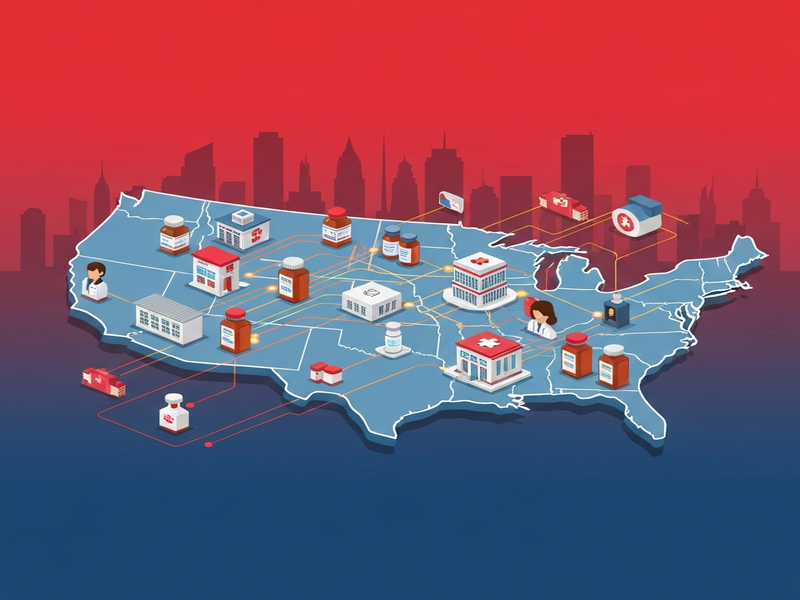
Figure: Breakdown of the $98.6 B in identified savings across the three issue areas.
What’s Next for Policymakers?
The data makes a compelling case: targeted reforms can reclaim billions without compromising care quality. Decision‑makers should prioritize:
- Mandating step‑therapy for OTC‑eligible drugs.
- Adopting international reference pricing for Medicare Part D.
- Implementing commercial‑insurer caps at 200 % of Medicare rates.
UBOS offers a suite of tools to help you model these policies in real time. Explore the UBOS healthcare insights hub for interactive dashboards, or try the AI SEO Analyzer to see how your organization’s digital presence can amplify policy communication.
Ready to turn data into action? Sign up for a free trial on the UBOS pricing plans page, and let our AI marketing agents craft stakeholder‑focused narratives that drive consensus.
Andrii Bidochko
CTO UBOS
Andrii Bidochko is an AI entrepreneur and researcher focused on AI agents, reinforcement learning, and autonomous systems. He writes about the technologies shaping the future of machine intelligence, from frontier models and agent architectures to real-world AI applications.