

- Updated: March 16, 2026
- 5 min read
AI‑Generated Scam Avatars: How Human ‘Face Models’ Fuel Deepfake Fraud
AI‑generated scam avatars are deep‑fake personas that fraudsters use in video calls and online chats to trick victims into cryptocurrency and romance scams.
Scam‑Face Models Are Flooding the Dark Web – A Wired Investigation
A recent Wired report uncovered a hidden labor market where people from around the globe apply to become “AI face models.” These models sit behind a computer, swapping their faces with AI‑generated avatars to conduct high‑stakes fraud. The story shines a light on a rapidly expanding ecosystem that blends human trafficking, deep‑fake technology, and cryptocurrency crime.
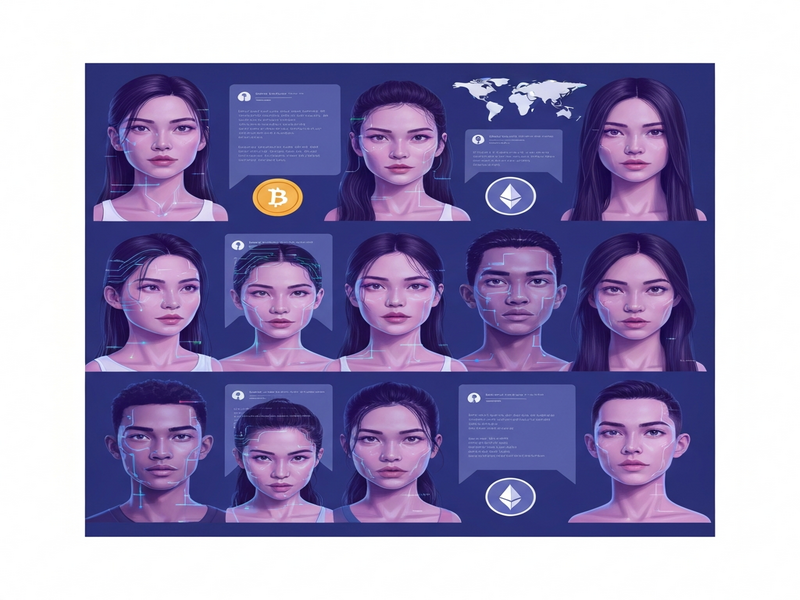
The AI‑Face‑Model Scam Ecosystem Explained
At its core, the ecosystem consists of three interlocking layers:
- Recruiters who post job ads on Telegram and other messaging platforms, promising high salaries for “AI modeling” work.
- Human “models”—often young women—who provide their likeness, voice recordings, and personal data.
- Fraud operators who feed the models’ images into deep‑fake pipelines, creating avatars that can appear in real‑time video calls with unsuspecting victims.
The result is a scalable, low‑cost “human‑in‑the‑loop” operation that can generate thousands of convincing video calls per day, each tailored to a specific target.
Recruitment Tactics and Red Flags
Scam recruiters use a blend of professional‑sounding language and emotional appeals to lure applicants:
- Job ads list “100–150 video calls per day” with promises of up to $7,000 monthly pay.
- Requirements include fluency in English, a “Western accent,” and often Chinese language skills.
- Applicants must submit daily selfies, voice clips, and personal details such as marital and vaccination status.
- Contracts claim “full days off” but actually demand night‑shift hours (10 pm–10 am) in Cambodian compounds.
These ads are posted in Telegram channels that also host other illicit services, making the recruitment process a seamless entry point into the broader fraud network.
Regional Hotspots: Why Southeast Asia?
Southeast Asia, especially Cambodia’s Sihanoukville, has become a magnet for AI‑model scams because:
- Loose regulatory oversight and a high concentration of “scam compounds” that already host human‑trafficking victims.
- Cheap electricity and internet infrastructure that support 24/7 video streaming.
- Proximity to major cryptocurrency markets, allowing rapid conversion of stolen funds.
- Existing networks of recruiters from Turkey, Russia, Ukraine, Belarus, and other countries who funnel talent into the region.
Impact on Victims and the Rise of Crypto Fraud
Deep‑fake avatars dramatically increase the success rate of scams:
“When a victim asks for a video call, the AI‑swapped face looks perfectly real, and the fraudster can build trust in minutes.” – Hieu Minh Ngo, cybercrime investigator.
Key consequences include:
| Consequence | Typical Loss |
|---|---|
| Emotional manipulation leading to large crypto transfers | $5,000–$30,000 per victim |
| Identity theft and credential harvesting | Long‑term financial damage |
| Reputational harm for platforms where the calls occur | Loss of user trust |
Because the avatars can mimic real people, victims often cannot verify authenticity, making traditional fraud‑prevention tools less effective.
Expert Commentary on AI‑Deepfake Risks
Cyber‑security specialists warn that the current wave of AI‑generated scam avatars is only the beginning. Dr. Lina Khan, a researcher at the AI security team, notes:
“Deep‑fake video synthesis has moved from a novelty to a commodity. When combined with a human operator, the threat surface expands exponentially.”
Key takeaways for organizations:
- Implement real‑time liveness detection in video‑chat solutions.
- Adopt AI‑driven anomaly detection that flags unusually high call volumes from a single source.
- Educate users about the signs of AI‑swapped faces (e.g., subtle lighting inconsistencies, echoing audio).
How to Defend Your Business with UBOS AI Tools
UBOS offers a suite of AI‑powered solutions that can help security teams, marketers, and developers mitigate the risks posed by deep‑fake fraud.
UBOS platform overview
Leverage a unified AI stack to build real‑time verification pipelines without writing extensive code.
AI marketing agents
Detect suspicious outreach patterns in your sales funnel before they reach customers.
Workflow automation studio
Automate alerts when a video call exceeds a predefined threshold of AI‑generated content.
Enterprise AI platform by UBOS
Scale deep‑fake detection across multiple regions and languages.
For startups looking to prototype anti‑deep‑fake tools, the UBOS for startups program provides free credits and mentorship.
SMBs can explore ready‑made templates such as the UBOS templates for quick start. Two particularly relevant templates are:
- AI SEO Analyzer – helps you monitor suspicious traffic spikes that may indicate fraud campaigns.
- AI Article Copywriter – can generate internal training material on deep‑fake awareness.
If you need a voice‑based verification layer, consider the ElevenLabs AI voice integration to add biometric voice checks to your authentication flow.
For teams already using ChatGPT, the OpenAI ChatGPT integration lets you run real‑time content analysis on incoming messages, flagging potential deep‑fake cues.
Finally, explore the UBOS partner program to collaborate with security vendors and share threat intelligence.
Conclusion: Vigilance Meets Innovation
AI‑generated scam avatars illustrate how quickly malicious actors can weaponize emerging technology. The combination of human recruiters, deep‑fake pipelines, and cryptocurrency incentives creates a self‑reinforcing fraud loop that is hard to break with traditional defenses.
However, the same AI breakthroughs that empower scammers also empower defenders. By adopting robust verification workflows, leveraging AI‑driven detection, and integrating platforms like UBOS homepage, organizations can stay one step ahead of the next wave of deep‑fake fraud.
Stay informed, invest in AI‑enhanced security, and remember: when a video call looks too perfect, it might be a synthetic avatar.
Andrii Bidochko
CTO UBOS
Andrii Bidochko is an AI entrepreneur and researcher focused on AI agents, reinforcement learning, and autonomous systems. He writes about the technologies shaping the future of machine intelligence, from frontier models and agent architectures to real-world AI applications.