

- Updated: March 16, 2026
- 5 min read
Understanding Agentic Engineering: A Comprehensive Overview
Agentic engineering is the practice of developing software with the help of AI coding agents that can write **and** execute code in a continuous loop until a defined goal is achieved.
Agentic Engineering: The New Frontier of Software Development
Imagine a developer who never sleeps, never gets distracted, and can instantly prototype, test, and refactor code on demand. That developer exists today—only it’s an AI agent powered by large language models (LLMs) and tightly integrated execution environments. The rise of agentic engineering is reshaping how tech professionals, AI developers, and software engineers approach automation, speed, and quality.
In this tech news deep‑dive we’ll unpack what agentic engineering really means, outline its core principles, compare it with traditional development, and show why it matters for anyone building modern SaaS products.
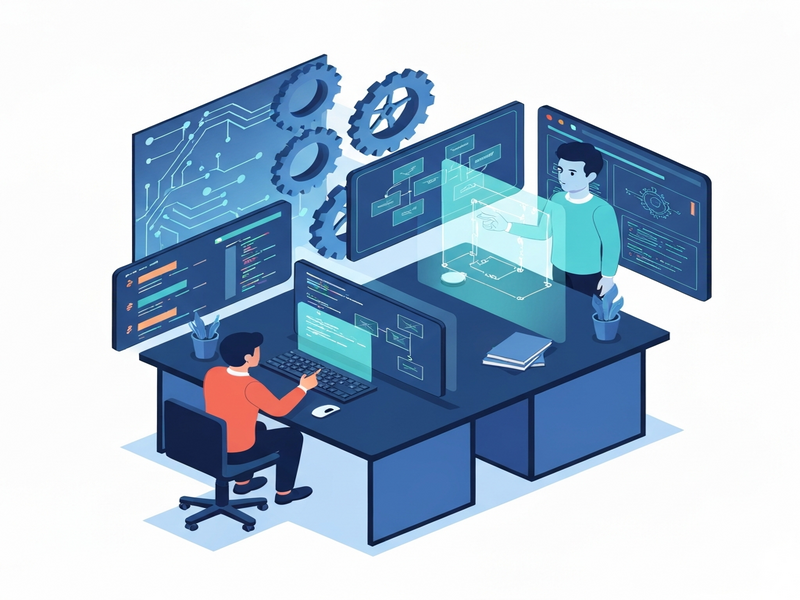
What Is Agentic Engineering?
At its core, agentic engineering combines three ingredients:
- Coding agents – AI models that can generate syntactically correct code (e.g., Claude Code, OpenAI Codex, Gemini CLI).
- Execution sandbox – A secure runtime where the generated code can be compiled, run, and observed.
- Goal‑oriented loop – A feedback cycle that repeatedly prompts the agent, runs the code, evaluates results, and refines the next prompt.
When these pieces work together, the agent can autonomously transform a high‑level description like “create a REST API for a todo list” into a fully functional service, complete with tests, documentation, and deployment scripts.
“Code execution is the defining capability that makes agentic engineering possible.” – Simon Willison
Key Principles & Typical Workflow
1. Define a Precise Goal
Start with a concise, measurable objective. For example, “Generate a Node.js microservice that stores user profiles in PostgreSQL and exposes CRUD endpoints.” The clearer the goal, the fewer iterations the agent needs.
2. Prompt the Coding Agent
Send the goal to a coding agent via an API call or a UI prompt. The agent returns a code snippet and a short rationale.
3. Execute & Validate
Run the generated code in an isolated container. Automated tests, static analysis, or even human review verify whether the output meets the goal.
4. Iterate with Feedback
If the test fails, feed the error back to the agent. The next prompt includes the failure details, guiding the agent toward a corrected solution.
5. Refine & Deploy
Once the agent produces a stable build, you can add CI/CD pipelines, monitoring, and documentation. The loop ends when the deployment criteria are satisfied.
MECE Summary: Goal → Prompt → Execute → Feedback → Refine → Deploy.
Benefits & Real‑World Use Cases
Agentic engineering isn’t just a novelty; it delivers tangible value across the software lifecycle.
Accelerated Prototyping
Developers can spin up functional prototypes in minutes instead of days. This speed is especially valuable for UBOS for startups that need to validate market fit quickly.
Consistent Code Quality
Because the agent runs code through automated tests on every iteration, the resulting codebase often adheres to best practices out‑of‑the‑box. Pair this with the AI marketing agents that generate clean copy, and you have a full‑stack quality pipeline.
Scalable Automation
Large enterprises can embed agents into internal tooling. The Enterprise AI platform by UBOS already offers hooks for custom agents that automate data‑pipeline generation, API scaffolding, and more.
Knowledge Capture & Reuse
Agents can be taught to reuse patterns stored in a vector database like Chroma DB integration. This turns institutional knowledge into reusable code snippets, reducing “reinvent‑the‑wheel” moments.
Cross‑Domain Innovation
Combine a coding agent with voice synthesis (ElevenLabs AI voice integration) or messaging platforms (ChatGPT and Telegram integration) to create interactive, voice‑driven development assistants.
Below are three concrete templates from the UBOS marketplace that illustrate agentic engineering in action:
- AI Chatbot template – a ready‑made conversational agent that can be extended with custom code generation hooks.
- GPT‑Powered Telegram Bot – demonstrates how a coding agent can autonomously update its own command set.
- AI SEO Analyzer – uses an agent to generate SEO‑optimized content and then validates it against real‑world metrics.
Agentic Engineering vs. Traditional Development
| Aspect | Traditional Workflow | Agentic Engineering |
|---|---|---|
| Speed of Delivery | Days‑to‑weeks for scaffolding, testing, and iteration. | Minutes to hours; the agent iterates automatically. |
| Human Effort | High – manual coding, debugging, and refactoring. | Low – developers focus on goal definition and review. |
| Error Detection | Post‑mortem debugging; often late in the cycle. | Continuous feedback after each execution. |
| Scalability | Limited by team size and expertise. | Agent can spawn parallel tasks, scaling with compute. |
While traditional methods still excel in highly regulated domains where human oversight is mandatory, agentic engineering shines in fast‑moving product environments, internal tooling, and any scenario where rapid iteration is a competitive advantage.
Conclusion: Embrace the Agentic Wave
Agentic engineering transforms the developer’s role from “code writer” to “problem architect.” By delegating repetitive coding tasks to AI agents, engineers can allocate more brainpower to system design, user experience, and strategic innovation.
If you’re ready to experiment with AI‑driven development, start with the UBOS homepage and explore the UBOS platform overview. The platform’s Web app editor on UBOS and Workflow automation studio let you prototype agentic pipelines without writing a single line of infrastructure code.
Check out the UBOS pricing plans to find a tier that matches your team’s size, then dive into the UBOS portfolio examples for inspiration. Need a head start? Grab a template from the UBOS templates for quick start library and watch an AI agent bring it to life.
Stay ahead of the curve—agentic engineering isn’t a passing fad; it’s the next evolution of software craftsmanship.
Ready to build the future? Join the UBOS partner program and co‑create next‑gen AI‑augmented solutions today.
For a deeper historical perspective, read Simon Willison’s original guide on what is agentic engineering.
Andrii Bidochko
CTO UBOS
Andrii Bidochko is an AI entrepreneur and researcher focused on AI agents, reinforcement learning, and autonomous systems. He writes about the technologies shaping the future of machine intelligence, from frontier models and agent architectures to real-world AI applications.