

- Updated: March 13, 2026
- 6 min read
Rivian R2 vs Tesla Model Y: Detailed Comparison and Market Insights
Rivian R2 vs. Tesla Model Y: Which 2024 Electric SUV Wins the Race?
The Rivian R2 and Tesla Model Y are both midsize electric SUVs, but the R2 aims to undercut the Model Y on price while adding genuine off‑road capability, making it a compelling alternative for budget‑conscious, adventure‑seeking buyers.
As the EV market tightens around a handful of dominant models, the showdown between Rivian’s newest R2 and Tesla’s best‑selling Model Y has become the headline of every automotive forum. For a full rundown of the launch event, see the original Verge article. Below we break down specs, pricing, performance, and the broader market forces that could decide which vehicle truly sticks the landing.
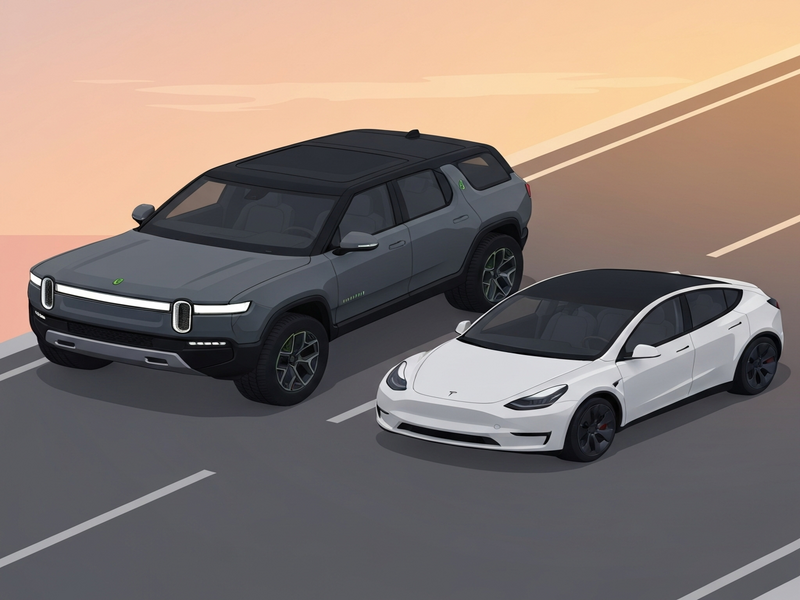
Rivian R2 – Specs at a Glance
Rivian positions the R2 as a “mass‑market” electric SUV that retains the brand’s rugged DNA. The company promises three trim levels, with the entry‑level “R2 Base” starting under $45,000 after incentives.
- Battery: 75 kWh lithium‑ion pack (estimated 275 mi EPA range)
- Powertrain: Dual‑motor AWD delivering 300 hp and 350 lb‑ft of torque
- 0‑60 mph: Approximately 5.8 seconds
- Ground clearance: 9.6 in, with adjustable air suspension
- Interior tech: 15‑inch infotainment screen, Rivian OS v2, and a customizable digital gauge cluster
- Unique features: Power‑down rear window, vented quarter windows, and a “Adventure Mode” that tweaks torque distribution for light off‑roading
Rivian also touts a robust over‑the‑air (OTA) update system that can add new driver‑assist features and improve battery efficiency over time. The company’s commitment to sustainable materials—recycled plastics, vegan leather, and a low‑VOC cabin—aligns with the expectations of environmentally conscious buyers.
Tesla Model Y – Specs at a Glance
The Model Y remains Tesla’s flagship midsize crossover, benefitting from the automaker’s massive production scale and a mature software ecosystem. The base “Long Range” version starts at $49,990 before any regional incentives.
- Battery: 82 kWh lithium‑ion pack (estimated 321 mi EPA range)
- Powertrain: Dual‑motor AWD delivering 384 hp and 376 lb‑ft of torque
- 0‑60 mph: 4.8 seconds (Performance trim)
- Ground clearance: 6.4 in
- Interior tech: 15‑inch central touchscreen, Tesla’s proprietary UI, and optional 12‑speaker audio system
- Unique features: Full‑self‑driving (FSD) beta (optional), “Tesla Vision” camera suite, and a minimalist cabin design
Tesla’s Supercharger network continues to be a decisive advantage, offering up to 250 kW fast‑charging capability that can replenish 80 % of the battery in roughly 25 minutes. The Model Y also benefits from a proven supply chain that has kept production hiccups to a minimum.
Head‑to‑Head Comparison
Below is a concise side‑by‑side table that highlights the most critical buying factors for each vehicle.
| Feature | Rivian R2 | Tesla Model Y |
|---|---|---|
| Starting Price (USD) | $44,990 (Base) | $49,990 (Long‑Range) |
| EPA Range | 275 mi | 321 mi |
| 0‑60 mph | 5.8 s | 4.8 s (Performance) |
| Ground Clearance | 9.6 in | 6.4 in |
| Off‑Road Capability | Adventure Mode, adjustable suspension | Limited (mainly on‑road) |
| Charging Speed (max) | 200 kW (DC fast) | 250 kW (Supercharger V3) |
| Software Ecosystem | Rivian OS v2, OTA updates, integrated adventure apps | Tesla UI, FSD beta, extensive third‑party apps |
Price vs. range trade‑off: The R2’s lower entry price is offset by a shorter electric range. For commuters whose daily mileage stays under 200 mi, the R2’s range is more than adequate, while long‑distance travelers may still favor the Model Y’s superior range and faster Supercharging network.
Performance & capability: Tesla retains the edge in straight‑line acceleration, but Rivian’s higher ground clearance and dedicated off‑road mode give it a clear advantage for owners who plan weekend trips on unpaved roads.
Technology & user experience: Both brands excel at OTA updates, yet Tesla’s ecosystem is more mature, especially with the optional Full‑Self‑Driving suite. Rivian counters with a richer interior experience, including tactile steering‑wheel scroll wheels and a more traditional gauge cluster that many drivers find less distracting.
Market Context & Industry Analysis
The EV market in 2024 is entering a “price‑sensitivity” phase. Federal tax credits have been phased out for many models, and consumers are scrutinizing total cost of ownership more than ever. According to AutoPacific, the average EV buyer now expects a sub‑$50,000 price point for a midsize SUV with at least 250 mi of range.
Rivian’s strategy with the R2 is to capture a slice of the “budget‑friendly adventure” niche that Tesla has largely ignored. By offering a higher ground clearance and rugged styling, Rivian hopes to attract former Jeep and Subaru owners who are looking to transition to electric power without sacrificing outdoor capability.
Meanwhile, Tesla continues to leverage its massive scale. The Model Y benefits from the company’s vertically integrated battery supply chain, which keeps unit costs low and ensures a steady flow of vehicles to meet demand. Tesla’s Supercharger network also remains a decisive factor for long‑distance travelers, a network that Rivian is still building through partnerships with third‑party fast‑charging operators.
From an investor perspective, the R2 could be a make‑or‑breakout moment for Rivian. The company’s earlier flagship models, the R1T pickup and R1S SUV, were priced above $70,000 and sold in limited volumes. If the R2 can achieve the projected 20,000–25,000 units in its first year, Rivian will demonstrate that it can compete in the high‑volume segment, which is essential for long‑term profitability.
The broader industry trend also points toward increased integration of AI‑driven services within vehicles. Rivian’s upcoming AI marketing agents and the UBOS platform overview illustrate how SaaS providers are embedding intelligent assistants directly into the driving experience—ranging from predictive route planning to real‑time energy‑efficiency coaching.
Conclusion: Which EV Should You Choose?
If your priority is a lower upfront cost, genuine off‑road capability, and a brand that champions sustainable materials, the Rivian R2 is the clear contender. However, if you need the longest possible range, the fastest charging experience, and a proven software ecosystem with optional Full‑Self‑Driving, the Tesla Model Y remains the benchmark.
Both vehicles represent the rapid evolution of electric SUVs in 2024, and the ultimate decision will hinge on how you balance price, performance, and lifestyle needs. Whichever you choose, you’ll be joining a growing community of drivers who are reshaping transportation toward a cleaner, smarter future.
Ready to explore more AI‑enhanced tools for your business or personal projects? Visit the UBOS homepage to discover how AI can accelerate your next venture.
Andrii Bidochko
CTO UBOS
Andrii Bidochko is an AI entrepreneur and researcher focused on AI agents, reinforcement learning, and autonomous systems. He writes about the technologies shaping the future of machine intelligence, from frontier models and agent architectures to real-world AI applications.