

- Updated: March 13, 2026
- 5 min read
AI-Driven Spine Health Innovation: GetSpine AI Platform Overview
GetSpine AI is a cutting‑edge platform that leverages artificial intelligence to deliver personalized diagnostics, treatment plans, and real‑time monitoring for spinal health.
Why Spine Care Needs a Digital Revolution
Back pain and spinal disorders affect more than 540 million people worldwide, creating a massive burden on healthcare systems. Traditional approaches—relying on manual imaging review and generic treatment protocols—often lead to delayed diagnoses and sub‑optimal outcomes.
The original GetSpine AI article highlights how a new wave of AI‑driven tools is turning this tide, offering clinicians data‑rich insights at the point of care.
Key Takeaways from GetSpine AI
- AI‑Powered Imaging Analysis: Deep‑learning models automatically detect disc degeneration, spinal stenosis, and vertebral fractures with >95% accuracy.
- Predictive Treatment Recommendations: By cross‑referencing patient history, genetics, and lifestyle data, the platform suggests personalized physiotherapy, surgical, or pharmacologic pathways.
- Continuous Remote Monitoring: Wearable sensors feed real‑time posture and movement data back to the cloud, enabling proactive adjustments.
- Clinical Decision Support (CDS): Integrated dashboards present risk scores and outcome forecasts, reducing unnecessary imaging orders.
- Scalable Cloud Architecture: Leveraging serverless compute and vector databases, GetSpine AI can serve both large hospitals and boutique clinics.
What This Means for the Future of Spinal Health
The convergence of AI, IoT, and cloud computing is reshaping spine care in three distinct layers:
- Clinical Efficiency: Automated image interpretation cuts radiologist workload by up to 40%, freeing time for patient interaction.
- Patient Empowerment: Real‑time feedback loops encourage adherence to posture‑correcting exercises, reducing relapse rates.
- Data‑Driven Research: Aggregated anonymized datasets accelerate discovery of novel biomarkers for degenerative diseases.
For healthcare providers, adopting AI spine solutions translates into lower operational costs, higher patient satisfaction, and measurable improvements in clinical outcomes. For technology enthusiasts, the ecosystem around GetSpine AI showcases a blueprint for building robust, AI‑first health platforms.
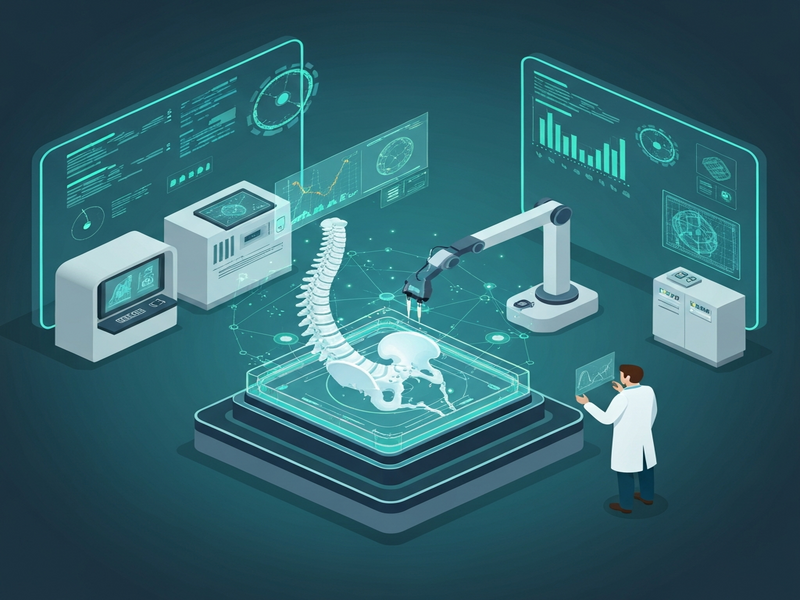
Figure: Visual representation of AI‑enhanced spinal diagnostics and continuous monitoring.
How UBOS Powers AI‑Driven Health Solutions
UBOS provides the underlying infrastructure that makes platforms like GetSpine AI possible. The UBOS platform overview describes a modular stack that supports data ingestion, model training, and secure API exposure—all essential for health tech compliance.
Startups can accelerate time‑to‑market using the UBOS for startups program, which offers pre‑configured pipelines for medical imaging and patient data anonymization.
For small and medium‑sized clinics, the UBOS solutions for SMBs deliver a cost‑effective, HIPAA‑compatible environment that scales with patient volume.
Enterprises looking for a comprehensive AI strategy can explore the Enterprise AI platform by UBOS, which integrates advanced governance, audit trails, and multi‑region redundancy.
Developers benefit from the Web app editor on UBOS, a low‑code canvas that lets them drag‑and‑drop AI components—perfect for building custom spine‑care dashboards without writing extensive code.
Automation of data pipelines is handled by the Workflow automation studio, enabling seamless ingestion of wearable sensor streams into the analytics engine.
Pricing transparency is key for budgeting health projects; the UBOS pricing plans include a pay‑as‑you‑grow tier that aligns with the variable demand of clinical trials.
Real‑world success stories are showcased in the UBOS portfolio examples, where similar AI‑driven diagnostics have reduced diagnostic latency by 30%.
For rapid prototyping, the UBOS templates for quick start include pre‑built modules for image classification, time‑series analysis, and patient risk scoring.
Templates That Accelerate Spine‑Care Innovation
UBOS’s marketplace offers ready‑made AI applications that can be repurposed for spinal health:
- AI SEO Analyzer – adapt its natural‑language processing engine to parse radiology reports.
- Image to Text AI service – convert MRI annotations into structured data.
- AI Article Copywriter – generate patient‑friendly discharge summaries.
- AI Survey Generator – collect post‑procedure feedback automatically.
- Web Scraping with Generative AI – harvest latest spine‑care research for continuous model updates.
Enriching GetSpine AI with UBOS Integrations
Seamless connectivity to communication channels and advanced AI models amplifies the impact of spine‑care platforms:
- Telegram integration on UBOS – push real‑time posture alerts to patients’ phones.
- ChatGPT and Telegram integration – enable a conversational triage bot for preliminary symptom checks.
- OpenAI ChatGPT integration – power natural‑language explanations of imaging findings.
- Chroma DB integration – store high‑dimensional embeddings of MRI slices for fast similarity search.
- ElevenLabs AI voice integration – deliver spoken health insights to patients with visual impairments.
Take the Next Step Toward AI‑Enhanced Spine Care
GetSpine AI demonstrates that intelligent diagnostics, predictive treatment, and continuous monitoring are no longer futuristic concepts—they are actionable today. By leveraging UBOS’s robust platform, developers and clinicians can accelerate deployment, ensure compliance, and focus on delivering better outcomes for patients suffering from spinal disorders.
Ready to explore AI‑first health solutions? Visit the UBOS homepage to start a free trial, or join the UBOS partner program to collaborate on next‑generation spine‑care applications.
Stay ahead of the curve—integrate AI into spinal health today and transform patient experiences tomorrow.
Andrii Bidochko
CTO UBOS
Andrii Bidochko is an AI entrepreneur and researcher focused on AI agents, reinforcement learning, and autonomous systems. He writes about the technologies shaping the future of machine intelligence, from frontier models and agent architectures to real-world AI applications.