

- Updated: March 12, 2026
- 7 min read
Returning to Rails in 2026: Insights from Mark Round’s Journey
Returning to Ruby on Rails in 2026 proves that Rails 8’s modern stack—featuring Stimulus, Solid Cache/Queue, SQLite defaults, and Kamal deployment—delivers a fast, low‑maintenance, and developer‑friendly experience for today’s web projects.
Why Rails 8 Matters in 2026
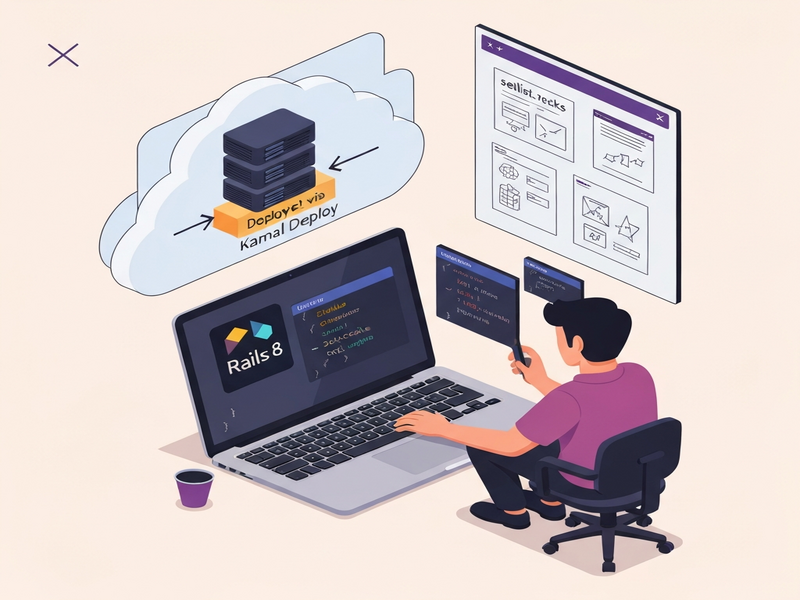
In a world where JavaScript frameworks dominate headlines, Mark Round’s recent blog post “Returning to Rails in 2026” reminds developers that the Ruby on Rails ecosystem is far from obsolete. By revisiting a personal side‑project—setlist.rocks—Round demonstrates how Rails 8 can feel both nostalgic and cutting‑edge, especially for developers who crave convention over configuration and a streamlined DevOps workflow.
For tech leads, product managers, and full‑stack engineers, the article offers a concrete case study of building a modern web app without drowning in JavaScript build tools or complex container orchestration. Below, we break down Round’s experience, highlight the most compelling Rails 8 features, and show how UBOS can amplify these capabilities for startups, SMBs, and enterprises alike.
Mark Round’s Journey Back to Rails
After years of focusing on DevOps, infrastructure, and “black‑box” SaaS platforms, Round decided to resurrect his love for Ruby by building a setlist manager for his band. The project started as a simple CRUD app, but quickly evolved into a full‑featured platform with drag‑and‑drop reordering, PDF generation, and real‑time collaboration.
What surprised him most was how quickly he could prototype with Rails 8’s generators and conventions. Within a weekend, he had a working prototype that could:
- Persist band data using SQLite with production‑ready pragmas.
- Cache view fragments via the new Solid Cache library.
- Run background jobs without a separate Redis instance, thanks to Solid Queue.
- Deliver a snappy UI using Hotwire’s Stimulus and Turbo, eliminating the need for Webpack.
The experience reminded him why Rails was once called “the framework that makes web development fun again.” As he put it, “I haven’t felt this much joy writing code in years.”
Rails 8 Features That Redefine the Stack
1. Stimulus & Turbo – A “No‑Build” Front‑End
Rails 8 ships with Hotwire out of the box. Turbo intercepts link clicks and form submissions, swapping page fragments without a full reload. Stimulus adds lightweight JavaScript controllers that can be attached directly to HTML elements. This “no‑build” approach means you avoid npm, Yarn, and Webpack entirely—perfect for teams that want to stay focused on Ruby.
Round leveraged Stimulus to add modal dialogs for song notes and used Turbo Streams to update setlists in real time. The result was a responsive UI that felt like a single‑page app while staying fully server‑rendered.
2. Solid Cache & Solid Queue – Database‑Backed Performance
Traditional Rails apps rely on Redis or Memcached for caching and background processing. Rails 8 introduces Solid Cache and Solid Queue, which store cache entries and job payloads directly in the database. This eliminates an external dependency, reduces operational overhead, and works seamlessly with SQLite’s default configuration.
In practice, Round enabled fragment caching for the band dashboard with a single line:
<% cache "dashboard", expires_in: 10.minutes do %>
  <!-- heavy HTML here -->
<% end %>
The same simplicity applied to background jobs:
class GeneratePdfJob < ApplicationJob
  queue_as :default
  def perform(setlist_id)
    # PDF generation logic
  end
end
3. SQLite as a Production‑Ready Default
Rails 8’s database.yml now includes sensible pragmas: WAL journal mode, normal sync, and generous cache sizes. These settings make SQLite fast enough for many small‑to‑medium SaaS products, removing the need for a separate PostgreSQL instance during early stages.
Round appreciated this because he could spin up a fully functional production environment on a single file, simplifying both local development and CI pipelines.
From Code to Cloud: Front‑End Simplicity and Kamal Deployment
The “no‑build” front‑end philosophy pairs naturally with Kamal, Rails 8’s new deployment tool. Kamal builds a Docker image, pushes it to a registry, and orchestrates zero‑downtime releases with a lightweight reverse proxy.
Round’s deployment workflow looked like this:
- Run
kamal initto generatedeploy.yml. - Define web and job servers in the YAML file.
- Execute
kamal deploy—Kamal builds the image, pushes it, and rolls out the new version.
The entire process took under five minutes, rivaling the simplicity of Heroku while keeping full control over the stack.
Ruby & Rails: Niche Yet Resilient
The 2025 Stack Overflow Developer Survey placed Rails at #20 among web frameworks, and Ruby fell just outside the top‑10 languages. Despite this, the framework’s release cadence—one major version every year—shows a healthy, sustainable development model.
Round notes that while community buzz may have shifted toward JavaScript, the Ruby ecosystem still offers mature gems, a supportive community, and a philosophy that prioritizes developer happiness. For teams that value rapid iteration and clear conventions, Rails remains a compelling choice.
“Rails isn’t about being the most popular; it’s about being the most enjoyable to work with.” – Mark Round
Boosting Rails Projects with UBOS
While Rails 8 already reduces operational friction, pairing it with the UBOS homepage can accelerate development even further. UBOS provides a low‑code platform that integrates seamlessly with modern Rails workflows.
Rapid Prototyping and Templates
The UBOS templates for quick start include pre‑configured Rails 8 starter kits. You can launch a new app with built‑in Solid Cache, Turbo, and SQLite defaults in minutes, then focus on domain logic.
AI‑Powered Enhancements
UBOS’s AI marketing agents can auto‑generate SEO‑friendly copy for your Rails app’s landing pages. For example, the AI SEO Analyzer scans your routes and suggests meta tags, while the AI Article Copywriter drafts blog posts that rank for keywords like “Rails 8” and “Stimulus.”
Integrated DevOps
The Workflow automation studio lets you define CI/CD pipelines that trigger Kamal deployments automatically when you push to Git. Combined with the UBOS pricing plans, you can scale from a hobby project to an enterprise‑grade service without re‑architecting your stack.
Extending Functionality with AI Services
UBOS offers a marketplace of AI‑driven micro‑services. Need voice interaction? Add the ElevenLabs AI voice integration to let users query setlists via speech. Want a chatbot? Deploy the OpenAI ChatGPT integration or the ChatGPT and Telegram integration for real‑time support. For vector search, the Chroma DB integration provides fast semantic lookup of song lyrics.
Targeted Solutions for Different Audiences
Whether you’re a bootstrapped founder (UBOS for startups), an SMB looking to digitize workflows (UBOS solutions for SMBs), or an enterprise seeking a robust AI platform (Enterprise AI platform by UBOS), the ecosystem adapts to your scale.
Showcase and Community
Browse the UBOS portfolio examples for real‑world Rails‑based applications that have leveraged these integrations. The About UBOS page details the team’s commitment to open‑source and developer experience.
Partner Opportunities
Companies can join the UBOS partner program to co‑market AI‑enhanced Rails solutions, receive dedicated support, and access early‑beta features.
Takeaway: Rails 8 + UBOS = Modern, Low‑Ops Web Development
Mark Round’s hands‑on account proves that Rails 8 is no longer a relic; it’s a pragmatic, full‑stack framework that lets developers ship features quickly, keep infrastructure lean, and stay productive without drowning in JavaScript tooling. By pairing Rails with UBOS’s low‑code platform, AI integrations, and automated deployment pipelines, teams can accelerate time‑to‑market while preserving the joy of coding.
If you’re evaluating a new stack for a SaaS product, consider the following checklist:
- Do you need rapid prototyping with minimal DevOps overhead? Web app editor on UBOS can get you started in minutes.
- Is server‑side rendering with real‑time UI updates a priority? Leverage Telegram integration on UBOS for instant notifications.
- Do you want AI‑driven content creation? Deploy the AI Video Generator or AI Image Generator directly from your Rails app.
- Are you ready for production‑grade deployment? Use Enterprise AI platform by UBOS together with Kamal for zero‑downtime releases.
The future of web development is not about chasing the newest JavaScript hype; it’s about choosing tools that empower developers to build, iterate, and maintain with confidence. Rails 8, combined with UBOS’s ecosystem, offers exactly that.
Andrii Bidochko
CTO UBOS
Andrii Bidochko is an AI entrepreneur and researcher focused on AI agents, reinforcement learning, and autonomous systems. He writes about the technologies shaping the future of machine intelligence, from frontier models and agent architectures to real-world AI applications.