

- Updated: March 12, 2026
- 5 min read
Gestala Secures $21 Million Funding for Ultrasound‑Based Non‑Invasive Brain‑Computer Interface in China
Gestala, the Chinese brain‑computer interface (BCI) startup, closed a $21 million Series A funding round, valuing the company at roughly $100‑$200 million and positioning it as the largest early‑stage BCI raise in China.
Gestala Secures $21 Million to Accelerate Ultrasound‑Based BCI Innovation
Two months after its public launch, Gestala announced a $21.6 million financing round led by Guosheng Capital and Dalton Venture. The oversubscribed round attracted commitments exceeding $58 million from a roster of Chinese venture firms, including Tsing Song Capital, Gobi Ventures, Fourier Intelligence, Liepin, and Seas Capital. The capital will fund rapid R&D, team expansion, and the construction of a dedicated manufacturing facility in China.
Background: Gestala’s Ultrasound BCI Vision
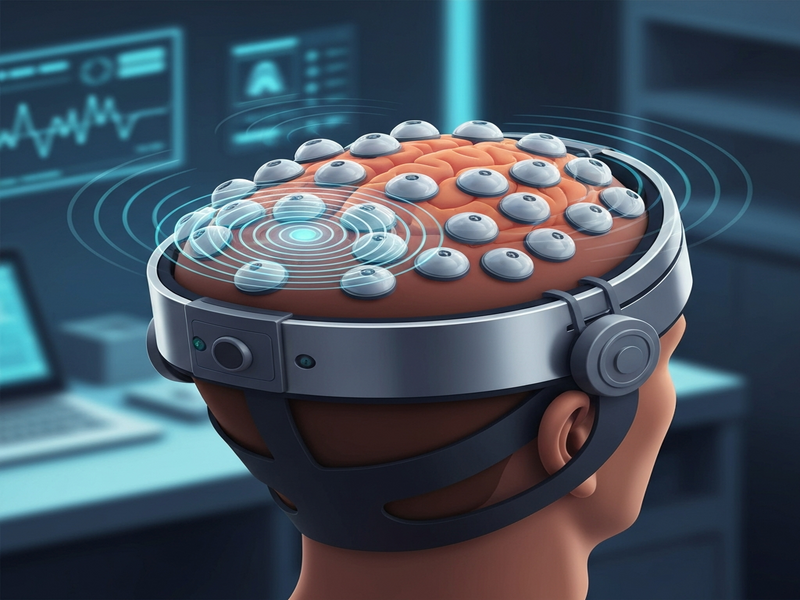
Founded by serial entrepreneur Phoenix Peng, Gestala focuses on non‑invasive brain‑computer interfaces that leverage phased‑array ultrasound to both read and stimulate neural activity. Unlike traditional implantable electrode systems, Gestala’s technology promises whole‑brain coverage, deep‑circuit access, and a safety profile that eliminates the need for brain surgery.
The company’s approach builds on recent breakthroughs in medical ultrasound, repurposing high‑frequency acoustic waves to modulate neuronal firing patterns. By steering multiple ultrasound beams in real time, Gestala can target specific brain regions with millimeter precision, opening pathways for therapeutic and consumer‑grade applications.
How Ultrasound BCI Works
- Phased‑array transducers emit focused acoustic pulses that penetrate the skull.
- Real‑time feedback loops decode the resulting neural signals into digital commands.
- Bidirectional stimulation enables both reading brain activity and modulating it without incisions.
Funding Round Details: Investors, Valuation, and Use of Proceeds
The $21.6 million round was co‑led by UBOS partner program‑backed investors Guosheng Capital and Dalton Venture. Participation from Tsing Song Capital, Gobi Ventures, Fourier Intelligence, Liepin, and Seas Capital pushed the total committed capital to more than $58 million, making the round heavily oversubscribed.
Gestala’s internal valuation now sits between $100 million and $200 million, a range that reflects both the nascent market potential of ultrasound BCI and the company’s rapid product development timeline.
The newly raised funds will be allocated as follows:
- R&D acceleration: Finalizing the first‑generation prototype by year‑end.
- Team expansion: Growing the workforce from 15 to roughly 35 engineers, neuroscientists, and regulatory experts.
- Manufacturing footprint: Building a dedicated ultrasound‑BCI production line in China to achieve economies of scale.
- Clinical partnerships: Scaling trials with leading Chinese hospitals at 20‑33 % of typical U.S./European costs.
Market Significance and Potential Applications
Gestala’s raise marks the largest early‑stage financing event in China’s BCI sector, underscoring a global shift toward non‑invasive brain‑interface solutions. The company’s technology could disrupt several high‑impact markets:
Medical Therapeutics
- Chronic pain management: Early studies suggest ultrasound stimulation can reduce pain perception without opioids.
- Neuropsychiatric disorders: Ongoing research targets depression, PTSD, autism spectrum disorder, and OCD.
- Neuro‑rehabilitation: Stroke recovery and motor‑function restoration via targeted neural modulation.
- Neurodegenerative diseases: Long‑term pipelines include Alzheimer’s, essential tremor, and Parkinson’s disease.
Consumer & Enterprise Use Cases
- Hands‑free control of smart devices for accessibility and gaming.
- Real‑time mental‑state monitoring for wellness applications.
- Integration with AI agents (e.g., AI news) to enable brain‑driven command interfaces.
By leveraging China’s integrated manufacturing ecosystem, Gestala aims to bring products to market faster and at lower cost than many Western competitors, potentially reshaping the global BCI supply chain.
Founder’s Perspective: A Quote on the Future of Ultrasound BCI
“Ultrasound gives us the ability to access the entire brain without the surgical risks that have limited adoption of implantable BCIs,” said Phoenix Peng, founder and CEO of Gestala. “Our goal is to democratize brain‑computer interaction, making it as safe and scalable as a smartphone.”
Why This Funding Matters for AI‑Driven Platforms
The infusion of capital into Gestala aligns with broader trends in AI‑enhanced hardware. Platforms like the UBOS platform overview are already integrating AI models that can interpret neural data streams, enabling developers to build sophisticated brain‑aware applications without deep expertise in signal processing.
For marketers, the emergence of non‑invasive BCI opens new avenues for hyper‑personalized experiences. AI marketing agents could soon receive direct neural feedback, refining ad targeting in real time.
Startups looking to prototype BCI‑enabled services can accelerate development using the UBOS templates for quick start, which include pre‑built data pipelines for handling high‑frequency sensor inputs.
Pricing transparency is also crucial. The UBOS pricing plans offer scalable options that match the budgetary constraints of early‑stage hardware ventures like Gestala.
For a full read of the original announcement, see the TechCrunch article.
Conclusion: A New Chapter for Non‑Invasive Brain‑Computer Interfaces
Gestala’s $21 million raise not only validates the commercial promise of ultrasound‑based BCIs but also signals investor confidence in China’s ability to produce world‑class neurotechnology at scale. As the startup moves toward a production‑ready prototype, the ripple effects will be felt across medical therapeutics, consumer electronics, and AI‑driven platforms that seek to interpret the brain’s signals directly.
Stakeholders—from venture capitalists tracking startup funding trends to AI developers hunting the next data source—should watch Gestala closely. The convergence of safe, non‑invasive BCI hardware with powerful AI analytics could soon make brain‑computer interaction as commonplace as voice assistants today.
Andrii Bidochko
CTO UBOS
Andrii Bidochko is an AI entrepreneur and researcher focused on AI agents, reinforcement learning, and autonomous systems. He writes about the technologies shaping the future of machine intelligence, from frontier models and agent architectures to real-world AI applications.