

- Updated: March 11, 2026
- 6 min read
Department of War Labels Anthropic as Supply‑Chain Risk – Implications for AI Governance
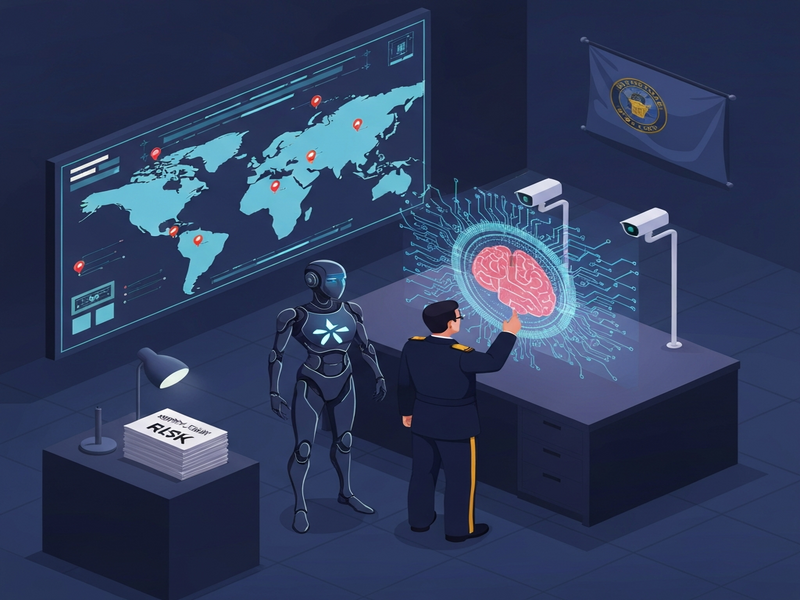
The U.S. Department of War has officially designated Anthropic as a supply‑chain risk because the company refuses to waive its red‑line restrictions on mass surveillance and autonomous weapons.
Why This Designation Matters for Everyone Who Uses AI
From battlefield drones to the AI‑powered chatbots that draft your marketing copy, the Anthropic supply‑chain risk signals a clash between national security priorities and the ethical guardrails that AI developers are trying to enforce. For tech‑savvy readers, AI researchers, and policy makers, the fallout will shape how both military and civilian AI applications evolve over the next decade.
What the Department of War Actually Said
The Department of War (DoW) invoked the 2018 Defense Supply Chain Risk Management (DSCRM) authority, a statute originally designed to keep foreign hardware—like Huawei chips—out of Pentagon systems. In a rare move, the DoW applied the same mechanism to a software provider, labeling Anthropic’s Claude models a “high‑risk component” because the company refused to remove red‑line clauses that prohibit use for mass surveillance and autonomous weapons.
Anthropic’s stance is simple: it will not sell its models for purposes that violate its internal safety policies. The DoW, however, argues that “all lawful purposes” should be permissible, effectively demanding a blanket waiver.
Implications for Military AI Deployments
Even though Anthropic’s models are not yet embedded in core combat systems, the designation sets a precedent that could affect any AI vendor that embeds ethical safeguards. Here’s what the Pentagon may need to consider:
- Supply‑chain fragmentation: Contractors may need to replace Claude‑based components with alternatives, increasing integration costs.
- Vendor lock‑in risk: Relying on a single AI provider could give that provider leverage to dictate terms, a scenario the DoW explicitly wants to avoid.
- Operational continuity: If a model is pulled from a mission‑critical pipeline, fallback solutions must be ready within days, not months.
For civilian enterprises, the ripple effect is equally significant. Companies that have built workflows around Anthropic’s APIs—such as AI SEO Analyzer or the AI Article Copywriter—may need to re‑engineer their pipelines or face compliance audits.
Mass Surveillance: The Hidden Threat Behind the Label
Anthropic’s red lines are not just legal footnotes; they address a fundamental technical reality: modern large language models (LLMs) can process billions of video frames, audio snippets, and text logs at a fraction of the cost of traditional analytics. This makes nationwide, real‑time surveillance technically feasible.
“If you can run a model on every CCTV feed for a few cents per million tokens, you can map an entire city in real time.” – AI policy analyst, 2024
When a government agency can ingest and interpret that data without oversight, the line between security and oppression blurs. The DoW’s claim that “mass surveillance is illegal” ignores the fact that U.S. law already permits bulk data collection under broad “relevant” clauses. AI simply removes the “relevant” bottleneck.
Private firms that embed Anthropic’s models into products like the AI YouTube Comment Analysis tool or the AI Video Generator must now evaluate whether their services could be repurposed for state‑level monitoring.
AI Alignment: Who Decides the Moral Compass?
At the heart of the dispute is a question that has long haunted AI safety researchers: to whom should advanced AI systems be aligned? Anthropic’s stance—refusing to be a tool for mass surveillance—embodies a form of “value‑locking” that many argue is essential for safe AI.
However, the DoW’s push for unrestricted access raises a counter‑argument: in a national security context, the government should retain ultimate authority over any technology that could affect the nation’s defense posture.
Three Alignment Scenarios
- Company‑first alignment: AI providers embed their own ethical policies (e.g., Anthropic’s red lines). This protects civil liberties but may limit government flexibility.
- Government‑first alignment: The state dictates permissible uses, potentially overriding corporate safeguards. This could accelerate weaponization.
- Hybrid governance: Independent oversight bodies certify AI models for specific use‑cases, balancing security and rights.
UBOS, for instance, offers a Enterprise AI platform that lets organizations embed custom “constitution” files into their models, enabling a hybrid approach where policy can be swapped without retraining the core model.
Regulation: The Next Frontier in AI Governance
Anthropic’s public call for a “nuclear‑style” regulatory regime—an independent agency with the power to certify or ban AI capabilities—has sparked a heated debate. Critics argue that such a body could become a political weapon, while proponents see it as the only way to prevent catastrophic misuse.
Key regulatory questions include:
- How should “mass surveillance risk” be defined in law?
- What thresholds trigger a supply‑chain risk designation?
- Can private companies be forced to waive safety red lines under national emergency powers?
In the meantime, companies can adopt proactive compliance measures. UBOS’s Workflow automation studio lets developers embed audit trails and automated policy checks directly into their AI pipelines, reducing the risk of inadvertent violations.
What You Can Do Right Now
If you’re a developer, product manager, or policy analyst, consider the following steps to navigate the evolving landscape:
- Audit your AI dependencies: Identify which third‑party models (e.g., Claude, GPT‑4) power critical features. Use UBOS’s templates for quick start to map dependencies.
- Implement policy‑as‑code: Leverage the Chroma DB integration to store and enforce usage policies at runtime.
- Prepare fallback models: Keep an open‑source alternative (e.g., LLaMA) ready to replace a vendor‑locked model if a supply‑chain risk is declared.
- Engage with regulators early: Participate in public comment periods for AI legislation; align your internal governance with emerging standards.
- Educate stakeholders: Use UBOS’s AI marketing agents to generate clear, non‑technical briefs for executives and board members.
Conclusion: A Pivotal Moment for AI Governance
The Department of War’s supply‑chain risk designation against Anthropic is more than a bureaucratic footnote; it is a bellwether for how governments will interact with private AI innovators. The outcome will dictate whether AI remains a tool for empowerment or becomes a lever for unchecked surveillance.
Stakeholders across the ecosystem—startups, SMBs, enterprises, and policymakers—must collaborate now to shape a framework that safeguards both national security and civil liberties. The future of AI depends on the choices we make today.
Ready to future‑proof your AI projects? Explore the UBOS for startups program or contact the UBOS partner program for tailored guidance.
Read the original announcement and detailed analysis on the Department of War’s website: Department of War – Anthropic Supply‑Chain Risk.
Andrii Bidochko
CTO UBOS
Andrii Bidochko is an AI entrepreneur and researcher focused on AI agents, reinforcement learning, and autonomous systems. He writes about the technologies shaping the future of machine intelligence, from frontier models and agent architectures to real-world AI applications.