

- Updated: March 4, 2026
- 7 min read
TikTok Rejects End‑to‑End Encryption for Direct Messages Over Safety Concerns
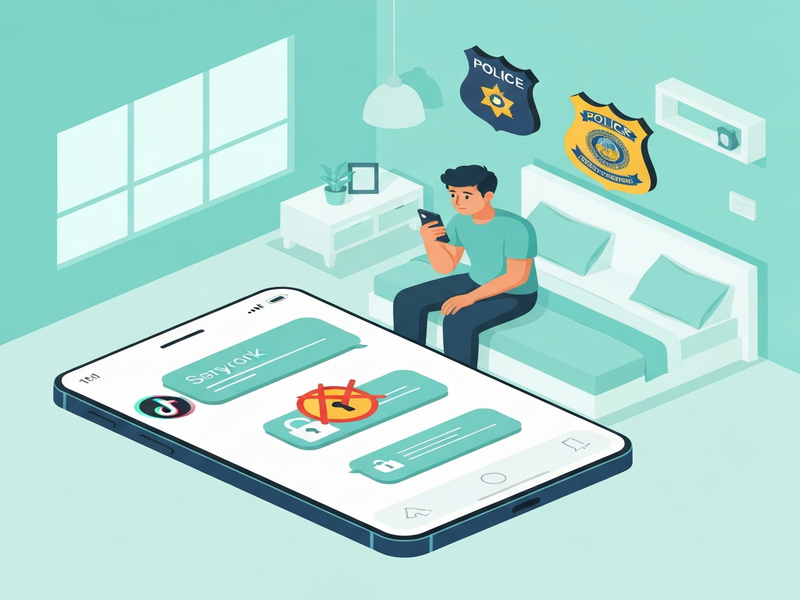
TikTok has decided **not** to roll out end‑to‑end encryption (E2EE) for its direct messages, arguing that the technology would make it harder to protect young users from harmful content.
Why TikTok’s stance matters for social‑media privacy
TikTok, the short‑form video platform with over a billion global users, announced that it will keep its direct‑message (DM) system under standard encryption rather than adopting the industry‑standard end‑to‑end encryption. The move has sparked a fresh privacy debate about the balance between child safety and user privacy. In a briefing at its London office, the company said the decision is a “proactive safety” measure aimed at protecting its largely under‑18 audience.
What is end‑to‑end encryption and why it matters
End‑to‑end encryption (E2EE) ensures that only the sender and the recipient can read a message. Even the platform’s own servers cannot decrypt the content. This technology is the gold standard for protecting conversations from hackers, corporations, and repressive regimes.
Key characteristics of E2EE
- Zero‑knowledge architecture – the service provider never holds the decryption keys.
- Cryptographic guarantees – messages are signed and encrypted with strong algorithms.
- Legal resilience – law‑enforcement requests cannot compel the platform to hand over plaintext.
TikTok’s official stance – a safety‑first decision
During a media briefing, TikTok explained that E2EE would “prevent police and safety teams from being able to read direct messages if they needed to.” The company emphasized that its existing encryption already protects data in transit, but that only authorized employees can access DMs under strict circumstances, such as a valid law‑enforcement request or a user report of harmful behaviour.
By refusing to adopt E2EE, TikTok positions itself as an outlier among rivals like WhatsApp, Signal, and Instagram, which have already enabled the feature for most private communications.
Why TikTok believes E2EE could be risky
- Child‑protection concerns: Direct messages are a known vector for grooming, harassment, and the exchange of illicit material. Without the ability to review flagged content, TikTok argues it would be “less safe” for its under‑18 users.
- Regulatory pressure: U.S. lawmakers have already forced the company to separate its U.S. operations from its global business. Maintaining a level of “read‑access” helps the platform demonstrate cooperation with authorities.
- Brand differentiation: TikTok wants to market itself as a “pro‑safety” platform, a narrative that resonates with parents and educators.
Reactions from experts, child‑protection groups, and industry analysts
The decision has drawn praise from several child‑safety charities, while privacy advocates warn it could set a concerning precedent.
Industry analysts
Social‑media analyst Matt Navarra described TikTok’s move as “swimming against the tide” but noted that it gives the platform a “powerful soundbite” about proactive safety. He cautioned, however, that the choice may “put TikTok out of step with global privacy expectations.”
Child‑safety charities
The UK’s NSPCC welcomed the decision, stating: “We know just how risky end‑to‑end‑encrypted platforms can be for children, preventing the detection of child sexual abuse and exploitation.” The Internet Watch Foundation (IWF) echoed this sentiment, calling the move “an important precedent.”
Privacy experts
Cyber‑security professor Alan Woodward warned that the decision could be influenced by “Chinese pressure,” noting that E2EE is largely banned in China. He argued that while safety is vital, “privacy absolutism” remains a cornerstone of digital rights.
How TikTok’s approach stacks up against other platforms
Below is a quick snapshot of the encryption status across major social‑media services.
| Platform | E2EE Status | Notes |
|---|---|---|
| Enabled by default | Owned by Meta | |
| Signal | Enabled by default | Open‑source, privacy‑first |
| Instagram DMs | Rolling out as default | Part of Meta ecosystem |
| X (formerly Twitter) | E2EE‑like, not industry‑standard | Critics say security is weaker |
| Telegram | Optional (Secret Chats) | Standard chats are server‑encrypted only |
| TikTok | Standard encryption only | Prioritises child safety over privacy absolutism |
Implications for users, law enforcement, and the broader privacy debate
For everyday users
While TikTok’s DMs remain encrypted in transit, the platform retains the technical ability to read messages when required. This means:
- Potentially reduced confidence among privacy‑conscious users.
- Greater reassurance for parents worried about grooming and exploitation.
- Possibility of increased moderation of harmful content, as the company can act on reports more quickly.
For law‑enforcement agencies
Authorities gain a clearer pathway to request DM content in investigations involving child exploitation, cyber‑bullying, or terrorism. However, the lack of a universal E2EE standard across platforms continues to create a fragmented investigative landscape.
For regulators and future policy
The TikTok case adds a new dimension to the ongoing digital safety conversation. Regulators may start to weigh “safety‑first” exemptions against the principle of “privacy by design.” The UK’s upcoming consultation on under‑16 social‑media bans could reference TikTok’s approach as a benchmark.
AI‑powered tools that can help navigate the new privacy landscape
As platforms grapple with safety versus privacy, AI solutions are emerging to assist both users and moderators. For example, the AI YouTube Comment Analysis tool uses natural‑language processing to flag potentially harmful language, while the AI SEO Analyzer helps creators optimize content without compromising user data.
Businesses looking to embed similar safety layers can explore the AI marketing agents on the UBOS platform overview. These agents can automatically scan user‑generated content for policy violations, providing a middle ground between full encryption and unrestricted access.
Building privacy‑first applications with UBOS
Developers who want to create secure messaging or moderation tools can leverage UBOS’s low‑code environment:
- Web app editor on UBOS – drag‑and‑drop UI for rapid prototyping.
- Workflow automation studio – orchestrate content‑review pipelines without writing extensive code.
- ChatGPT and Telegram integration – combine conversational AI with secure messaging channels.
- OpenAI ChatGPT integration for intelligent moderation.
Startups can accelerate time‑to‑market using UBOS for startups, while SMBs benefit from UBOS solutions for SMBs. Enterprises looking for a scalable, compliant stack can explore the Enterprise AI platform by UBOS.
Getting started – pricing, templates, and community
UBOS offers transparent pricing plans that include access to a rich template marketplace. Notable templates for privacy‑focused projects include:
- AI Article Copywriter – generate compliance‑ready documentation.
- AI Chatbot template – embed safe conversational agents.
- GPT‑Powered Telegram Bot – secure messaging with optional encryption.
- AI Image Generator – create visual assets without exposing user data.
Explore real‑world implementations in the UBOS portfolio examples and join the UBOS partner program to collaborate on privacy‑first solutions.
Conclusion – what TikTok’s decision means for you
By opting out of end‑to‑end encryption, TikTok has placed child safety at the forefront of its policy agenda, a move that both satisfies protection advocates and raises eyebrows among privacy purists. The ripple effects will shape how regulators, developers, and users think about the trade‑off between safety and privacy in the years to come.
Stay informed and protect your digital footprint. For a deeper dive into the original reporting, read the full BBC article here. If you’re building tools that need to balance security with user trust, explore how UBOS can accelerate your journey.
© 2026 UBOS – Empowering AI‑driven safety and innovation.
Andrii Bidochko
CTO UBOS
Andrii Bidochko is an AI entrepreneur and researcher focused on AI agents, reinforcement learning, and autonomous systems. He writes about the technologies shaping the future of machine intelligence, from frontier models and agent architectures to real-world AI applications.