

- Updated: March 3, 2026
- 5 min read
AI Companies Pour $125M Into Super PAC Targeting Pro‑Regulation Candidates
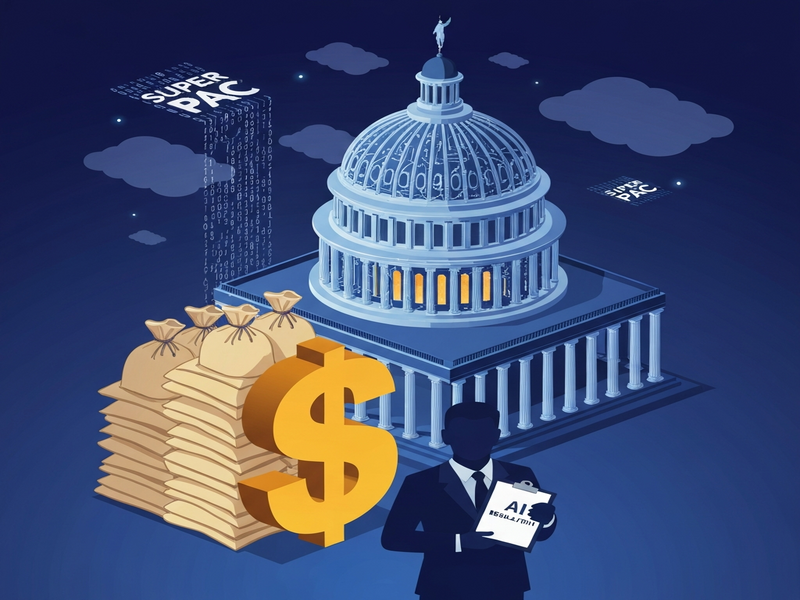
AI companies are spending $125 million through a billionaire‑backed super PAC to influence the 2026 elections, specifically targeting candidates like Alex Bores who champion stricter AI regulation.
Why AI Lobbying Is Suddenly a $125 Million Battle
In the weeks leading up to the 2026 election cycle, a wave of political ads and grassroots campaigns has emerged, all funded by a single, well‑capitalized super PAC. The TechCrunch article details how this PAC, backed by some of Silicon Valley’s most influential billionaires, is pouring unprecedented sums into state and federal races to shape AI policy in its favor.
Historical Context: AI Companies and Political Money
Political spending by tech firms is not new, but the scale and focus have shifted dramatically over the past five years. In 2021, AI‑related lobbying expenditures topped $30 million, primarily aimed at influencing data‑privacy legislation. By 2024, the figure had more than doubled, reflecting growing concerns over algorithmic bias, facial‑recognition bans, and the nascent AI safety regime.
Key trends that set the stage for today’s $125 million surge include:
- Rapid commercialization of generative AI models, creating new revenue streams worth billions.
- Fragmented state‑level AI regulations that threaten a unified national market.
- Increasing public scrutiny after high‑profile AI mishaps, prompting lawmakers to propose stricter oversight.
The Super PAC: Who’s Funding the $125 Million War Chest?
The super PAC, named Leading the Future, was officially registered in early 2025. Its backers include:
- Joe Lonsdale, co‑founder of Palantir.
- Greg Brockman, President of OpenAI.
- Andreessen Horowitz, the venture‑capital powerhouse.
- Perplexity AI, a fast‑growing AI search startup.
Collectively, these investors have pledged $125 million to the PAC, with a strategic allocation plan that emphasizes:
- Targeted TV and digital ads in swing districts where AI‑related bills are on the ballot.
- Grassroots mobilization through door‑to‑door canvassing and phone banking.
- Direct contributions to candidates who oppose state‑level AI regulation.
According to the PAC’s filing, at least $10 million is earmarked specifically to defeat Alex Bores in New York’s 12th congressional district.
Alex Bores: The Unexpected Champion of AI Regulation
Alex Bores, a former senior engineer at Palantir, entered the political arena after resigning in 2019 over the company’s partnership with U.S. Immigration and Customs Enforcement. Bores now runs for New York’s 12th congressional district, positioning himself as one of the few lawmakers with a deep technical background who advocates for comprehensive AI oversight.
His flagship proposal, the RAISE Act, mandates that AI firms generating over $500 million in annual revenue publish a publicly accessible safety plan and report any catastrophic incidents. While the bill is considered “light‑touch” compared to more aggressive proposals, it marks the first federal attempt to codify AI safety standards.
“They have committed to spending at least $10 million against me… because they know I am their biggest threat in their quest for unbridled control over the American worker, over our kids’ minds, climate, and our utility bills,” Bores told TechCrunch.
Bores’ platform also includes:
- Mandatory disclosure of training‑data sources.
- Metadata standards for synthetic content to improve traceability.
- A national AI governance blueprint covering 43 policy recommendations across eight issue areas.
What This Means for the 2026 Elections and AI Policy
The infusion of $125 million into AI‑related political races could reshape the legislative landscape in three critical ways:
1. Dilution of State‑Level Regulation
States such as California, New York, and Texas have been pioneering AI transparency laws. With the super PAC’s resources, candidates who oppose these measures are likely to win, creating a patchwork of regulations that could hinder national AI innovation.
2. Acceleration of Federal‑Only Solutions
Industry leaders have repeatedly argued that a single federal framework would eliminate “onerous” state requirements. The PAC’s campaign may pressure Congress to adopt a federal bill that mirrors industry preferences—potentially a lighter, self‑regulatory approach.
3. Heightened Public Awareness and Grassroots Mobilization
Even as the PAC spends heavily on negative ads, the controversy has sparked a wave of grassroots activism. Tech workers, civil‑society groups, and independent PACs like UBOS partner program are rallying to fund pro‑regulation candidates, creating a more balanced political ecosystem.
How UBOS Helps Stakeholders Navigate the AI Regulation Landscape
For policymakers, investors, and tech professionals seeking actionable tools, UBOS offers a suite of resources designed to demystify AI governance and accelerate responsible AI deployment.
Explore the UBOS platform overview
Gain a holistic view of how AI models can be integrated, monitored, and audited within a single, secure environment.
UBOS AI regulation guide
Download our free whitepaper that breaks down upcoming federal proposals and offers compliance checklists.
UBOS templates for quick start
Leverage pre‑built templates like the AI SEO Analyzer or AI Article Copywriter to generate policy briefs and stakeholder communications in minutes.
Workflow automation studio
Automate compliance reporting, data‑lineage tracking, and audit‑ready documentation without writing a single line of code.
Whether you’re building a Web app editor on UBOS for internal policy dashboards or integrating voice‑enabled AI with the ElevenLabs AI voice integration, our platform scales from startups to enterprise‑grade deployments.
Start exploring today by visiting the UBOS homepage and signing up for a free trial. Our UBOS pricing plans are transparent, with options tailored for SMBs, startups, and large enterprises alike.
Bottom Line: The $125 Million AI Lobby Battle Is Just Beginning
The unprecedented $125 million war chest deployed by a billionaire‑backed super PAC signals that AI regulation will be one of the defining policy battles of the 2026 election cycle. While the PAC aims to suppress voices like Alex Bores, the surge in public interest and the rise of independent, tech‑focused advocacy groups suggest a more contested and nuanced debate ahead.
Stakeholders who stay informed, leverage robust compliance tools, and engage in transparent policy discussions will be best positioned to shape an AI future that balances innovation with societal responsibility.
References
Andrii Bidochko
CTO UBOS
Andrii Bidochko is an AI entrepreneur and researcher focused on AI agents, reinforcement learning, and autonomous systems. He writes about the technologies shaping the future of machine intelligence, from frontier models and agent architectures to real-world AI applications.