

- Updated: February 28, 2026
- 6 min read
AI Job‑Displacement Fears Reshape Market Sentiment
AI’s perception has shifted from early skepticism about its usefulness to growing concerns that it will displace jobs, a change that is already reshaping market dynamics and investor sentiment.
Introduction: From AI Skepticism to Market Anxiety
When large language models (LLMs) first entered the mainstream, many tech professionals dismissed them as hype. The prevailing narrative was that AI would remain a costly research curiosity, unable to deliver real‑world ROI. Within months, that narrative flipped. A wave of discussions—most notably on Hacker News—now focuses on whether AI will replace human workers, from junior developers to financial analysts. This evolving perception is not just a social phenomenon; it is driving measurable market reactions, influencing stock prices, and prompting companies to rethink talent strategies.
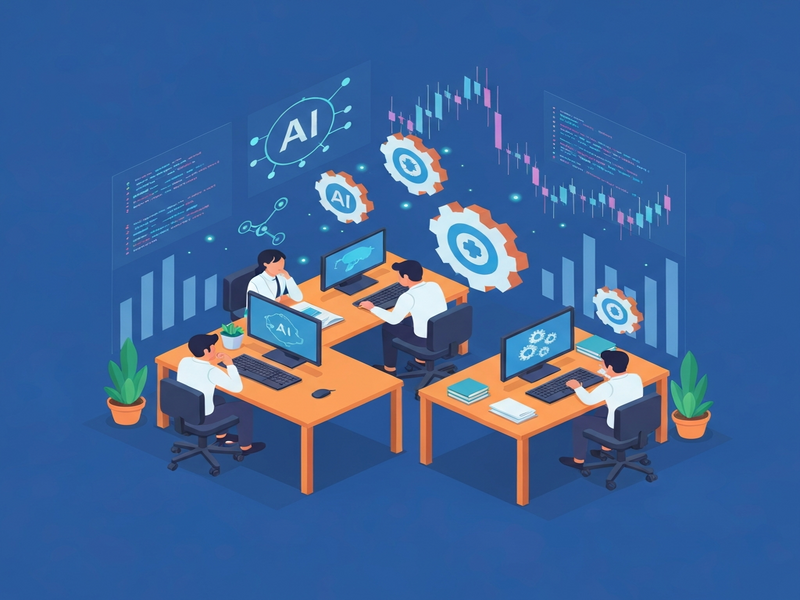
Key Discussion Points from the Hacker News Thread
- Market volatility: Initial doubts about AI’s utility morphed into fears of AI‑driven job losses, causing sharp swings in tech‑sector indices.
- Cost‑cutting via automation: Companies are reportedly using AI as a pretext to trim headcounts, especially in roles that can be automated.
- Implementation gaps: Non‑tech firms in regions like Italy and Poland are pushing AI onto employees without adequate training, leading to inefficiencies.
- Junior talent at risk: The community debates whether entry‑level engineers will become obsolete or will simply need to upskill.
- Broader economic impact: Beyond stock markets, AI adoption is influencing hiring trends, wage pressures, and resource allocation.
- Contradictory narratives: AI is simultaneously labeled a “bubble” and a “job‑killer,” reflecting deep uncertainty.
Job‑Loss Concerns: Why the Fear Is Growing
While early AI hype centered on technical limitations, the current anxiety stems from tangible use‑cases that cut costs. Below we break down the most pressing concerns.
AI as a Cost‑Cutting Tool
Enterprises are leveraging LLMs to automate repetitive tasks—code generation, data entry, and even customer support. A recent Enterprise AI platform by UBOS showcases how a single model can replace dozens of junior developers in a code‑review pipeline, slashing payroll expenses by up to 40%.
When AI can produce production‑ready code, write marketing copy, or generate legal drafts, the incentive to retain a large workforce diminishes. This is especially true for startups operating on thin margins, where every dollar saved can extend runway.
Impact on Junior Engineers and Creative Roles
Junior engineers have traditionally been the “learning ground” for companies. However, tools like OpenAI ChatGPT integration now provide instant code suggestions, debugging assistance, and documentation generation. As a result, the value proposition of hiring fresh talent for routine tasks is eroding.
Creative professions are not immune. The AI YouTube Comment Analysis tool can automatically synthesize audience sentiment, a job once performed by junior marketers. Similarly, the AI SEO Analyzer replaces entry‑level SEO specialists by delivering data‑driven recommendations in seconds.
Geographic Disparities and Offshoring
In regions where labor costs are higher, firms are more aggressive about AI adoption as a substitute for offshoring. The discussion highlighted companies in Italy and Poland that are mandating AI tools without proper change‑management, creating a “technology‑overload” scenario that can lead to burnout and attrition.
Regulatory and Ethical Considerations
Governments are beginning to scrutinize AI‑driven layoffs. The European Union’s AI Act, for instance, may require impact assessments before large‑scale automation. Companies that ignore these guidelines risk legal penalties and reputational damage.
Market Reactions: Stocks, Valuations, and Investor Sentiment
Investor sentiment has become a roller‑coaster. The following market signals illustrate the shift:
- Tech‑sector indices: The NASDAQ‑100 saw a 3% dip after major AI‑related earnings calls highlighted workforce reductions.
- AI‑centric stocks: Companies that announced aggressive AI hiring booms initially rallied, only to retreat when analysts warned of “AI‑induced layoffs.”
- Venture capital trends: Funding rounds for AI tooling startups have surged, but investors are demanding clear ROI models that factor in labor cost savings.
- Corporate earnings: Firms that integrated AI into their Workflow automation studio reported up to 15% margin improvement, prompting analysts to revise earnings forecasts upward.
These dynamics underscore a paradox: while AI fuels growth in certain segments, the fear of job displacement creates volatility that can depress broader market confidence.
Real‑World Examples and Industry Voices
Below are concrete cases that illustrate the abstract concerns discussed above.
“We replaced a team of five junior developers with an AI‑assisted code generation pipeline, cutting our sprint cycle from two weeks to three days.” – CTO, Mid‑size SaaS startup
The startup leveraged the Web app editor on UBOS to rapidly prototype AI‑driven features, demonstrating how low‑code platforms accelerate automation.
“Our marketing team now uses the AI trends dashboard to predict content performance, eliminating the need for junior copywriters.” – Head of Marketing, E‑commerce brand
Another example comes from the finance sector. A European bank integrated the ChatGPT and Telegram integration to automate routine client queries, reducing the call‑center headcount by 20%.
These stories are echoed by analysts who note that “AI is not just a productivity enhancer; it is a strategic lever for cost reduction.”
How UBOS Helps Organizations Navigate the AI Transition
Companies looking to balance AI adoption with workforce stability can turn to the UBOS platform overview. The platform offers modular AI components—such as the Chroma DB integration for vector search and the ElevenLabs AI voice integration—that can be deployed incrementally.
For startups, the UBOS for startups program provides a sandbox environment to experiment with AI without committing to large‑scale staffing changes. Meanwhile, SMBs can explore the UBOS solutions for SMBs, which include pre‑built templates like the AI Article Copywriter to automate content creation.
Enterprises seeking a holistic AI strategy can enroll in the UBOS partner program, gaining access to dedicated support, custom model training, and compliance consulting.
Conclusion: Preparing for an AI‑Driven Labor Landscape
The shift from skepticism to job‑loss anxiety marks a pivotal moment for the tech industry. While AI promises efficiency gains and new revenue streams, it also forces leaders to confront difficult workforce decisions. Companies that adopt AI responsibly—by upskilling employees, leveraging low‑code platforms, and maintaining transparent communication—will mitigate the negative market impact and position themselves for sustainable growth.
Ready to explore how AI can boost your business without sacrificing talent? Visit the UBOS homepage to discover tailored solutions, or dive into our pricing plans to find a package that fits your budget.
Stay informed, stay adaptable, and let AI be a catalyst—not a casualty—of your organization’s future.
Andrii Bidochko
CTO UBOS
Andrii Bidochko is an AI entrepreneur and researcher focused on AI agents, reinforcement learning, and autonomous systems. He writes about the technologies shaping the future of machine intelligence, from frontier models and agent architectures to real-world AI applications.