

- Updated: February 24, 2026
- 6 min read
Anthropic’s AI Partnership Talks with Pentagon: Key Details and Implications
Anthropic‑Pentagon Negotiations: $200 Million AI Deal Under Fire
Anthropic and the U.S. Department of Defense are currently negotiating a $200 million contract that hinges on the company’s “acceptable‑use policy,” a set of red‑lines that could determine whether its Claude model remains in the Pentagon’s classified AI stack.
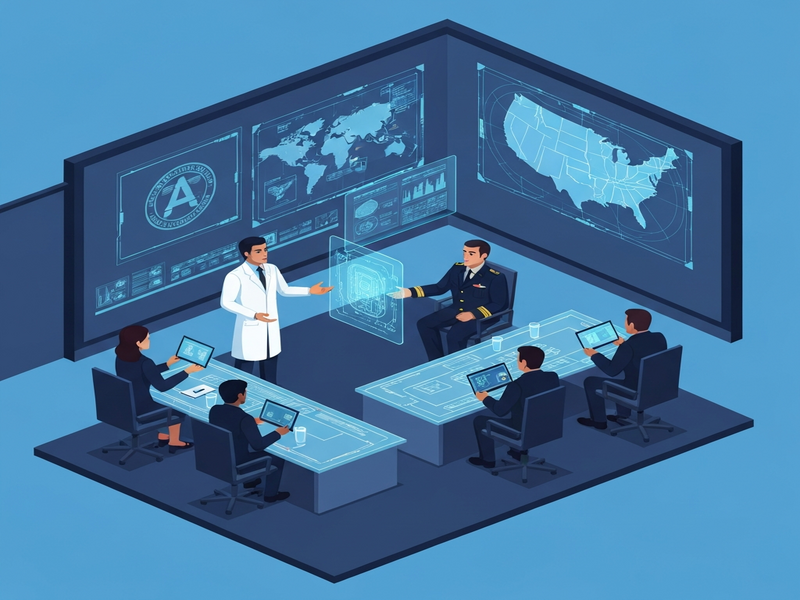
The talks, which have unfolded publicly through social media, leaked memos and insider reports, center on whether Anthropic will permit “any lawful use” of its technology—including mass surveillance and autonomous kinetic operations. The outcome will shape not only a multi‑year, multi‑hundred‑million-dollar partnership but also the broader trajectory of AI governance in U.S. defense circles.
Anthropic: The Startup Behind Claude
Founded in 2020 by former OpenAI researchers, Anthropic quickly rose to prominence with its flagship model, Claude. Claude is distinguished by a safety‑first training regime that emphasizes “constitutional AI,” a set of guiding principles designed to curb harmful outputs. Because of this approach, Claude became the first commercial foundation model cleared for Impact Level 6 (IL‑6) classified environments, allowing it to process top‑secret data on Pentagon networks.
Anthropic’s business model blends enterprise licensing with a strong emphasis on responsible AI. The company’s About UBOS page notes that Anthropic’s “acceptable‑use policy” mirrors many U.S. defense directives, such as DoD Directive 3000.09, which mandates human‑in‑the‑loop decision‑making for lethal autonomous weapons.
Pentagon Negotiations: Stakes, Players, and the $200 Million Contract
The Department of Defense signed a $200 million agreement with Anthropic in July 2025, earmarked for integrating Claude into classified workflows ranging from intelligence analysis to mission planning. The contract’s core clause requires Anthropic to honor its own usage restrictions, which currently prohibit:
- Fully autonomous kinetic operations (i.e., weapons that select and engage targets without human oversight).
- Mass domestic surveillance of U.S. persons without explicit legal authority.
Pentagon Chief Technology Officer Emil Michael, a former Uber executive, has pressed the DoD to reinterpret the “any lawful use” language in a way that would override Anthropic’s red‑lines. Michael’s stance reflects a broader “AI‑first” warfighting doctrine outlined in Secretary Pete Hegseth’s recent memo, which calls for rapid AI deployment across the kill chain.
Anthropic CEO Dario Amodei is slated to meet Secretary Hegseth at the Pentagon next week. Sources describe the meeting as a “high‑stakes, make‑or‑break” session, with the potential to either cement Anthropic’s role as the sole IL‑6‑cleared model or force the company out of the defense supply chain.
Implications for Defense, AI Policy, and the Wider Industry
The outcome of these negotiations will reverberate across three critical dimensions:
- Supply‑chain security: If Anthropic is labeled a “supply‑chain risk,” major contractors such as AWS, Palantir, and Anduril would be forced to replace Claude, potentially disrupting ongoing classified projects.
- AI ethics and governance: A forced waiver of Anthropic’s policy could set a precedent for the DoD to demand “lawful use” waivers from other AI vendors, eroding the industry‑wide push for responsible AI.
- Competitive dynamics: OpenAI, xAI, and Google’s Gemini have already renegotiated their own contracts to align with the “any lawful use” clause. However, none of those models currently hold IL‑6 clearance, meaning the Pentagon would lose a uniquely classified capability if Claude is removed.
Defense analysts on UBOS’s defense‑tech hub warn that a single‑supplier vulnerability could jeopardize mission‑critical AI pipelines, especially as the DoD accelerates AI integration into “intelligence‑to‑weapon” workflows.
Key Voices: Paraphrased Statements from Stakeholders
“We cannot compromise on the principle that AI systems must retain a human in the loop for lethal decisions,” said a senior official from the Future of Life Institute, echoing DoD Directive 3000.09.
“The Pentagon’s priority is speed, not perfection. If a model can accelerate decision‑making, we must find a way to use it,” noted an unnamed defense procurement officer, reflecting Secretary Hegseth’s “risk‑tradeoff” mindset.
“Anthropic’s red lines are already aligned with existing U.S. policy. We are simply asking for clarification, not a waiver,” Amodei reportedly told reporters after a briefing.
Read the Full Story on The Verge
For a comprehensive account of the negotiations, see the original Verge article. The piece provides additional context on the political dynamics and the potential impact on future AI contracts.
How UBOS Helps Organizations Navigate AI‑Driven Defense Projects
Companies looking to integrate AI responsibly can leverage the AI news hub for the latest policy updates, while the Workflow automation studio enables secure, low‑code orchestration of AI models across classified and unclassified environments.
The Web app editor on UBOS lets developers prototype compliance‑first interfaces, and the Enterprise AI platform by UBOS offers built‑in governance layers that mirror DoD directives.
For startups seeking a fast entry point, the UBOS for startups program provides templates such as the AI SEO Analyzer and the AI Article Copywriter, which can be repurposed for defense‑grade documentation while maintaining audit trails.
SMBs can explore the UBOS solutions for SMBs, which include the AI Email Marketing template—useful for secure internal briefings and stakeholder updates.
Further Reading & Tools
- AI marketing agents – automate campaign creation with policy‑compliant prompts.
- UBOS pricing plans – transparent tiers for enterprises and defense contractors.
- UBOS portfolio examples – case studies of AI integration in secure environments.
- UBOS templates for quick start – jump‑start compliance‑first AI projects.
Conclusion: A Pivotal Moment for AI in Defense
The Anthropic‑Pentagon negotiations represent a watershed moment where the imperatives of national security intersect with the ethical guardrails of modern AI. A decision that forces Anthropic to abandon its acceptable‑use policy could unlock broader “any lawful use” deployments, but at the cost of eroding the very safeguards that keep autonomous systems accountable.
For policymakers, defense contractors, and AI innovators alike, the lesson is clear: responsible AI governance is no longer a peripheral concern—it is a strategic asset. Whether Anthropic secures its $200 million contract or is sidelined, the ripple effects will shape how the U.S. military—and the global defense industry—approach AI for years to come.
Stay informed on AI policy developments and discover how UBOS can help you build compliant, high‑performance AI solutions.
Andrii Bidochko
CTO UBOS
Andrii Bidochko is an AI entrepreneur and researcher focused on AI agents, reinforcement learning, and autonomous systems. He writes about the technologies shaping the future of machine intelligence, from frontier models and agent architectures to real-world AI applications.