

- Updated: February 23, 2026
- 5 min read
Hetzner Announces 2026 Price Adjustments for Cloud Services – What It Means for Your Business
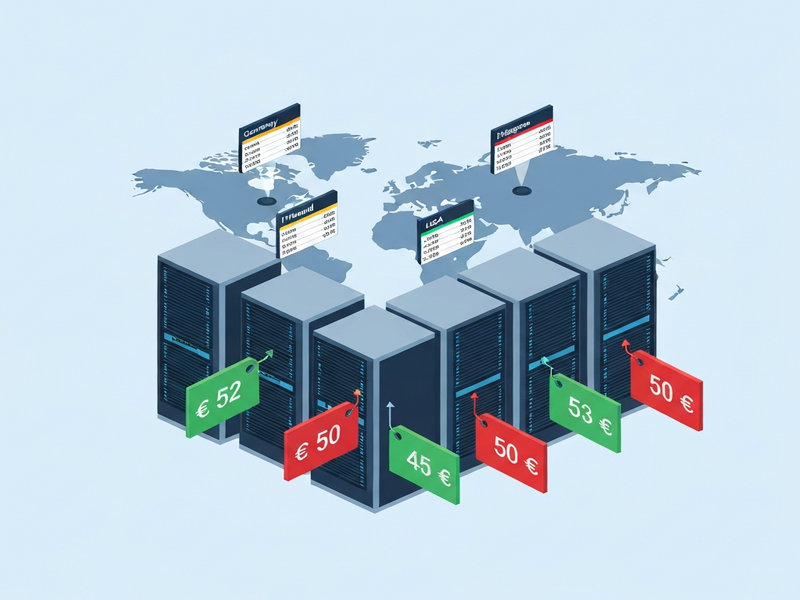
Hetzner will increase the hourly and monthly rates for its cloud servers, load balancers, and object storage on 1 April 2026, affecting both new orders and existing contracts across Europe and the United States.
What the Hetzner price adjustment means for cloud‑focused businesses
Hetzner, one of Europe’s most cost‑effective infrastructure providers, announced a comprehensive price revision that will take effect on 1 April 2026. The change covers all major cloud products—virtual machines (CAX, CCX, CPX, CX series), load balancers, and object storage—across its German, Finnish, US, and Singapore data‑center regions. For IT decision‑makers, DevOps engineers, and cloud infrastructure managers, the adjustment translates into higher operating expenses that must be reflected in budgeting, capacity planning, and cost‑optimization strategies.
Detailed breakdown of affected services
The price revision touches three core service categories:
1️⃣ Cloud servers (VMs)
All VM families see a uniform uplift ranging from ~15 % for entry‑level instances to over 30 % for high‑performance configurations. Below is a representative snapshot for the German region (prices in € per hour / per month):
| Instance | Old (€/h / €/mo) | New (€/h / €/mo) | % Increase |
|---|---|---|---|
| CAX11 | 0.0053 / 3.29 | 0.0072 / 4.49 | +36 % |
| CAX41 | 0.0384 / 23.99 | 0.0505 / 31.49 | +32 % |
| CCX63 | 0.4615 / 287.99 | 0.6001 / 374.49 | +30 % |
| CX53 | 0.0272 / 16.99 | 0.0360 / 22.49 | +33 % |
2️⃣ Load balancers
Load balancer pricing follows a similar trajectory, with the smallest LB11 moving from €0.0088 /h to €0.0120 /h (+36 %). Larger balancers (LB31) see a rise from €0.0495 /h to €0.0689 /h (+39 %). These changes affect traffic‑distribution layers for high‑availability architectures.
3️⃣ Object storage
Base object‑storage rates increase from €0.0081 /h to €0.0104 /h (+28 %). Additional storage per GB also climbs from €0.0067 /h to €0.0087 /h (+30 %). For data‑intensive workloads, the cumulative effect can be substantial.
Old vs. new pricing – a side‑by‑side look
Below is a concise comparison that highlights the most common price points across regions. All figures exclude VAT.
- German CAX21 VM: €0.0096 /h (old) → €0.0128 /h (new) – ≈33 % increase.
- US CCX13 VM: €0.0209 /h (old) → €0.0272 /h (new) – ≈30 % increase.
- Singapore LB21: €0.0253 /h (old) → €0.0344 /h (new) – ≈36 % increase.
- Object storage (base): €0.0081 /h → €0.0104 /h – ≈28 % increase.
When converted to monthly billing, the same instances see a jump of roughly €2–€70 per month, depending on size. For enterprises running dozens of instances, the aggregate impact can exceed several thousand euros each month.
Impact analysis for businesses
Understanding the financial ripple effect is essential for budgeting and cost‑optimization. Below are three practical lenses through which decision‑makers should evaluate the adjustment.
💡 Budget forecasting
Most organizations base their cloud spend forecasts on historical usage patterns. The 30‑plus percent uplift forces a recalibration of quarterly and annual budgets. A simple spreadsheet model that multiplies current instance counts by the new hourly rates can reveal the exact delta.
⚙️ Architecture review
Higher VM costs incentivize a review of workload placement. Consider:
- Consolidating under‑utilized instances into larger, more cost‑effective shapes.
- Shifting bursty workloads to spot or pre‑emptible instances where possible.
- Leveraging Workflow automation studio to orchestrate auto‑scaling policies that shut down idle resources.
📊 Competitive pricing analysis
Hetzner’s price hike narrows its historic advantage over rivals such as AWS, Azure, and Google Cloud. Companies should benchmark the new rates against comparable offerings, factoring in performance, data‑transfer costs, and regional latency.
What Hetzner says
“In order to sustain the quality of our infrastructure and to continue investing in next‑generation hardware, we are adjusting our cloud pricing effective 1 April 2026. Existing customers will see the new rates applied to any resources that are provisioned after this date.” – Hetzner Communications Team
How to stay ahead with UBOS
While Hetzner’s price adjustment may feel like a cost shock, it also opens an opportunity to re‑evaluate your cloud strategy. UBOS offers a suite of tools that help you migrate, optimize, and even build AI‑enhanced services on top of any provider.
- Explore the UBOS platform overview to see how a unified dashboard can monitor multi‑cloud spend in real time.
- Leverage the Enterprise AI platform by UBOS to embed intelligent cost‑prediction models directly into your pipelines.
- Kick‑start a new project with UBOS templates for quick start, such as the AI SEO Analyzer or the AI Article Copywriter, which run on any cloud backend.
- For startups, the UBOS for startups program provides discounted compute credits that can offset Hetzner’s higher rates.
- SMBs can benefit from the UBOS solutions for SMBs, which include pre‑configured cost‑control policies.
- Need a custom integration? Check out the Telegram integration on UBOS or the OpenAI ChatGPT integration to automate alerts when spend thresholds are breached.
- Join the UBOS partner program to co‑sell cost‑optimization services to your clients.
By aligning your cloud governance with UBOS’s AI‑driven insights, you can mitigate the impact of Hetzner’s price increase while unlocking new efficiencies.
Read the official announcement
The full Hetzner price‑adjustment notice is available on their documentation portal: Hetzner price adjustment page. The document details the exact rollout schedule, regional breakdowns, and the rationale behind the change.
Conclusion: Navigating the Hetzner price adjustment
Hetzner’s 2026 price adjustment reshapes the cost landscape for cloud servers, load balancers, and object storage across Europe and the United States. IT leaders must act now—re‑forecast budgets, audit workloads, and consider multi‑cloud alternatives. Leveraging UBOS’s AI marketing agents, Web app editor on UBOS, and the extensive UBOS portfolio examples can accelerate the transition to a more cost‑effective, AI‑enhanced architecture.
Stay informed, stay optimized, and turn pricing changes into a catalyst for smarter cloud adoption.
Andrii Bidochko
CTO UBOS
Andrii Bidochko is an AI entrepreneur and researcher focused on AI agents, reinforcement learning, and autonomous systems. He writes about the technologies shaping the future of machine intelligence, from frontier models and agent architectures to real-world AI applications.