

- Updated: February 23, 2026
- 6 min read
How Daily Rituals Help Manage Uncertainty and Stress
Daily rituals give our brains a sense of predictability, which lowers anxiety, improves performance, and strengthens social bonds, especially when we face uncertainty and stress.
How Daily Rituals Help Us Cope with Uncertainty and Stress
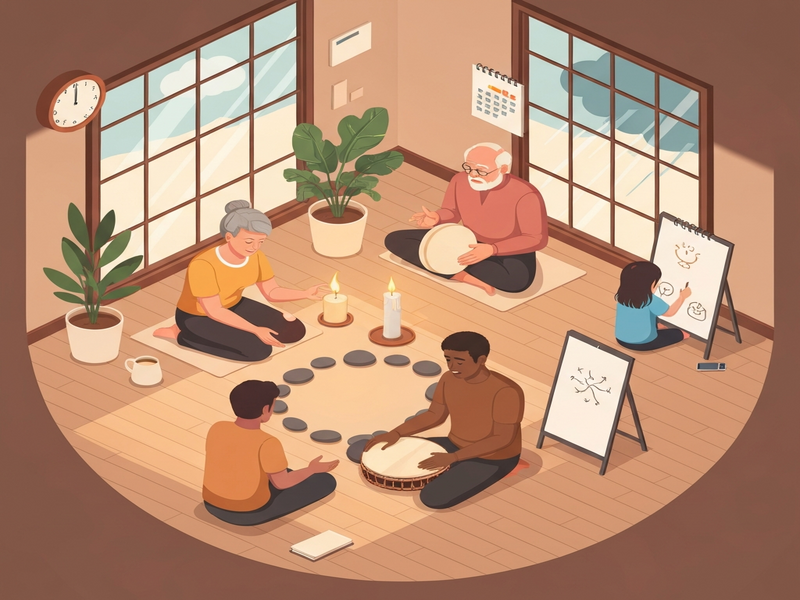
In a world where change is constant and pressure is relentless, many tech‑savvy professionals turn to simple, repeatable actions to stay grounded. Recent research highlighted by BBC Future confirms that rituals—whether a morning coffee ritual, a pre‑meeting breathing exercise, or a nightly journaling habit—act as psychological anchors. This article unpacks the science, history, and practical steps you can take to embed effective rituals into your daily workflow.
Why Rituals Matter: The Brain’s Need for Predictability
Psychologists define a ritual as “a predefined sequence of symbolic actions that lacks direct instrumental purpose.” Neuroscience shows that such sequences trigger the brain’s prefrontal cortex, which is responsible for planning and self‑control, while simultaneously calming the amygdala, the fear center.
- Pattern recognition: Repeating actions creates neural pathways that make future events feel more controllable.
- Stress buffering: Rituals release dopamine, a neurotransmitter linked to reward and motivation, which counteracts cortisol spikes.
- Sense of agency: Even a tiny, symbolic act (e.g., lighting a candle) signals to the brain that you are actively shaping your environment.
These mechanisms explain why a simple habit can transform a chaotic morning into a calm, focused start.
Rituals Across Time and Cultures
Rituals are not a modern invention. Archaeologists uncovered a 70,000‑year‑old python carving in Botswana, accompanied by burnt stone spearheads—evidence of early humans performing symbolic sacrifices to gain control over the unknown.
Anthropologist Bronislaw Malinowski documented the Trobriand Islanders’ elaborate canoe‑painting ceremonies before venturing into the Pacific. Though the same fishermen skipped the rites when navigating calm lagoon waters, the rituals served as a psychological shield against the ocean’s unpredictability.
Similar superstitions appear among deep‑sea fishers off Texas and skippers in East Anglia, reinforcing a universal pattern: when stakes are high and outcomes uncertain, humans create rituals to mitigate anxiety.
Modern Science Confirms the Stress‑Reducing Power of Rituals
Recent experiments provide quantitative backing:
- Pre‑performance ritual study: Participants who sprinkled salt on drawings before singing “Don’t Stop Believing” showed lower heart rates and higher pitch accuracy than a control group (Harvard Business School, Francesca Gino).
- Temple ritual trial: Hindu women who prayed at a local temple before delivering a speech reported significantly reduced anxiety and lower physiological arousal compared with peers who simply rested.
- Group chanting research: Football fans who engaged in synchronized chants experienced heightened oxytocin levels, strengthening social bonds and elevating mood.
These findings illustrate that the form of the ritual matters less than the act of performing it. Even brief, low‑effort actions can recalibrate the nervous system.
Key Benefits of Daily Rituals
Anxiety Relief
Rituals activate the parasympathetic nervous system, lowering cortisol and heart rate. This physiological shift translates into a calmer mental state, making it easier to face unpredictable challenges.
Performance Boost
By establishing a pre‑task routine, athletes like Rafael Nadal (who follows 19 personal rituals) and public speakers alike experience heightened focus and reduced “stage fright.”
Social Bonding
Shared rituals—whether a weekly virtual coffee or a team‑wide meditation—signal group identity, fostering trust and cooperation. Studies show that collective rituals increase pain thresholds and positive affect, reinforcing cohesion.
Sense of Control
When external variables feel out of hand, a self‑chosen ritual restores agency. Even simple actions like arranging a desk in a specific order can create an internal “anchor” that steadies decision‑making.
Potential Downsides and Cautions
While rituals are largely beneficial, they can backfire if they become rigid or exclusionary:
- Inter‑group bias: Collective rituals may unintentionally create “us vs. them” mentalities, amplifying social division.
- Hazing and harmful initiation: Some group rituals devolve into abusive practices, leading to psychological trauma or even physical harm.
- Over‑reliance: If a ritual is the only coping mechanism, individuals may struggle when circumstances prevent its execution.
Mindful design—ensuring rituals are inclusive, flexible, and optional—mitigates these risks.
How to Build Your Own Stress‑Reducing Rituals
Follow this MECE‑styled framework to craft rituals that align with your goals and lifestyle:
1. Define the Trigger
Identify a consistent cue—e.g., opening your laptop, arriving at the office, or the first sip of water.
2. Choose a Symbolic Action
Pick a simple, repeatable act that carries personal meaning. Examples include:
- Lighting a scented candle before deep work.
- Writing three gratitude points in a digital notebook.
- Running a 30‑second mindfulness timer via the AI Video Chat Bot on your desktop.
3. Keep It Brief
Effective rituals last 30 seconds to two minutes. The goal is consistency, not duration.
4. Embed Technology (Optional)
Leverage AI tools to automate or enhance your ritual:
- Use the AI Article Copywriter to generate a quick daily affirmation.
- Integrate OpenAI ChatGPT integration for a 1‑minute reflective chat.
- Set up a Workflow automation studio to trigger a calming playlist at 9 am.
5. Review and Iterate
Every two weeks, assess the ritual’s impact on your stress levels and productivity. Adjust the trigger or action as needed.
“A ritual is a tiny promise you make to yourself that the day will have at least one moment of order.” – Francesca Gino
Conclusion: Turn Uncertainty into Opportunity
By weaving intentional, symbolic actions into your routine, you give your brain a reliable scaffold that reduces anxiety, sharpens performance, and deepens connections. Whether you’re a startup founder, a corporate manager, or a freelance developer, the science is clear: rituals are a low‑cost, high‑impact tool for thriving in volatile environments.
Ready to experiment with AI‑enhanced rituals? Explore the UBOS platform overview to build custom workflows, or try the UBOS templates for quick start that include pre‑built meditation and focus routines. For startups seeking a competitive edge, the UBOS for startups program offers tailored AI agents that can remind you of your daily rituals automatically.
Embrace the power of ritual today, and transform uncertainty into a source of confidence and creativity.
Andrii Bidochko
CTO UBOS
Andrii Bidochko is an AI entrepreneur and researcher focused on AI agents, reinforcement learning, and autonomous systems. He writes about the technologies shaping the future of machine intelligence, from frontier models and agent architectures to real-world AI applications.