

- Updated: February 22, 2026
- 7 min read
Red Bull Media House Launches Playable Tetris Magazine
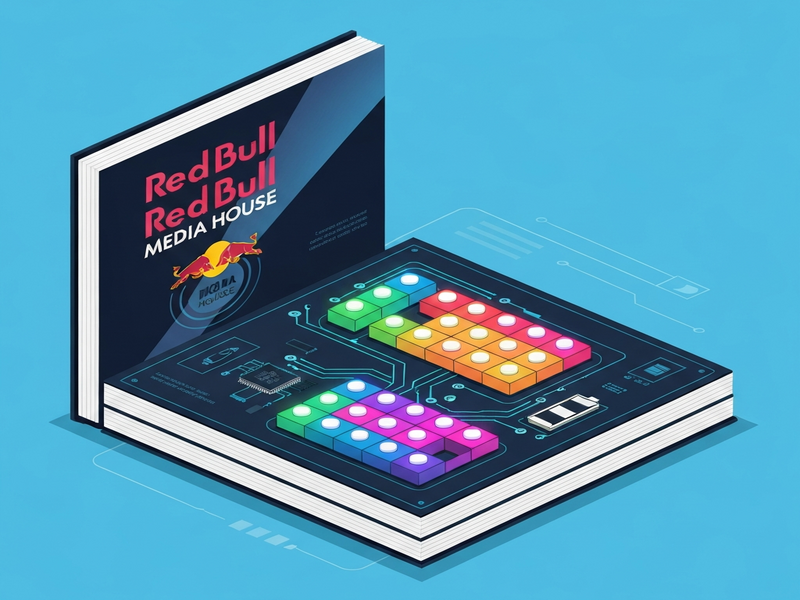
Red Bull Media House has released a limited‑edition, paper‑thin magazine whose cover doubles as a fully functional Tetris game, using a flexible LED matrix, custom circuitry, and a rechargeable coin‑cell battery.
A Playable Magazine That Turns Every Page Into a Game Board
Imagine flipping through a glossy lifestyle magazine and, instead of just reading an article, you can instantly start a game of Tetris on the cover. That’s exactly what Red Bull Media House delivered with its newest playable magazine. The concept blends the tactile joy of print with the interactivity of modern gaming, creating a collectible that feels like a novelty gadget and a piece of media art at the same time.
Red Bull Media House’s Vision: Interactive Publishing Meets Tech Innovation
Red Bull Media House, the content arm behind the iconic The Red Bulletin, has a history of pushing the envelope—whether it’s sponsoring massive drone light‑shows or sponsoring esports tournaments. The latest experiment, dubbed the GamePop GP‑1 Playable Magazine System, transforms the magazine’s front cover into a flexible Tetris display that can be played straight out of the box.
The project was born out of a partnership with Kevin Bates, a maker known for ultra‑thin gaming cards and the $39 Arduboy handheld. Bates’ decade‑long work on pocket‑sized Tetris devices culminated in a design that could survive the rigors of a printed medium while staying under 5 mm thick at its thickest point.
Inside the Flexible Tetris Display: LEDs, Circuits, PCB, and Battery
The heart of the magazine is a custom‑engineered matrix of 180 RGB LEDs, each only 2 mm across. These LEDs are mounted on a flexible circuit board that is a mere 0.1 mm thick, allowing the cover to bend without cracking.
Key hardware components
- LED matrix: 180 tiny RGB LEDs arranged in a 15 × 12 grid, providing enough resolution for recognizable Tetris blocks.
- Flexible PCB: A thin polymer substrate that carries the LED traces and seven capacitive touch sensors printed directly into the copper layer.
- Rigid microcontroller board: A small ARM‑based 32‑bit processor sits along the spine, handling game logic, scoring, and power management.
- Power source: Four LIR2016 3 V rechargeable coin‑cell batteries supply up to two hours of continuous play.
- Charging interface: A deconstructed USB‑C port hidden in a paper pocket lets users recharge the device without removing it from the magazine.
Touch controls without mechanical buttons
Instead of traditional buttons, the cover uses seven capacitive touch sensors printed into the copper layer. When you press the paper‑covered sensor, the flex of the page gives a tactile “click” sensation, making the controls feel surprisingly responsive despite the lack of moving parts.
“We wanted something that could survive being folded, slipped into a bag, and even get a few knocks. The flexible LED matrix and capacitive sensors gave us that durability while keeping the experience paper‑thin.” – Kevin Bates, creator of the GamePop GP‑1.
Durability testing
Bates put the prototype through a series of stress tests, including hammer blows and repeated flex cycles. The LED matrix held up, proving that flexible circuitry can be more resilient than many consumer‑grade foldable OLED screens, which are prone to creasing and delamination.
From Prototype to Limited‑Edition Release
Developing the playable cover took “most of last year,” according to Bates. The process involved several stages:
- Designing the LED matrix layout and sourcing ultra‑thin flexible PCBs.
- Integrating the microcontroller and programming the Tetris engine in C++.
- Embedding the flexible circuit between two sheets of high‑grammage paper using a low‑temperature adhesive.
- Testing power consumption and optimizing the piezo speaker to extend battery life.
- Creating a hidden USB‑C charging pocket that blends seamlessly with the magazine’s graphic design.
Red Bull printed roughly 1,000 copies of the special edition, but only 150 featured the playable cover. Those copies were distributed to Tetris tournament participants, influencers, and select media outlets. The magazine is available for purchase online in Europe and at specialty newsstands such as Iconic Magazines in New York and Rare Mags in Manchester.
Why This Matters: A New Frontier for Interactive Publishing
The Red Bull playable magazine is more than a clever gimmick; it signals a shift in how publishers can blend physical and digital experiences. Here are three ways it could influence the future of media:
1. Re‑imagining the print product as an interactive platform
Traditional magazines rely on static images and text. By embedding a functional game, publishers can create a “value‑added” product that encourages repeat engagement, social sharing, and collector appeal.
2. Leveraging affordable flexible electronics
The cost‑effective use of off‑the‑shelf LEDs, coin‑cell batteries, and flexible PCBs demonstrates that high‑tech features no longer require expensive OLED panels. This opens the door for smaller publishers to experiment with similar concepts—think QR‑code‑triggered AR, NFC‑enabled coupons, or even low‑resolution e‑ink displays.
3. Creating new revenue streams through limited‑edition collectibles
Limited runs of tech‑enhanced print media can command premium pricing and generate buzz on social platforms. The scarcity model mirrors the success of limited‑edition sneakers and can be combined with subscription bundles or NFT‑based ownership verification.
For SaaS companies and developers, the underlying technology offers a sandbox for building custom interactive experiences. Imagine integrating a OpenAI ChatGPT integration into a printed brochure, or using the Chroma DB integration to store user interaction data locally on a flexible chip.
What’s Next? Explore Interactive Solutions on UBOS
If the Red Bull playable magazine sparked your imagination, UBOS offers a suite of tools to turn similar ideas into reality:
- Start with the UBOS homepage to explore the platform’s low‑code environment.
- Check out the UBOS platform overview for details on flexible UI components.
- Leverage AI marketing agents to auto‑generate promotional copy for your interactive product.
- For startups, the UBOS for startups program provides discounted access to premium modules.
- SMBs can benefit from UBOS solutions for SMBs, which include ready‑made templates for printable tech.
- Enterprises looking for scale should explore the Enterprise AI platform by UBOS, which supports massive device fleets.
- Design interactive pages with the Web app editor on UBOS, a drag‑and‑drop builder for HTML5 canvases.
- Automate workflows using the Workflow automation studio, perfect for syncing device data to cloud services.
- Review pricing options on the UBOS pricing plans page to find a tier that matches your budget.
- Get inspiration from real‑world projects in the UBOS portfolio examples.
- Kick‑start development with UBOS templates for quick start, including a “Tetris‑style LED matrix” starter kit.
- Integrate messaging bots via the Telegram integration on UBOS to push updates to users.
- Combine chat capabilities with Telegram using the ChatGPT and Telegram integration for real‑time support.
- Explore voice interaction with the ElevenLabs AI voice integration for audio feedback on printed devices.
- Learn more about our mission on the About UBOS page.
- Consider joining the UBOS partner program to co‑create innovative hardware‑software experiences.
The convergence of flexible electronics and low‑code development platforms like UBOS means that today’s novelty can become tomorrow’s mainstream product. Whether you’re a tech enthusiast, a media publisher, or a startup founder, the tools are finally within reach.
For the original reporting on Red Bull’s playable magazine, see the article on The Verge.
Andrii Bidochko
CTO UBOS
Andrii Bidochko is an AI entrepreneur and researcher focused on AI agents, reinforcement learning, and autonomous systems. He writes about the technologies shaping the future of machine intelligence, from frontier models and agent architectures to real-world AI applications.