

- Updated: February 21, 2026
- 5 min read
ZClaw: Lightweight AI Assistant Firmware for ESP32
ZClaw is a lightweight, open‑source AI assistant firmware for ESP32 devices that fits under 1 MiB, supports Telegram and OpenAI integrations, and runs on FreeRTOS/ESP‑IDF.
Introduction
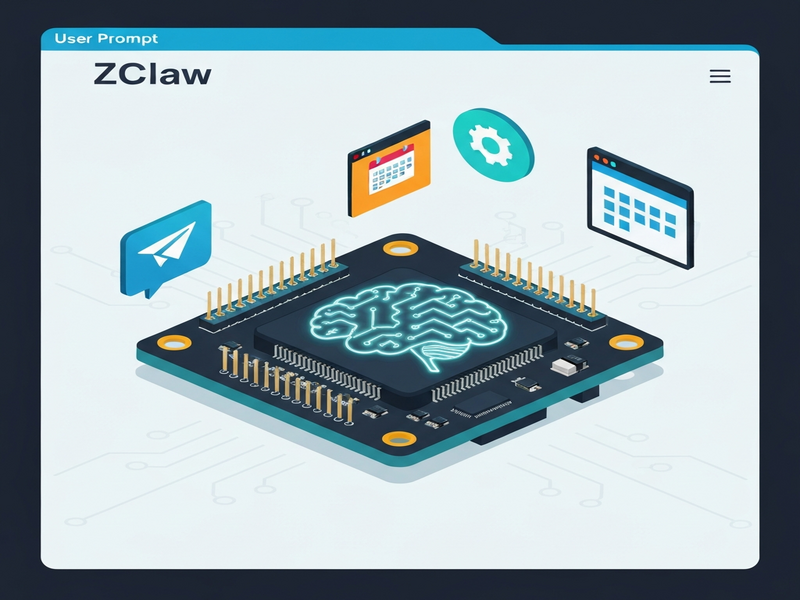
For ESP32 hobbyists and IoT developers, finding a compact yet powerful AI assistant has long been a challenge. The ZClaw ESP32 project answers that call by delivering a full‑featured AI agent in a firmware image that stays well below the 1 MiB threshold. Built with the ESP‑IDF and FreeRTOS, ZClaw brings natural‑language task automation, secure credential storage, and multi‑channel communication (Telegram, web relay, and OpenAI) to any ESP32‑C3, ESP32‑S3, or ESP32‑C6 board.
Project Overview
ZClaw is designed with three core principles in mind:
- Minimal footprint: The entire binary stays under 888 KiB, leaving ample flash for user code.
- Extensible AI workflow: Users can compose custom tools using natural language prompts, schedule tasks, and control GPIOs.
- Secure by default: Encrypted flash and TLS/crypto stacks protect credentials and network traffic.
These principles make ZClaw an ideal foundation for projects ranging from smart home controllers to portable AI assistants.
Key Features
The firmware packs a surprising amount of functionality for its size:
| Feature | Benefit |
|---|---|
| Telegram integration | Telegram integration on UBOS enables real‑time command and status updates from any chat client. |
| ChatGPT & OpenAI support | OpenAI ChatGPT integration lets the device answer natural‑language queries without leaving the board. |
| FreeRTOS scheduling | Run periodic jobs (e.g., sensor reads) alongside AI tasks without blocking. |
| Secure flash encryption | Credentials are stored in encrypted NVS, meeting industry best practices. |
| GPIO control via natural language | Ask ZClaw to “turn on the LED” and it toggles the pin instantly. |
Technical Specifications
ZClaw leverages the native ESP‑IDF toolchain and the following components:
- Language: C (compiled with ESP‑IDF 5.x)
- RTOS: FreeRTOS (built‑in scheduler)
- Networking: Wi‑Fi stack (~366 KiB) with TLS/crypto (~123 KiB)
- Certificate bundle: ~90 KiB for secure HTTPS connections
- Supported chips: ESP32‑C3, ESP32‑S3, ESP32‑C6 (and other ESP32 variants with minor tweaks)
- Memory usage: Total binary ≈ 845 KiB, leaving ~200 KiB for user extensions
Installation & Usage Guide
Getting ZClaw up and running is straightforward, even for developers new to ESP32.
Prerequisites
- macOS or Linux terminal (Windows via WSL works as well)
- Python 3.9+ (for helper scripts)
- ESP‑IDF installed (use the official Espressif repo)
One‑Line Bootstrap
curl -sSL https://raw.githubusercontent.com/tnm/zclaw/main/bootstrap.sh | bashThis script clones the repo, sets up the environment, and builds the firmware.
Flashing the Firmware
idf.py -p /dev/ttyUSB0 flash monitorReplace /dev/ttyUSB0 with your serial port. The monitor will display boot logs and the ZClaw prompt.
Provisioning Wi‑Fi & Telegram Bot
Run the provisioning script to store Wi‑Fi SSID, password, and Telegram bot token securely:
python tools/provision.py --wifi-ssid MyNetwork --wifi-pass secret123 --tg-token 123456:ABCDEFFirst Interaction
Open Telegram, start a chat with your bot, and send:
What time is it?
ZClaw will reply with the current time, demonstrating the AI pipeline.
Community & Licensing Information
ZClaw is released under the permissive MIT license, encouraging both commercial and hobbyist use. The project’s GitHub repository (GitHub – ZClaw) hosts:
- Source code and build scripts
- Extensive documentation and FAQ
- Issue tracker for bug reports and feature requests
- Community‑driven forks that add niche integrations (e.g., ChatGPT and Telegram integration)
Developers are encouraged to submit pull requests, share template apps, or join the UBOS partner program to co‑market their ZClaw‑based solutions.
Why ZClaw Stands Out in the ESP32 Ecosystem
Compared with generic firmware like Arduino or ESP‑Home, ZClaw’s AI‑first approach offers:
- Sub‑MiB footprint: Ideal for devices with limited flash.
- Native AI channel support: Direct calls to OpenAI or local LLMs without extra middleware.
- Secure provisioning: Encrypted NVS and TLS ensure data privacy.
- Extensible template marketplace: Reuse ready‑made AI apps such as the AI SEO Analyzer or the AI Chatbot template to accelerate development.
Integrating ZClaw with UBOS AI Services
UBOS provides a suite of AI‑powered tools that complement ZClaw’s capabilities. For example, you can connect ZClaw’s Telegram bot to the AI marketing agents to auto‑generate promotional copy, or pipe sensor data into the UBOS templates for quick start and instantly create dashboards.
Developers building SaaS products can leverage the Enterprise AI platform by UBOS to scale ZClaw‑based edge devices across fleets, while startups may find the UBOS for startups program useful for early‑stage funding and technical mentorship.
Real‑World Use Cases
Below are three illustrative scenarios where ZClaw shines:
- Smart Garden Monitor: Sensors report soil moisture; ZClaw uses OpenAI to suggest watering schedules and sends alerts via Telegram.
- Portable Language Translator: Combine ZClaw with the Multi-language AI Translator template to translate spoken phrases on the fly.
- Edge‑AI Security Camera: Capture frames, run a lightweight object detector, and have ZClaw log events to a cloud endpoint using the Web app editor on UBOS.
Pricing & Support
While ZClaw itself is free under MIT, many developers choose UBOS’s managed services for hassle‑free deployment. Review the UBOS pricing plans to find a tier that matches your project scale.
Conclusion & Call‑to‑Action
In a landscape crowded with heavyweight IoT frameworks, ZClaw delivers a lean, AI‑ready firmware that fits comfortably under 1 MiB, offers secure communications, and integrates seamlessly with popular platforms like Telegram and OpenAI. Whether you are a hobbyist building a personal assistant or a startup looking to prototype edge‑AI solutions, ZClaw provides a solid foundation.
Ready to try it? Clone the repository, flash your ESP32, and start chatting with your new AI companion today. For deeper integration with UBOS’s AI ecosystem, explore the UBOS partner program and discover how you can monetize your ZClaw‑powered creations.
Source: Original news article