

- Updated: February 19, 2026
- 6 min read
StrauDE: Gamified AI Coding Assistant Boosts Developer Productivity
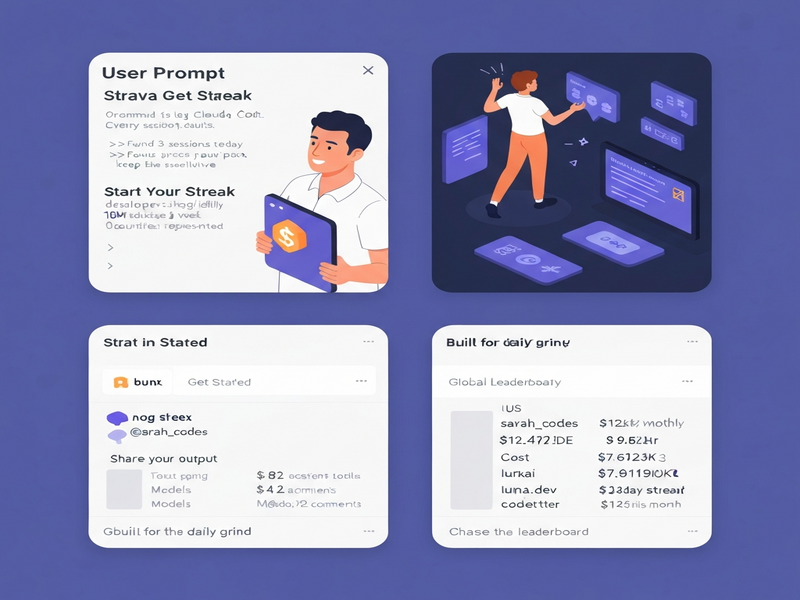
STRAUDE is a developer‑focused platform that gamifies AI coding by tracking Claude usage, awarding streaks, displaying leaderboards, and enabling community posts, turning every coding session into a measurable productivity boost.
Introduction
In the fast‑moving world of AI‑assisted development, staying motivated and accountable can be as challenging as mastering the underlying models. STRAUDE tackles this problem head‑on by turning Claude‑powered coding sessions into a social sport. Think of it as “Strava for code” – a place where developers log every token, cost, and model usage, compare their pace with peers, and keep their streaks alive.
For tech‑savvy developers and AI enthusiasts, STRAUDE offers a fresh lens on productivity: data‑driven insights, gamified competition, and a vibrant community that celebrates every line of code generated by an AI assistant.
What is STRAUDE?
STRAUDE is a lightweight, zero‑install CLI tool that scans your local Claude Code usage, extracts session metrics, and posts a concise summary to your public profile. Each post includes:
- Token count and monetary cost per session
- Models invoked (Claude‑Instant, Claude‑2, etc.)
- Timestamped streak information
- Automatic placement on global and regional leaderboards
The platform also provides a public feed where developers can share achievements, ask for feedback, and discover optimization tips. By turning raw usage data into shareable content, STRAUDE creates a feedback loop that encourages better prompt engineering and cost‑effective model selection.
Core Features
Coding Streaks
Streaks are the heartbeat of STRAUDE. A streak begins the moment you log your first Claude session of the day and continues as long as you log at least one session every subsequent day. Missing a day resets the counter, adding a gentle pressure to stay consistent.
Leaderboards
Leaderboards are split into three timeframes—daily, weekly, and monthly—and are further segmented by region (e.g., US, EU, APAC). Rankings are based on a weighted score that considers token volume, cost efficiency, and streak length. This multi‑dimensional scoring system ensures that both high‑volume power users and frugal coders can compete on a level playing field.
Usage Statistics
Every post includes a snapshot of your session:
- Tokens processed: Total tokens generated by Claude.
- Cost breakdown: Dollar amount per model, helping you spot expensive calls.
- Model mix: Which Claude versions you used and how often.
These stats are visualized in a clean card format that can be embedded in personal blogs or team dashboards.
Community Posts
Beyond numbers, STRAUDE’s feed is a social hub. Developers post insights, share prompt templates, and celebrate milestones. The platform’s comment system encourages peer‑review, turning each log into a learning opportunity.
Why It Matters for AI Coding Assistants and Developers
AI coding assistants like Claude promise to accelerate development, but without visibility into usage patterns, teams can inadvertently overspend or underutilize model capabilities. STRAUDE solves three critical pain points:
- Accountability: Streaks and leaderboards create a habit‑forming loop that nudges developers to code daily.
- Cost Transparency: Real‑time cost reporting prevents surprise bills and encourages smarter prompt design.
- Community‑Driven Optimization: By sharing logs, developers can crowdsource prompt improvements and discover best‑practice patterns.
For enterprises, these insights can be aggregated to monitor team productivity, allocate AI budgets, and enforce governance policies.
Comparison with Claude and Other AI Agents
While Claude remains the core engine behind STRAUDE’s data collection, the platform’s gamified layer distinguishes it from plain usage dashboards. Below is a quick comparison:
| Feature | STRAUDE | Claude (native) | Other AI Agents (e.g., ChatGPT, Gemini) |
|---|---|---|---|
| Gamified Streaks | ✅ | ❌ | ❌ |
| Public Feed | ✅ | ❌ | ❌ |
| Cost Breakdown per Model | ✅ | ❌ | Partial |
| Leaderboard Rankings | ✅ | ❌ | ❌ |
| Zero‑Install CLI | ✅ | ✅ | ✅ |
In short, STRAUDE adds a social and analytical layer that most AI agents lack, making it especially valuable for developers who thrive on competition and data‑driven improvement.
Getting Started & Community Engagement
Starting with STRAUDE is intentionally frictionless. Follow these three steps:
- Install the CLI (or use npx):
npx straude@latestscans your local Claude logs and prepares a post. - Authorize your profile: Connect your STRAUDE account with your preferred GitHub or email handle.
- Post and compete: Your first session appears on the public feed, and you instantly join the global leaderboard.
Once you’re on board, consider these community‑driven actions to maximize value:
- Comment on peers’ posts to exchange prompt tricks.
- Join regional “coding sprint” events hosted on the feed.
- Leverage UBOS templates for quick start to build companion tools that ingest STRAUDE data.
- Explore the AI news hub for the latest trends in AI‑assisted development.
- Check out the developer tools section for integrations that can enrich your STRAUDE workflow.
“Seeing my daily token count and cost side‑by‑side with the community’s stats made me rethink my prompt design. I cut my monthly spend by 18% just by swapping a few model calls.” – Maria L., senior AI engineer
How STRAUDE Fits Into the Wider UBOS Ecosystem
While STRAUDE focuses on Claude, the UBOS homepage offers a suite of AI‑powered services that can complement your workflow. For instance, you can pipe STRAUDE logs into the Workflow automation studio to trigger alerts when daily costs exceed a threshold.
Developers looking to prototype AI‑enhanced features can start with the Web app editor on UBOS, which provides drag‑and‑drop components for building dashboards that visualize STRAUDE metrics in real time.
For startups, the UBOS for startups program includes credits that can offset the cost of running Claude models, while SMBs can benefit from the UBOS solutions for SMBs pricing tier.
Enterprises seeking a more robust AI stack can explore the Enterprise AI platform by UBOS, which integrates with OpenAI ChatGPT integration, Chroma DB integration, and even voice capabilities via the ElevenLabs AI voice integration. These integrations enable you to enrich STRAUDE data with conversational insights or embed it into voice‑driven dashboards.
Moreover, the UBOS partner program invites developers to co‑create templates. You could, for example, publish a AI SEO Analyzer that consumes STRAUDE’s token usage to suggest SEO‑friendly prompt structures.
Pricing and Value Proposition
STRAUDE itself is free for individual developers, with optional premium tiers for teams that need advanced analytics and private leaderboards. The pricing aligns with the UBOS pricing plans, offering a seamless upgrade path if you decide to integrate deeper UBOS services.
Conclusion & Call to Action
By turning Claude usage into a competitive, data‑rich experience, STRAUDE empowers developers to code more consistently, spend smarter, and learn from a global community. Whether you’re a solo freelancer, a startup founder, or part of a large engineering org, the platform’s streaks, leaderboards, and community posts provide tangible incentives to keep the AI coding momentum going.
Ready to log your first session? Visit STRAUDE’s official site, run npx straude@latest, and join the leaderboard today. And don’t forget to explore the broader UBOS ecosystem for complementary tools that can amplify your AI‑driven development workflow.
Explore more: