

- Updated: February 18, 2026
- 6 min read
Tesla Stops Using “Autopilot” Term in California Marketing – UBOS Tech News
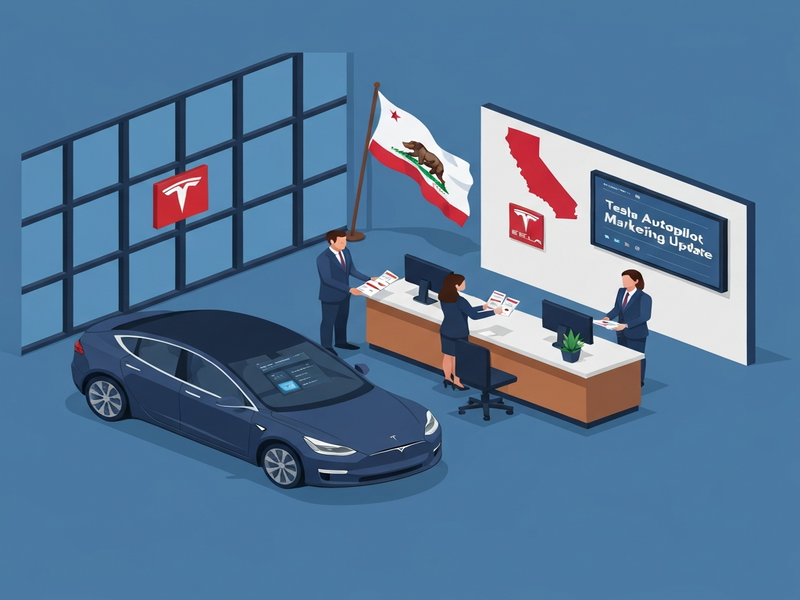
Tesla has officially ceased using the “Autopilot” label on its vehicles sold in California following a California DMV marketing directive that deemed the term misleading.
Background: How “Autopilot” Became Tesla’s Signature
Since its debut in 2014, Tesla Autopilot has been marketed as a suite of advanced driver‑assistance features that can steer, accelerate, and brake under driver supervision. The branding grew into a cultural touchstone, appearing on everything from sales brochures to in‑car displays. Over time, the term blurred the line between assisted driving and full autonomy, prompting regulators nationwide to scrutinize its usage.
Evolution of the branding
- 2014 – Introduction of “Autopilot” with basic lane‑keeping and adaptive cruise control.
- 2020 – Launch of “Full Self‑Driving (FSD) Capability” as an optional upgrade, still marketed under the Autopilot umbrella.
- 2021 – Tesla adds “(Supervised)” to FSD marketing after early complaints, but retains the Autopilot name.
- 2023 – Multiple state investigations begin, citing potential consumer deception.
These milestones illustrate why the California Department of Motor Vehicles (DMV) felt compelled to intervene: the term “Autopilot” suggested a level of autonomy that the technology did not yet deliver.
California DMV Marketing Update: What Changed?
The California DMV marketing update issued in early February 2026 mandated that Tesla remove the “Autopilot” label from all marketing materials, sales contracts, and vehicle interfaces within the state. The agency’s decision stemmed from a December 2025 investigation that concluded Tesla’s branding violated California’s consumer‑protection statutes.
Key requirements from the DMV
- Cease using “Autopilot” in any public‑facing content for California‑registered vehicles.
- Replace the term with a more descriptive label such as “Advanced Driver Assistance System (ADAS).”
- Update digital and printed sales brochures within 30 days.
- Submit a compliance report to the DMV confirming the changes.
Enforcement timeline
The DMV gave Tesla a 60‑day window to implement the changes. Failure to comply would trigger a 30‑day suspension of Tesla’s manufacturing and dealer licenses in California, effectively halting sales in the nation’s largest automotive market.
Within two weeks of the notice, Tesla announced that it had already begun the rebranding process, replacing “Autopilot” with “Advanced Driver Assistance” across its California‑specific website and dealership signage.
Implications for Consumers and the Automotive Industry
Removing the “Autopilot” label has ripple effects that extend beyond a simple name change. Below are the most significant implications:
- Consumer clarity: Buyers will receive more accurate information about the capabilities and limitations of Tesla’s driver‑assistance features.
- Regulatory precedent: Other states may follow California’s lead, prompting a nationwide shift in how ADAS technologies are marketed.
- Brand perception: Tesla risks diluting a powerful brand asset, but the move may bolster trust among safety‑conscious consumers.
- Competitive dynamics: Rivals such as Waymo and Cruise could leverage the regulatory focus to differentiate their truly autonomous offerings.
- Software update cycles: Tesla’s OTA update infrastructure will need to accommodate the new terminology without disrupting user experience.
Official Statements from Tesla and the DMV
“We respect California’s commitment to consumer safety and have acted swiftly to align our marketing with state regulations,” said Elon Musk, CEO of Tesla, in a brief statement released on February 15, 2026.
“The DMV is committed to safety throughout all California’s roadways and communities. We are pleased that Tesla took the required action to remain in compliance with the State of California’s consumer protections,” remarked Steve Gordon, Director of the California DMV.
Both statements underscore a collaborative, albeit pressured, approach to ensuring that marketing language accurately reflects vehicle capabilities.
Broader Context: Autonomous Vehicle Regulation in the United States
The California decision fits into a larger mosaic of state‑level actions aimed at clarifying the distinction between driver assistance and full autonomy. While the National Highway Traffic Safety Administration (NHTSA) provides federal guidelines, enforcement largely rests with state agencies. Recent trends include:
- Mandated disclosure of system limitations on vehicle dashboards.
- Standardized terminology such as “Level 2” or “Level 3” automation.
- Increased penalties for misleading advertising of autonomous features.
These measures aim to protect consumers while fostering responsible innovation in the rapidly evolving self‑driving market.
How UBOS Helps Companies Navigate the New Landscape
For tech‑savvy consumers and automotive firms alike, staying ahead of regulatory shifts requires agile AI tools. UBOS platform overview offers a low‑code environment where developers can quickly adapt marketing copy, compliance dashboards, and user‑interface text to meet evolving standards.
Our AI marketing agents can automatically audit and rewrite product descriptions, ensuring that terms like “Autopilot” are replaced with compliant language across all channels.
Startups looking to embed compliant ADAS features can leverage UBOS for startups, which provides pre‑built templates for regulatory checklists and real‑time monitoring.
SMBs benefit from UBOS solutions for SMBs, enabling them to generate accurate marketing assets without a dedicated legal team.
Enterprises can scale compliance with the Enterprise AI platform by UBOS, integrating directly with CRM, ERP, and vehicle‑telemetry data streams.
Our Workflow automation studio lets you create triggers that flag non‑compliant terminology the moment it appears in a draft, routing it to a compliance reviewer automatically.
Designers can use the Web app editor on UBOS to prototype new UI screens that display the updated “Advanced Driver Assistance” label, testing user perception before launch.
Pricing is transparent and flexible; see the UBOS pricing plans to find a tier that matches your compliance budget.
Explore real‑world success stories in the UBOS portfolio examples, where automotive clients have reduced regulatory review time by 40%.
Need a quick start? Our UBOS templates for quick start include a “Regulatory‑Ready Marketing Copy” template that’s pre‑filled with compliant language for ADAS products.
Template spotlight: AI SEO Analyzer
One of our most popular marketplace apps, the AI SEO Analyzer, can audit your website for non‑compliant terms and suggest alternatives, ensuring both search‑engine visibility and regulatory compliance.
Template spotlight: AI Video Generator
Use the AI Video Generator to produce explainer videos that accurately describe the capabilities of your ADAS features, avoiding the pitfalls that led to the California DMV’s warning.
Template spotlight: AI Chatbot template
Deploy the AI Chatbot template on your support site to answer consumer questions about “Advanced Driver Assistance” versus “Autopilot,” reducing misinformation and support tickets.
Visual Summary
Further Reading
For a detailed account of the regulatory action, see the original Verge article. The piece provides additional context on the legal arguments and industry reactions.
Conclusion: A New Chapter for Tesla and the Industry
The cessation of the “Autopilot” label in California marks a pivotal moment in the dialogue between innovative automotive technology and consumer‑protection law. While Tesla’s brand identity will adapt, the broader industry stands to benefit from clearer terminology and heightened safety awareness. Companies that leverage AI‑driven compliance tools—such as those offered by UBOS homepage—will be better positioned to navigate future regulatory landscapes while maintaining market momentum.