

- Updated: February 18, 2026
- 5 min read
U.S. Court Bars OpenAI from Using ‘Cameo’ Name for AI Video Feature
A U.S. federal court has blocked OpenAI from using the name “Cameo” for its AI‑powered video generation feature, compelling the company to rename the tool “Characters.”
OpenAI Loses Trademark Battle Over “Cameo” – What It Means for AI Video Generation
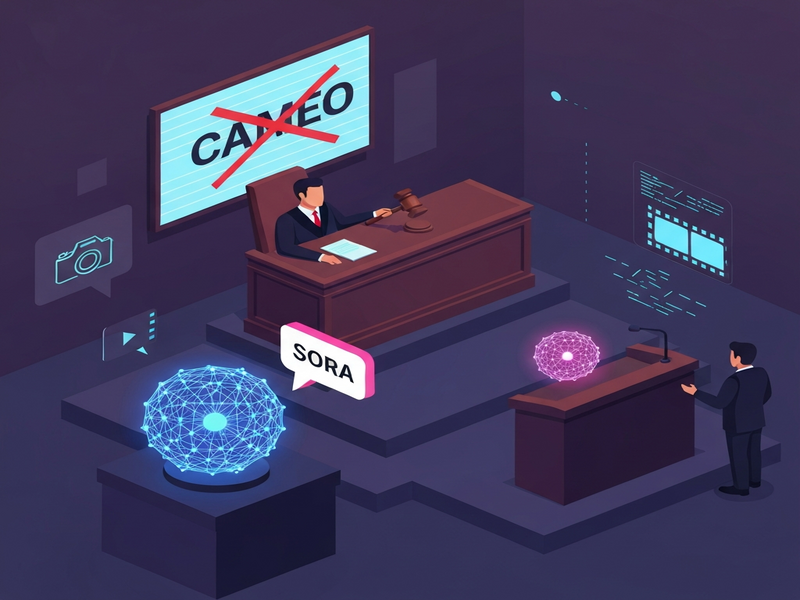
In a landmark decision released on February 17, 2026, a Northern California district court ruled in favor of Cameo, the celebrity‑video marketplace, and ordered OpenAI to cease all use of the “Cameo” brand in its products. The ruling not only forces a rapid rebranding of OpenAI’s Sora video generation feature but also sends a clear signal to the broader AI industry about the growing importance of trademark protection in the fast‑moving generative‑AI space.
Court Decision: Why “Cameo” Was Considered Infringing
The court’s opinion highlighted three key findings:
- Likelihood of confusion: The judge concluded that consumers could reasonably associate OpenAI’s “Cameo” feature with the established Cameo brand, given the similarity in name and the overlapping domain of personalized video content.
- Descriptive vs. suggestive: OpenAI argued that “Cameo” was merely descriptive of a brief appearance in a video. The court rejected this, stating the term “suggests” rather than merely “describes” the service, thereby qualifying it for trademark protection.
- Precedent of prior injunction: A temporary restraining order granted in November 2025 was upheld, reinforcing the court’s view that the alleged infringement was ongoing and harmful.
Judge Eleanor Martinez emphasized that “the term ‘Cameo’ has acquired distinct secondary meaning in the marketplace, signifying a trusted platform for celebrity‑driven video messages.” This language underscores the legal weight of brand equity built over a decade of operation.
OpenAI’s Reaction and Public Statements
OpenAI responded swiftly, issuing a brief statement to Reuters:
“We respect the court’s decision and will comply with the injunction. Our focus remains on delivering innovative AI experiences while honoring intellectual‑property rights.”
Internally, the company’s legal team has already begun the process of updating all documentation, UI elements, and marketing collateral to replace “Cameo” with the new moniker. The rapid pivot reflects OpenAI’s broader strategy of agile product management, a practice also evident in its recent rebranding of the “IO” hardware line.
From “Cameo” to “Characters”: The New Branding
Following the injunction, OpenAI announced that the feature will now be called “Characters.”strong> The name aligns with the product’s core capability: inserting digital likenesses of users—or fictional avatars—into AI‑generated video narratives. The rebrand is already visible in the latest beta release of Sora, where the “Characters” tab replaces the former “Cameo” label.
Industry analysts note that the new name may actually broaden the feature’s appeal, positioning it as a creative toolkit rather than a direct competitor to Cameo’s marketplace. This subtle shift could mitigate future trademark disputes while opening doors to new use‑cases such as gaming avatars, virtual influencers, and educational simulations.
What This Ruling Means for AI Companies
The decision reverberates beyond OpenAI, highlighting several trends that AI developers and investors should monitor:
- Increased scrutiny of brand names: As generative AI products proliferate, courts are likely to apply stricter standards to prevent consumer confusion.
- Strategic trademark filing: Companies are urged to file early and defensively for names that could become valuable assets.
- Product naming agility: Rapid rebranding capabilities become a competitive advantage, especially for firms operating in fast‑moving markets.
For startups building AI‑driven video tools, the lesson is clear: choose names that are distinctive, avoid overlap with established brands, and be prepared to pivot quickly if legal challenges arise.
For a full read of the original reporting, see the TechCrunch article covering the case.
Related UBOS Resources for AI Developers
If you’re navigating similar branding or integration challenges, UBOS offers a suite of tools that can streamline development and compliance:
- UBOS platform overview – a low‑code environment for building AI‑enhanced applications without deep infrastructure overhead.
- OpenAI ChatGPT integration – plug‑and‑play modules that let you embed conversational AI while respecting trademark constraints.
- AI marketing agents – automate brand‑compliant outreach and content generation.
- Workflow automation studio – design approval workflows that include legal checks before product naming is finalized.
- UBOS templates for quick start – accelerate prototyping with pre‑built UI components, including video generation modules.
- AI Video Generator – a ready‑made template that demonstrates best practices for naming and branding within video AI.
- AI SEO Analyzer – ensure your product pages are optimized for both human and AI search engines.
- AI Chatbot template – integrate a chatbot that can answer trademark‑related queries from users in real time.
- UBOS pricing plans – flexible pricing that scales from startups to enterprise deployments.
- Enterprise AI platform by UBOS – robust governance features for large organizations dealing with IP compliance.
Strategic Takeaways for Investors and Analysts
Investors should factor trademark risk into valuation models for AI startups. The OpenAI‑Cameo case illustrates that even industry giants can face costly rebranding exercises, which may affect go‑to‑market timelines and brand equity.
Key metrics to monitor include:
- Number of pending trademark applications for AI product names.
- Legal spend ratios relative to R&D budgets.
- Speed of product iteration post‑legal rulings (measured in weeks).
Companies that embed legal‑review loops into their development pipelines—using tools like UBOS’s Workflow automation studio—are better positioned to mitigate these risks.
Looking Ahead: The Future of AI Branding
The “Cameo” injunction is a watershed moment that underscores the intersection of AI innovation and traditional intellectual‑property law. While OpenAI adapts by rebranding to “Characters,” the broader AI ecosystem must adopt proactive naming strategies, robust compliance workflows, and flexible product architectures.
As generative AI continues to blur the lines between content creation and brand expression, the ability to navigate trademark landscapes will become as critical as model performance. Companies that master both will capture market share while avoiding costly legal setbacks.
Stay informed with UBOS for the latest AI‑centric tools, templates, and compliance guides that keep your innovations both cutting‑edge and legally sound.