

- Updated: February 17, 2026
- 5 min read
Rust Game Engine Project: Open‑Source Alternative to Unity and Unreal
The new Rust game engine project is an open‑source, high‑performance engine that leverages Rust’s memory safety and concurrency strengths to enable fast, reliable, and scalable game development.
Rust‑Powered Game Engine Shakes Up the Development Landscape
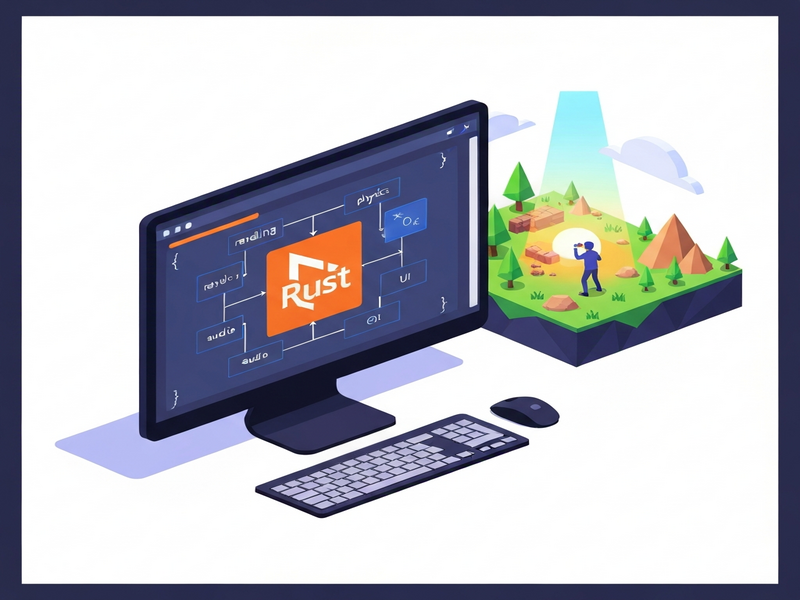
Developers looking for a modern, safe, and performant alternative to traditional C++‑based engines now have a compelling option: a community‑driven Rust game engine that promises zero‑cost abstractions, deterministic multithreading, and a thriving ecosystem of plugins. This article breaks down the project’s core concepts, technical implementation, and why it matters for both indie creators and large studios.
Project Overview: What Is the Rust Game Engine?
Launched as an open‑source initiative, the engine targets developers who value Rust’s guarantees of memory safety without sacrificing low‑level control. The repository includes a modular renderer, physics subsystem, asset pipeline, and a scripting layer built on wasm-bindgen for rapid iteration.
Key goals of the project are:
- Deliver native‑level performance comparable to C++ engines.
- Provide a developer‑friendly API that embraces Rust’s ownership model.
- Enable seamless integration with modern AI services, such as those offered on the UBOS homepage.
Key Features & Advantages
Safety‑First Architecture
Rust’s borrow checker eliminates data races at compile time, meaning your game logic runs without the dreaded segmentation faults that plague C++ projects.
High‑Performance Rendering
The engine uses wgpu for cross‑platform GPU abstraction, delivering Vulkan, Metal, and DirectX 12 support with a single codebase.
Modular Asset Pipeline
Assets are processed through a plug‑in system that can be extended with custom importers, making it easy to integrate UBOS templates for quick start or third‑party tools.
Built‑in AI Integration
Out‑of‑the‑box connectors for OpenAI ChatGPT integration and Chroma DB integration let developers embed conversational agents, procedural content generation, and intelligent NPC behavior directly into the engine.
These features translate into tangible benefits for developers:
- Faster iteration cycles thanks to Rust’s compile‑time checks.
- Reduced debugging time and higher stability in production builds.
- Scalable multiplayer support with deterministic lock‑step networking.
- Easy extension with AI services like ElevenLabs AI voice integration for immersive audio experiences.
Technical Implementation Details
The engine’s core is written in pure Rust, leveraging several crates that have become standards in the ecosystem:
| Component | Key Crate | Purpose |
|---|---|---|
| Renderer | wgpu |
Cross‑platform GPU abstraction |
| Physics | rapier |
Real‑time 2D/3D physics simulation |
| Scripting | wasmtime |
WebAssembly runtime for hot‑reloading scripts |
| Asset Management | bevy_asset |
Efficient loading and hot‑reloading of textures, meshes, and audio |
The engine also ships with a Web app editor on UBOS that allows developers to prototype UI and gameplay logic directly in the browser, then export the project as a native binary.
For developers interested in automating workflows, the Workflow automation studio can be used to set up CI pipelines that automatically run linting, unit tests, and performance benchmarks on every push.
How It Stacks Up Against Established Engines
Below is a concise comparison that highlights where the Rust engine excels and where traditional engines still hold an edge.
| Criterion | Rust Engine | Unity | Unreal Engine |
|---|---|---|---|
| Memory Safety | Compile‑time guarantees | Managed by GC (C#) | Manual, but with strong tooling |
| Performance | Near‑C++ level | Good, but overhead from Mono | Industry‑leading |
| Learning Curve | Steeper for Rust newcomers | Low (C#) | Medium (C++) |
| AI Integration | Native ChatGPT and Telegram integration support | Third‑party plugins | Blueprints & plugins |
| Cost | Free, open‑source | Free tier, paid Pro | Royalty‑based |
For studios that prioritize safety and want to avoid runtime crashes, the Rust engine offers a compelling proposition, especially when paired with UBOS’s Enterprise AI platform by UBOS for advanced analytics and AI‑driven gameplay.
Future Roadmap & Community Involvement
The maintainers have outlined a clear roadmap that aligns with the needs of both indie developers and enterprise teams:
- Q3 2026: Release of a stable 1.0 version with full Telegram integration on UBOS for real‑time debugging.
- Q4 2026: Integration of ElevenLabs AI voice integration for dynamic character dialogue.
- 2027: Expansion of the UBOS templates for quick start library with game‑specific templates such as AI SEO Analyzer and AI Article Copywriter to help developers market their games.
- 2028: Native support for OpenAI ChatGPT integration in the engine’s scripting layer.
Community contributions are encouraged through a transparent governance model. New contributors can join the UBOS partner program to receive mentorship, early access to premium features, and co‑marketing opportunities.
For startups, the UBOS for startups initiative offers discounted compute credits and dedicated support, making it easier to prototype games on the Rust engine while leveraging UBOS’s AI services.
Conclusion: Why You Should Try the Rust Game Engine Today
If you’re a developer who values safety, performance, and modern AI capabilities, the Rust game engine represents a fresh, open‑source alternative that integrates seamlessly with the broader UBOS ecosystem. By adopting this engine, you gain access to:
- Zero‑cost abstractions that keep your code fast and reliable.
- Built‑in connectors to AI services like ChatGPT and Telegram integration for intelligent NPCs.
- Scalable deployment options via the UBOS solutions for SMBs or the Enterprise AI platform by UBOS.
- Cost‑effective development with free open‑source licensing and optional premium support through the UBOS pricing plans.
Ready to dive in? Visit the UBOS platform overview to explore how the Rust engine can be combined with other UBOS tools, or check out the UBOS portfolio examples for real‑world case studies.
For a hands‑on start, clone the repository, follow the UBOS templates for quick start, and experiment with the Web app editor on UBOS. Your next game could be the first Rust‑powered title that leverages AI‑driven storytelling and voice synthesis—all built on a rock‑solid, safe foundation.
Stay updated on the engine’s progress by subscribing to our newsletter and joining the community forum. Let’s build the future of game development together.