

- Updated: February 16, 2026
- 6 min read
Samsung Galaxy S26 Unveils Zero‑Peeking Privacy Display in New Advertisement
Samsung Galaxy S26 Unveils Zero‑Peeking Privacy Display: A Game‑Changer for Mobile Confidentiality
Samsung’s latest flagship, the Galaxy S26, ships with a built‑in Zero‑Peeking privacy display that can instantly hide sensitive content from side‑glances.
The feature was first hinted at in a sleek advertisement that The Verge reported, confirming long‑standing rumors and setting a new benchmark for mobile privacy.
What Is the Zero‑Peeking Privacy Display?
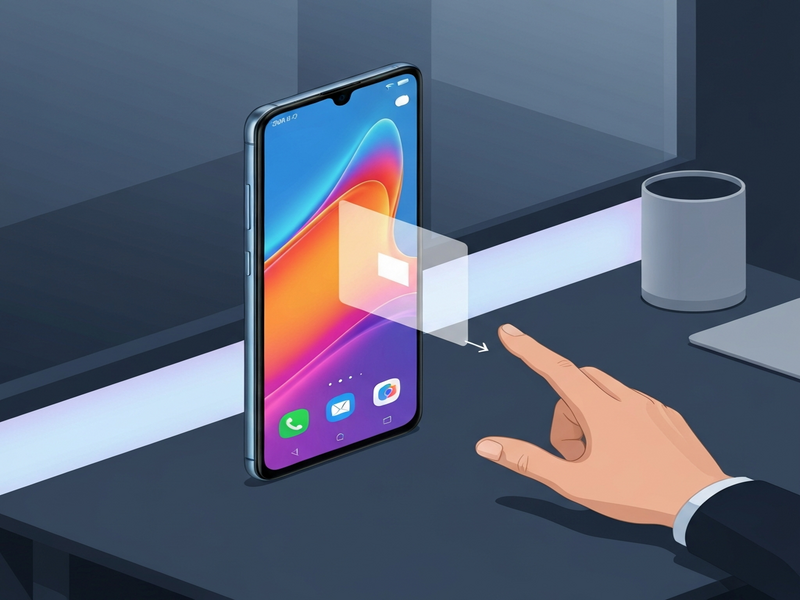
The Zero‑Peeking privacy display is a software‑driven, pixel‑level view‑angle control that lets users toggle privacy on demand. When activated, the screen narrows its viewing cone, rendering the content invisible or heavily dimmed to anyone looking from the side while keeping it perfectly clear for the owner.
- Instant activation via a single toggle in the quick‑settings panel.
- Selective privacy – only chosen apps or screen regions are affected.
- AI‑assisted detection of sensitive content (e.g., banking, messaging).
Zero‑Peeking Toggle & Flex Magic Pixel: How It Works
Samsung’s Flex Magic Pixel technology, first showcased at MWC 2024, underpins the privacy mode. Unlike traditional privacy filters that rely on a static matte layer, Flex Magic Pixel manipulates the OLED sub‑pixels to adjust their emission angles individually.
Key Technical Highlights
- Pixel‑by‑Pixel Angle Control: Each pixel can be set to a narrow or wide viewing cone, enabling dynamic privacy zones.
- AI‑Powered Context Awareness: Integrated AI analyses the foreground app and automatically engages privacy for banking, messaging, or any user‑defined app.
- Zero‑Latency Switching: The toggle responds instantly, with no perceptible lag or flicker.
The toggle appears as a simple switch labeled “Zero‑Peeking” in the quick‑settings. A single tap activates a darkened overlay on the selected region, while the rest of the screen remains fully visible. Users can also schedule privacy windows or link the toggle to biometric authentication for added security.
How Does It Stack Up Against Traditional Privacy Filters?
Conventional privacy filters are physical accessories that limit viewing angles uniformly across the entire screen. While effective, they suffer from drawbacks:
| Feature | Flex Magic Pixel (S26) | Physical Privacy Filter |
|---|---|---|
| Viewing Angle Control | Pixel‑level, selective | Uniform across screen |
| Activation Speed | Instant, software toggle | Manual attachment/removal |
| Battery Impact | Negligible (OLED efficiency) | None (passive) |
| Aesthetic | Seamless, no added thickness | Adds bulk, may affect touch sensitivity |
| Customizability | App‑specific, region‑specific | All‑or‑nothing |
The built‑in solution eliminates the need for aftermarket accessories, preserves the device’s sleek profile, and offers granular control that physical filters simply cannot match.
What Samsung Says
“Your privacy, on your terms. With Zero‑Peeking, the Galaxy S26 protects what matters, whenever you need it.” – Samsung Marketing Team
The ad dramatizes a commuter reading a confidential document on a crowded subway. A quick flick of the Zero‑Peeking toggle instantly blacks out the sensitive portion, leaving only the user with a clear view. This visual narrative underscores Samsung’s claim that privacy is now a native, effortless feature rather than an after‑thought.
Why This Matters for Users and the Industry
For tech‑savvy consumers, privacy is no longer a luxury—it’s a necessity. The S26’s built‑in solution addresses several pain points:
- Corporate Security: Professionals handling confidential emails or documents can safeguard data in public spaces without extra hardware.
- Personal Comfort: Users can read messages, browse, or watch videos without fearing prying eyes on public transport.
- Competitive Edge: Samsung differentiates its flagship line, potentially influencing buyer decisions in a saturated premium market.
Analysts predict that privacy‑centric features could become a new battleground for flagship smartphones, prompting rivals to explore similar software‑driven solutions. Moreover, the integration of AI for context‑aware activation hints at a broader trend where hardware and AI converge to deliver personalized security.
How UBOS Leverages Similar AI‑Driven Privacy Concepts
At UBOS homepage, we champion AI‑enhanced privacy across our platform. Our UBOS platform overview showcases how AI can dynamically mask sensitive data in web apps, mirroring the Zero‑Peeking philosophy but for enterprise dashboards.
For marketers, the AI marketing agents can automatically redact client‑specific information before sharing reports, ensuring compliance without manual effort.
Startups looking to embed privacy controls can benefit from our UBOS for startups program, which offers pre‑built modules for secure data handling. Meanwhile, SMBs can adopt UBOS solutions for SMBs to protect employee communications in real time.
Enterprises seeking a robust, AI‑powered security layer can explore the Enterprise AI platform by UBOS, which includes granular access controls akin to Samsung’s pixel‑level privacy.
Developers can prototype privacy‑aware interfaces using our Web app editor on UBOS and automate workflows with the Workflow automation studio. Real‑world examples of privacy‑first designs are highlighted in our UBOS portfolio examples.
For rapid deployment, the UBOS templates for quick start include a “Secure Dashboard” template that mirrors the Zero‑Peeking concept, allowing you to hide sensitive widgets with a single toggle.
Boost Your Privacy Projects with UBOS AI Tools
- AI SEO Analyzer – Optimize privacy‑related content for search.
- AI Article Copywriter – Generate privacy policy drafts in seconds.
- AI Video Generator – Create demo videos of privacy features like Zero‑Peeking.
- ChatGPT and Telegram integration – Build bots that alert users when privacy mode is active.
- OpenAI ChatGPT integration – Leverage conversational AI to guide users through privacy settings.
- ElevenLabs AI voice integration – Provide voice‑controlled privacy toggles.
Pricing, Availability, and What to Expect
The Galaxy S26 will launch on February 25, 2026, with pricing aligned to previous flagship tiers. While the privacy display is a standard feature across all variants, Samsung’s UBOS pricing plans illustrate a similar approach: premium capabilities bundled into core offerings, ensuring no extra cost for essential security.
Bottom Line: A New Standard for Mobile Privacy
Samsung’s Zero‑Peeking privacy display, powered by Flex Magic Pixel, transforms how we think about on‑device confidentiality. By merging hardware innovation with AI‑driven context awareness, the Galaxy S26 delivers a seamless, on‑demand privacy shield that outperforms any aftermarket filter. For professionals, privacy‑conscious consumers, and enterprises alike, this feature sets a fresh benchmark that competitors will need to match.
As the mobile ecosystem evolves, expect more AI‑enhanced privacy controls to appear across devices and platforms. In the meantime, developers and businesses can draw inspiration from Samsung’s approach and implement comparable safeguards using tools like the About UBOS suite, ensuring that data protection remains at the forefront of user experience.
Suggested Meta Description: Samsung Galaxy S26 introduces Zero‑Peeking privacy display with Flex Magic Pixel technology, offering instant, AI‑driven screen privacy. Learn how it works, how it compares to traditional filters, and its impact on users and the market.
Andrii Bidochko
CTO UBOS
Andrii Bidochko is an AI entrepreneur and researcher focused on AI agents, reinforcement learning, and autonomous systems. He writes about the technologies shaping the future of machine intelligence, from frontier models and agent architectures to real-world AI applications.