

- Updated: February 16, 2026
- 6 min read
Picol: A Minimalist 500‑Line Tcl‑Like Interpreter for Redis‑Compatible In‑Memory Stores
Picol is a minimalist, Tcl‑like interpreter written in just 500 lines of C, offering a lightweight, embeddable scripting engine and a Redis‑compatible in‑memory data store for developers who need high performance with a tiny footprint.
Picol Project: The Ultra‑Lightweight Tcl‑Like Interpreter Redefining Embedded Scripting
When antirez released Picol back in 2007, the programming world got a rare glimpse of a fully functional interpreter that fits on a single printed page. Today, the project resurfaces as a compelling alternative for developers seeking a minimal Redis clone and an embedded C interpreter that can be dropped into any application without bloating its size.
Background: From a Personal Experiment to an Open‑Source Gem
Salvatore Sanfilippo, better known as antirez, created Picol as a learning exercise to understand how Tcl parses and executes commands. His goal was simple yet ambitious: write a clear, well‑commented interpreter that mirrors the design of a real scripting engine while staying under 500 lines of C code. The result is a self‑contained, open‑source database that demonstrates:
- How to build a lightweight Redis clone from scratch.
- The mechanics of variable scoping, recursion, and command substitution in a Tcl‑like language.
- A practical example for developers who want to embed a scripting layer into IoT devices, micro‑services, or edge‑computing nodes.
Key Features and Technical Highlights
Picol packs a surprising amount of functionality into its modest codebase. Below is a MECE‑structured breakdown of its core capabilities:
Core Language Features
- Interpolation: Seamlessly combine variables and literals, e.g.,
set a "pu"set b {ts}$a$b→"puts Hello World!". - Procedures & Recursion: Define reusable blocks with
proc, supporting nested calls and proper call‑frame handling. - Control Flow: Full
if/else,whileloops,break,continue, andreturnstatements. - Arithmetic & Comparison: Built‑in operators
+,-,*,/,==,!=,>,<, etc.
Redis‑Compatible In‑Memory Store
While Picol is primarily a Tcl interpreter, its design mirrors the simplicity of Redis’ command set, making it a viable minimal Redis alternative for scenarios where full Redis is overkill. The interpreter’s internal variable table acts as a key‑value store, offering O(1) lookups and fast command execution.
Embedded C Implementation
All functionality lives in a single .c file, compiled with a standard gcc -O2 -Wall -o picol picol.c command. The code follows conventional C styling, making it an excellent teaching tool for developers learning both C and interpreter design.
Interactive Shell
Running ./picol without arguments launches an interactive REPL, allowing rapid prototyping and debugging directly from the terminal.
Recent Updates and Community Activity
After a long period of dormancy, the Picol repository was revived on GitHub in early 2024. The community has contributed:
- Documentation improvements, including a modern Picol introduction on UBOS.
- Portability patches for ARM‑based devices, expanding its use in edge computing.
- Integration examples with ChatGPT and Telegram integration, showcasing how Picol can drive lightweight bots.
These contributions keep the project relevant for developers exploring lightweight databases and embedded scripting.
Use‑Case Scenarios and Benefits
Because of its tiny footprint and zero external dependencies, Picol shines in several niche environments:
IoT Edge Devices
Microcontrollers with limited RAM can embed Picol to run custom automation scripts without the overhead of a full‑blown interpreter.
Serverless Functions
When latency and cold‑start time matter, a 500‑line interpreter boots in milliseconds, making it ideal for Workflow automation studio tasks that need quick script evaluation.
Educational Tools
Programming courses can use Picol as a concrete example of parser construction, variable scoping, and command dispatch, complementing resources like the UBOS templates for quick start.
Rapid Prototyping of Redis‑Like Caches
Developers building a custom caching layer can adopt Picol’s in‑memory store as a baseline, then extend it with domain‑specific commands.
Across these scenarios, the benefits are consistent: minimal binary size, fast startup, and a clear, maintainable codebase.
Picol vs. Other Lightweight Interpreters and Redis Clones
To understand Picol’s niche, let’s compare it with two popular alternatives: the official lightweight databases offering Redis compatibility, and other minimal scripting engines.
| Feature | Picol | Redis (official) | TinyLua |
|---|---|---|---|
| Code Size | ≈ 500 lines (≈ 15 KB compiled) | ≈ 200 KB source, larger binary | ≈ 1 KB script, but requires Lua runtime |
| Language Syntax | Tcl‑like, simple command/arg model | Redis command set (binary protocol) | Lua 5.1 subset |
| Embedding Ease | Single C file, no external libs | Requires server process, networking | Requires Lua interpreter library |
| Community Support | Niche but active on GitHub | Large, enterprise‑grade | Moderate, many forks |
While Redis offers robustness and clustering, Picol excels when you need a single‑binary, zero‑dependency solution that can be compiled for constrained environments.
Visual Overview of Picol’s Architecture
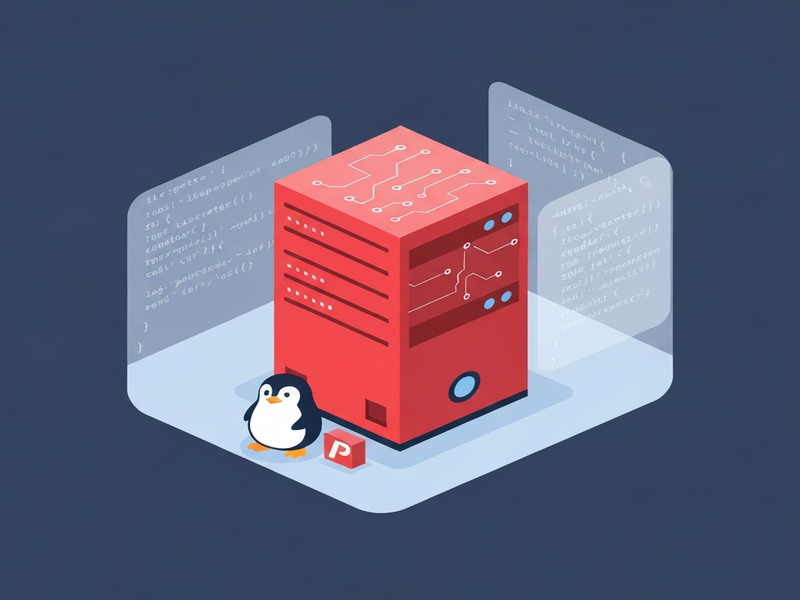
Figure: Simplified diagram showing Picol’s parser, evaluator, and in‑memory key‑value store.
Get the Source Code
Developers can clone the repository directly from GitHub:
https://github.com/antirez/picol
How Picol Fits Into the UBOS Ecosystem
UBOS provides a suite of tools that complement Picol’s lightweight nature. For instance, the OpenAI ChatGPT integration can be paired with a Picol‑driven bot to deliver ultra‑fast responses on edge devices. Similarly, the Chroma DB integration offers vector‑based similarity search that can be orchestrated from a Picol script.
Developers looking for a rapid start can explore the UBOS templates for quick start, many of which include pre‑configured Picol examples. The UBOS portfolio examples showcase real‑world deployments where a tiny interpreter like Picol powers custom dashboards.
For startups, the UBOS for startups program offers credits and mentorship, making it easy to prototype a Picol‑backed microservice. SMBs can benefit from UBOS solutions for SMBs, which include low‑cost hosting for lightweight services.
Enterprises seeking a scalable AI layer can leverage the Enterprise AI platform by UBOS, where Picol can act as a fast pre‑processor for data pipelines before feeding results into larger models.
To build a UI around a Picol script, the Web app editor on UBOS provides drag‑and‑drop components, while the Workflow automation studio lets you chain Picol‑driven tasks with other services.
Pricing is transparent; see the UBOS pricing plans for options that fit hobbyists to large teams.
For AI‑focused marketers, the AI marketing agents can be scripted with Picol to generate dynamic copy, a capability demonstrated by the AI SEO Analyzer template.
Finally, developers interested in voice capabilities can combine Picol with the ElevenLabs AI voice integration to create spoken feedback loops directly from embedded scripts.
Conclusion: Embrace the Power of Minimalism with Picol
If you need a lightweight Redis clone, a minimalist Tcl‑like interpreter, or a teaching tool for embedded C development, Picol delivers unmatched simplicity without sacrificing functionality. Its open‑source nature, combined with UBOS’s extensive ecosystem, makes it a strategic choice for developers building high‑performance, low‑overhead applications.
Ready to experiment? Visit the UBOS homepage to explore tutorials, download templates, and join the community that’s pushing the boundaries of what a 500‑line interpreter can achieve.
Keywords: Picol, lightweight Redis clone, Tcl‑like interpreter, antirez, embedded C interpreter, minimal Redis alternative, open‑source database, ubos.tech
Andrii Bidochko
CTO UBOS
Andrii Bidochko is an AI entrepreneur and researcher focused on AI agents, reinforcement learning, and autonomous systems. He writes about the technologies shaping the future of machine intelligence, from frontier models and agent architectures to real-world AI applications.