

- Updated: February 13, 2026
- 6 min read
SEC Closes Investigation into Fisker, Impact on EV Industry
The U.S. Securities and Exchange Commission (SEC) has officially closed its investigation into the bankrupt electric‑vehicle startup Fisker, ending a year‑long probe that began in September 2024.
Why the Fisker case matters for investors and the EV sector
Fisker’s rise and fall has been a cautionary tale for anyone watching the fast‑moving electric‑vehicle (EV) market. The company’s Chapter 11 filing in June 2024, combined with a high‑profile SEC inquiry, raised questions about corporate governance, disclosure practices, and the broader regulatory climate for emerging clean‑tech firms. Understanding why the SEC decided to close the investigation—and what that signals for the industry—helps investors, analysts, and tech enthusiasts make more informed decisions.
For a deeper dive into how AI‑driven platforms can help you monitor such regulatory developments, explore the UBOS homepage, which offers real‑time analytics and alerts tailored to the EV space.
SEC investigation closure: what the agency disclosed
The SEC confirmed that the Fisker probe was closed in September 2025 after a Freedom of Information Act (FOIA) request revealed roughly 21.7 GB of electronically maintained records related to the case. The agency’s FOIA response noted that it “does not typically release records for open investigations,” confirming the case’s final status.
The investigation originally surfaced in an October 2024 filing within Fisker’s bankruptcy proceedings, where the SEC announced it had issued subpoenas and might request additional documents. No formal comment was provided by the SEC, and Fisker’s founder Henrik Fisker declined to comment when approached for comment.
While the SEC has not detailed how far the inquiry progressed, the closure suggests that either no material violations were uncovered or that any issues were resolved without enforcement action. This outcome is notable because Fisker was among the last EV startups still under SEC scrutiny.
Fisker’s bankruptcy: a timeline and its ripple effects
Fisker’s financial distress began with the under‑performance of its flagship Ocean SUV, which suffered from production delays, cost overruns, and a series of strategic pivots. By early 2024, the company exhausted its cash reserves and filed for Chapter 11 protection in June 2024. The bankruptcy process allowed Fisker to:
- Sell remaining Ocean inventory to a ride‑hail leasing firm.
- Liquidate non‑core assets, including patents and tooling.
- Negotiate with creditors to restructure debt.
The fallout extended beyond the balance sheet. Suppliers faced delayed payments, and investors saw significant write‑downs. Moreover, the case highlighted the challenges of scaling EV production without deep pockets or a proven supply chain.
Startups looking to avoid a similar fate can learn from Fisker’s experience. The UBOS for startups suite offers modular AI tools that help founders model cash flow, forecast production bottlenecks, and maintain transparent investor communications—all critical for staying on the regulator’s radar.
SEC enforcement trends: a broader view of the regulatory landscape
Fisker’s case did not occur in a vacuum. Over the past two years, the SEC’s enforcement activity has fluctuated dramatically:
| Year | Enforcement Actions | Public‑Company Actions | Total Settlements (USD) |
|---|---|---|---|
| 2023 | 417 | 12 | 2.3 B |
| 2024 | 389 | 9 | 1.8 B |
| 2025 | 313 | 4 | 1.2 B |
The decline—27 % fewer actions in 2025 compared with the previous year—mirrors a broader shift toward settlement‑focused resolutions and a reduced emphasis on public‑company prosecutions. Notably, the SEC has already closed investigations into other EV players such as Nikola, Lordstown Motors, Canoo, and Hyzon Motors, often without filing lawsuits.
For companies navigating this environment, cost‑effective compliance solutions are essential. The UBOS pricing plans include tiered options that scale with a firm’s regulatory burden, making it easier for midsize firms to stay audit‑ready without breaking the bank.
What the closure means for the electric‑vehicle ecosystem
The SEC’s decision to close the Fisker investigation without enforcement carries several strategic implications:
- Regulatory fatigue may be setting in. With fewer actions, the SEC appears to be prioritizing high‑impact cases over smaller, niche startups.
- Investor confidence could rebound. The absence of a lingering probe removes a cloud of uncertainty that often depresses stock prices and private‑round valuations.
- Compliance technology demand will rise. Companies are likely to invest in AI‑driven monitoring tools to pre‑empt future investigations.
AI platforms are already reshaping how EV firms manage risk. For example, AI marketing agents can automatically audit promotional claims for compliance with SEC disclosure rules, while the Workflow automation studio enables seamless integration of compliance checkpoints into product‑development pipelines.
Moreover, the UBOS ecosystem offers ready‑made templates that accelerate AI adoption. The AI SEO Analyzer helps EV manufacturers optimize their web presence while staying within advertising guidelines, and the AI Article Copywriter can generate regulator‑friendly content at scale.
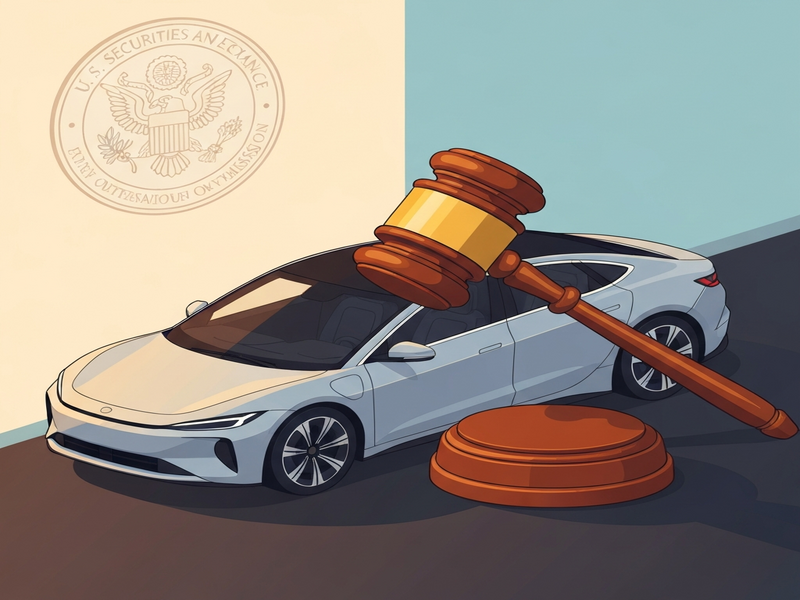
The original reporting on the SEC’s decision appeared in TechCrunch, which detailed the FOIA request and the agency’s brief statement.
AI tools that can future‑proof your EV venture
Beyond compliance, AI is unlocking new capabilities across the EV value chain. Below are a few UBOS marketplace solutions that are especially relevant for manufacturers, dealers, and investors:
- Talk with Claude AI app – a conversational assistant that can answer technical questions about battery chemistry or supply‑chain logistics.
- AI YouTube Comment Analysis tool – extracts sentiment from consumer videos, helping brands gauge market reception in real time.
- AI Video Generator – creates product demos and compliance‑focused explainer videos without a production crew.
- AI Image Generator – rapidly produces high‑resolution renderings of concept cars for investor decks.
- AI Email Marketing – automates outreach while ensuring all claims meet SEC advertising standards.
Takeaway: stay ahead of regulation with intelligent automation
The SEC’s closure of the Fisker investigation signals a quieter regulatory horizon for EV startups—at least for now. However, the underlying lessons about transparency, financial discipline, and proactive risk management remain timeless. Leveraging AI‑powered platforms can give you the foresight to spot red flags before they attract regulator attention.
If you’re ready to future‑proof your EV business, explore the UBOS partner program. Our ecosystem connects you with best‑in‑class AI modules, industry‑specific templates, and a community of innovators who are already turning compliance into a competitive advantage.
© 2026 UBOS. All rights reserved.