

- Updated: February 13, 2026
- 7 min read
iRobot’s Roomba Acquired by China’s Picea Robotics; New U.S. Subsidiary iRobot Safe to Guard Consumer Data
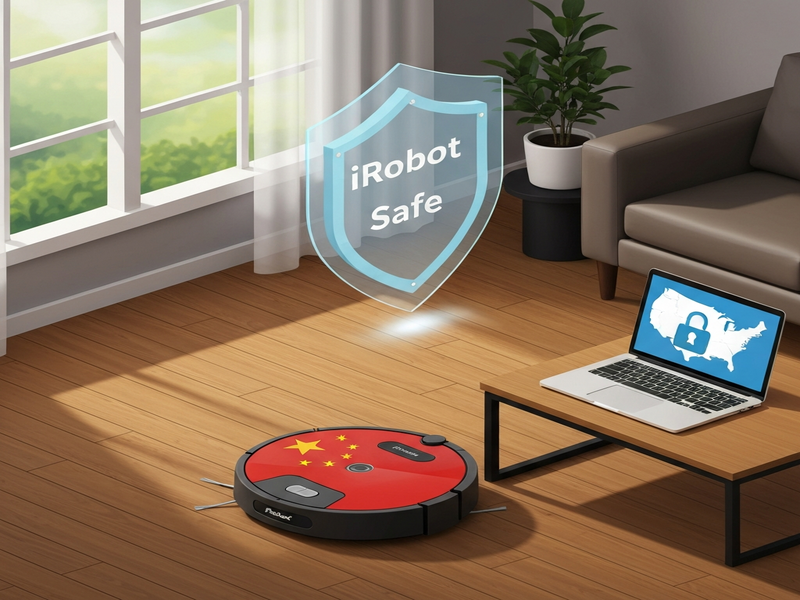
iRobot, the maker of Roomba robot vacuums, has been acquired by China‑based Picea Robotics, and the deal creates a new U.S. subsidiary called iRobot Safe that will keep all American consumer data on U.S. soil.
Why the iRobot‑Picea deal matters to every smart‑home owner
The news that a Chinese robotics firm now controls the iconic Roomba brand sent ripples through the consumer‑tech community. While many feared a data‑privacy nightmare, iRobot’s leadership has taken a proactive step: establishing iRobot Safe, a U.S.‑based data‑guardian that will operate independently of its new parent. For tech‑savvy consumers, investors, and professionals tracking the intersection of robotics and privacy, this move offers a rare case study of cross‑border acquisition mitigated by structural safeguards.
Core facts of the iRobot‑Picea acquisition
- Date of announcement: 13 February 2026.
- Acquirer: Picea Robotics, a privately held Chinese robotics conglomerate.
- Purchase price: Undisclosed, but reported to be a strategic buyout following iRobot’s Chapter 11 filing in December 2025.
- New U.S. entity: iRobot Safe, tasked with “protecting U.S. consumer data” and operating under a separate board, CEO, and data‑security officer.
- Data residency: All telemetry, usage logs, and voice‑assistant interactions from U.S. Roomba units will be stored and processed on servers located within the United States.
- Operational continuity: Existing Roomba hardware, firmware updates, and customer support remain unchanged for U.S. users.
A quick look at iRobot’s legacy
Founded in 1990, iRobot pioneered consumer robotics with the launch of the Roomba in 2002. Over two decades, the company expanded its portfolio to include the Braava mop robot, the Terra lawn‑mowing robot, and a suite of AI‑driven navigation algorithms. Despite its market leadership, iRobot faced mounting pressure from supply‑chain disruptions, rising component costs, and a series of high‑profile data‑privacy concerns that culminated in a Chapter 11 filing in late 2025.
Today, iRobot still operates out of its Bedford, Massachusetts headquarters, employing over 1,200 engineers and maintaining a robust ecosystem of third‑party integrations—ranging from smart‑home hubs to voice assistants. The company’s OpenAI ChatGPT integration exemplifies its commitment to AI‑enhanced user experiences, allowing owners to query cleaning schedules via natural language.
Who is Picea Robotics?
Picea Robotics emerged in 2018 as a Shanghai‑based venture focused on industrial automation, autonomous navigation, and AI‑driven perception. The firm’s rapid growth has been fueled by strategic investments in computer‑vision hardware and a portfolio of patents covering simultaneous localization and mapping (SLAM) technologies. In 2024, Picea attempted a high‑profile acquisition of iRobot that fell through due to regulatory hurdles, prompting the company to pursue a more nuanced approach—acquiring the assets while establishing a U.S. data‑privacy buffer.
Beyond the iRobot deal, Picea has launched the Chroma DB integration, a vector‑search database that powers next‑generation recommendation engines for robotics fleets. This expertise is expected to accelerate the rollout of advanced mapping features for future Roomba models.
Implications for U.S. consumer data and the smart‑home market
The creation of iRobot Safe mirrors the regulatory response seen in the TikTok‑Oracle deal, where a U.S. subsidiary was mandated to keep American user data on domestic servers. For consumers, the practical impact is twofold:
- Data sovereignty: Personal cleaning schedules, floor‑plan maps, and voice commands will no longer traverse cross‑border pipelines, reducing exposure to foreign jurisdiction requests.
- Continued innovation: By separating data governance from ownership, iRobot can still leverage Picea’s AI research while complying with U.S. privacy statutes such as the California Consumer Privacy Act (CCPA) and the upcoming Federal Data Privacy Act.
Industry analysts also note that the deal could set a precedent for other consumer‑robot manufacturers facing similar geopolitical scrutiny. The Enterprise AI platform by UBOS is already positioning itself as a compliance‑first solution for robotics firms seeking to navigate multi‑jurisdictional data rules.
What executives are saying
“Our priority is to protect the privacy of our U.S. customers while unlocking the next wave of AI‑driven cleaning technology,” said Colin Angle, CEO of iRobot, in a press release dated 23 January 2026.
“Picea’s acquisition is a partnership, not a takeover. By establishing iRobot Safe, we respect the data‑privacy expectations of American households and create a clear firewall between ownership and data handling,” explained Li Wei, President of Picea Robotics.
Both statements underscore a shared commitment to “clear separation” between corporate control and data stewardship—a narrative that resonates with privacy‑focused investors and regulators alike.
Read the original report
For a detailed account of the acquisition, see the coverage by The Verge. The article provides additional context on the regulatory negotiations that shaped the formation of iRobot Safe.
How UBOS can help businesses navigate similar transitions
Companies undergoing cross‑border acquisitions can benefit from the UBOS platform overview, which offers modular AI components that can be deployed behind regional firewalls. Startups looking to embed AI into their products may explore the UBOS for startups program, which includes pre‑configured data‑privacy templates.
For small‑ and medium‑size businesses, the UBOS solutions for SMBs provide a cost‑effective way to integrate AI agents—such as the AI marketing agents—while staying compliant with local data regulations.
Enterprises seeking a full‑stack AI environment can leverage the Enterprise AI platform by UBOS, which includes built‑in governance layers for data residency, audit trails, and role‑based access control.
Developers can accelerate time‑to‑market using the Web app editor on UBOS and the Workflow automation studio, enabling rapid prototyping of robot‑control dashboards that respect the same privacy boundaries established by iRobot Safe.
Pricing transparency is essential for budgeting post‑acquisition integration. Review the UBOS pricing plans to understand subscription tiers that align with data‑security requirements.
Explore real‑world implementations in the UBOS portfolio examples, which showcase how other robotics firms have built compliant AI pipelines.
For developers who need a head start, the UBOS templates for quick start include ready‑made modules such as the AI SEO Analyzer and the AI Article Copywriter, both of which can be repurposed for generating privacy policy content.
Specific to robotics, the GPT‑Powered Telegram Bot (available in the UBOS Template Marketplace) demonstrates how conversational interfaces can be securely hosted within a U.S. data center, mirroring the iRobot Safe model.
Bottom line: iRobot’s acquisition reshapes the consumer‑robot landscape
The iRobot acquisition by Picea Robotics is more than a financial transaction; it is a blueprint for how multinational tech deals can respect data privacy while preserving product continuity. By establishing iRobot Safe, the companies have addressed the most pressing concern of U.S. consumers—where their robot vacuum data lives—without stalling innovation.
For investors, the deal signals confidence in the long‑term viability of the consumer robotics market, even amid regulatory headwinds. For professionals building AI‑enabled products, the case study underscores the importance of designing architecture that can be partitioned by geography, a principle baked into the UBOS partner program and its suite of compliance‑first tools.
As the smart‑home ecosystem continues to expand, the iRobot‑Picea story will likely be referenced as a turning point where data sovereignty and global ambition found a workable middle ground.