

- Updated: February 6, 2026
- 6 min read
TikTok’s Addictive Design Under EU Scrutiny: What It Means for Digital Wellbeing
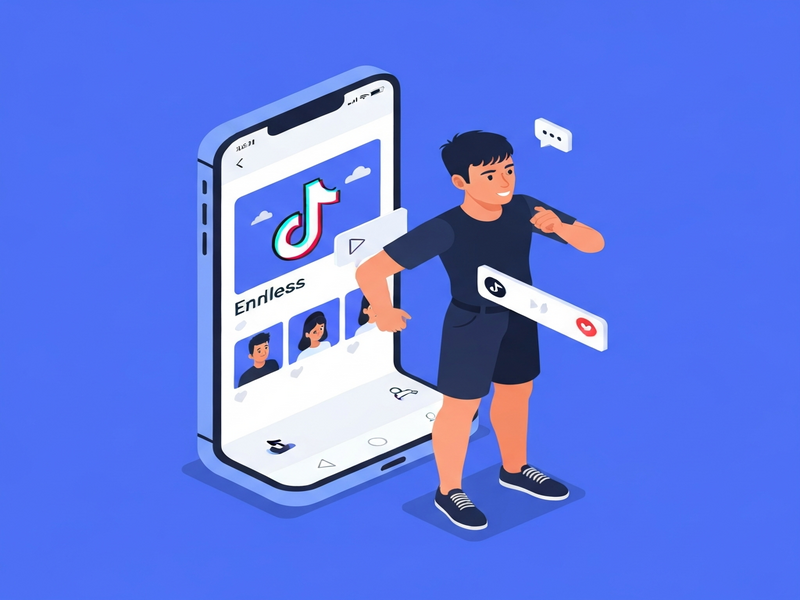
TikTok’s infinite‑scroll feed, autoplay videos, and push‑notification system are being flagged by EU regulators as potentially breaching the Digital Services Act because they foster addictive usage patterns that can harm users’ digital wellbeing.
Why Europe Is Turning Its Eye on TikTok’s “Addictive Design”
Since early 2024 the European Commission has been probing the world’s most popular short‑form video platform for features that may push users into compulsive scrolling. The investigation, launched under the Digital Services Act (DSA), zeroes in on three core design elements—infinite scroll, autoplay, and notifications—that together create a feedback loop designers call “the dopamine drip.”
EU Regulators’ Scrutiny of TikTok
The Commission’s preliminary report, released in February 2026, argues that TikTok’s current user‑experience architecture does not provide sufficient safeguards to protect mental health, especially for younger audiences. The DSA requires platforms to implement “risk‑mitigation measures” for any design that could be deemed “addictive.” If TikTok fails to comply, it could face fines up to 6 % of its global turnover.
For businesses looking to navigate similar regulatory waters, the UBOS platform overview offers a compliance‑first framework that can be adapted to any SaaS product facing EU scrutiny.
The Mechanics Behind TikTok’s Addictive Design
Understanding why TikTok feels “un‑stoppable” requires a deep dive into its three most persuasive UI patterns.
1. Infinite Scroll – The Never‑Ending Feed
Infinite scroll removes any natural stopping cue. As soon as a user watches a video, the next one loads automatically, rewarding the brain with a fresh burst of novelty. Research in cognitive psychology shows that this “variable‑ratio reinforcement” can trigger compulsive behavior similar to slot‑machine gambling.
- Content is algorithmically curated to match the user’s interests within milliseconds.
- No “end of list” signal, so the user’s attention horizon expands continuously.
- Studies cited by the Commission link this pattern to reduced self‑control and increased screen time.
2. Autoplay – The Silent Persuader
Autoplay eliminates the friction of manually pressing “play.” The moment a video ends, the next one starts, often with a subtle sound cue that draws the ear back into the app. This design exploits the brain’s “anticipation” circuitry, making it harder for users to disengage.
Platforms that have replaced autoplay with a manual “tap to play” option have reported a measurable drop in average session length, a fact highlighted in the Enterprise AI platform by UBOS case studies on user‑experience redesign.
3. Push Notifications – The External Nudge
TikTok’s notification engine sends alerts for new likes, comments, and “trending” videos, often at odd hours. These prompts act as external triggers that pull users back into the app, reinforcing the habit loop.
While TikTok argues that users can disable notifications, the default “on” setting combined with persuasive copy (“Your friends just posted a new video!”) makes the opt‑out path less visible. The Commission recommends clearer opt‑out mechanisms, a principle echoed in the design guidelines of the Workflow automation studio, which emphasizes user‑centric permission flows.
Potential DSA Violations and Regulatory Actions
The DSA outlines three categories of non‑compliance that could apply to TikTok:
- Risk‑assessment failure: Not conducting a thorough impact assessment of addictive features.
- Insufficient mitigation: Lack of effective parental‑control tools or screen‑time limits.
- Transparency gaps: Not providing clear information about how the recommendation algorithm works.
If the Commission confirms these breaches, TikTok may be ordered to:
- Redesign its feed to include a “stop‑scroll” button or a visible end‑of‑feed indicator.
- Offer a default‑off setting for autoplay and push notifications.
- Integrate robust parental‑control dashboards, similar to those showcased in the UBOS solutions for SMBs suite.
Impact on Users and Digital Wellbeing
Beyond regulatory risk, the design choices have tangible effects on mental health. A 2025 study by the European Institute of Public Health linked prolonged exposure to infinite‑scroll feeds with increased anxiety, sleep disturbances, and reduced attention span among teenagers.
Digital‑wellbeing advocates argue that platforms should adopt “digital‑detox” features—timed breaks, usage dashboards, and content‑pause options. The original UBOS news piece on digital wellbeing (external) outlines how AI‑driven analytics can surface risky usage patterns in real time.
For marketers, the shift toward responsible design opens new opportunities. The AI marketing agents on UBOS can now tailor campaigns that respect user fatigue signals, delivering messages when engagement likelihood is highest without over‑exposing the audience.
What This Means for the Wider Tech Ecosystem
TikTok is not the only platform under the DSA microscope. Instagram, YouTube Shorts, and emerging short‑form apps are all being asked to demonstrate “design‑ethics compliance.” Companies that proactively redesign their UI stand to gain a competitive edge, both in regulator goodwill and user trust.
Startups can leverage the UBOS for startups program to embed compliance checks early in the product lifecycle, reducing the risk of costly redesigns later.
Practical Steps for Developers and Product Teams
Below is a concise checklist derived from the Commission’s recommendations and UBOS best‑practice guides:
- Introduce a manual “next” button to replace pure infinite scroll.
- Make autoplay opt‑in rather than opt‑out, with a clear toggle in settings.
- Provide granular notification controls (type, frequency, time‑of‑day).
- Deploy a real‑time usage dashboard powered by AI SEO Analyzer‑style analytics to monitor session length.
- Run a risk‑assessment simulation using the Web app editor on UBOS to prototype alternative flows.
Looking Ahead: The Future of Regulated Social Media
As the EU tightens its grip, we can expect a wave of “design‑for‑wellbeing” standards to emerge globally. Platforms that embed these principles will likely see higher retention among users who value transparency and control.
For enterprises seeking to stay ahead, the UBOS partner program offers co‑development opportunities with AI‑enhanced compliance modules, ensuring that your product not only meets today’s regulations but is future‑proofed for the next wave of digital policy.
Conclusion & Call to Action
EU regulators have sent a clear signal: addictive design is no longer a permissible trade‑off. TikTok’s infinite scroll, autoplay, and notification mechanisms are under the microscope, and the outcome will shape the next generation of social‑media UX.
If you’re a product leader, marketer, or developer, now is the time to audit your own platforms. Explore UBOS’s suite of tools—starting with the UBOS templates for quick start—to prototype user‑friendly, compliant experiences.
Ready to transform your product? Check out our UBOS pricing plans and see how affordable responsible design can be. For inspiration, browse the UBOS portfolio examples that showcase real‑world implementations of ethical UI.
“Design should empower users, not trap them.” – European Commission, Digital Services Act Working Group
For a deeper dive into AI‑driven content creation, consider the AI Article Copywriter template, which can help you generate compliance‑focused copy at scale.
Stay informed, stay compliant, and let responsible design be your competitive advantage.