

- Updated: February 5, 2026
- 6 min read
Waymo’s Autonomous School Bus Pilot in Austin Faces Safety Scrutiny
Waymo’s school‑bus pilot in Austin has logged multiple safety violations, prompting federal investigations and sparking a debate over the readiness of autonomous vehicles to operate in high‑risk school zones.
Waymo School‑Bus Pilot in Austin: Safety Gaps, Regulatory Heat, and What It Means for the Future of Autonomous Transit
When Alphabet’s Waymo announced a first‑of‑its‑kind self‑driving school‑bus trial in Austin, Texas, the tech community buzzed with optimism. Yet, within weeks the pilot became a flashpoint for safety concerns, drawing the attention of the National Highway Traffic Safety Administration (NHTSA) and local school districts. This article dissects the pilot’s timeline, the incidents that have unfolded, and the broader implications for autonomous transportation.
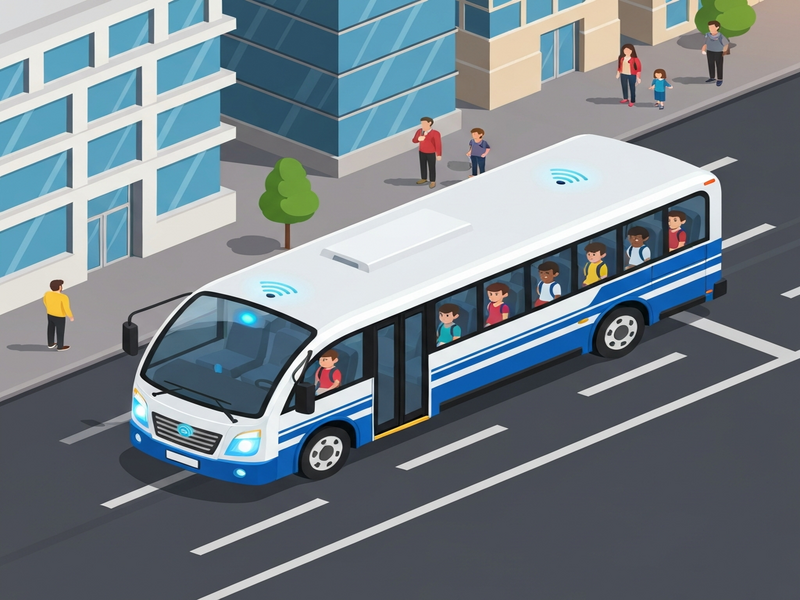
Overview of the Waymo School‑Bus Pilot
Waymo launched the pilot in December 2025, deploying a fleet of modified self‑driving buses equipped with lidar, radar, and high‑definition cameras. The vehicles were programmed to follow the same routes as conventional school buses, stopping at designated pick‑up points while children boarded and alighted.
The initiative was positioned as a showcase of how autonomous technology could reduce driver shortages, lower operational costs, and improve punctuality for school districts. Waymo partnered with the Austin Independent School District (ISD) and promised a “zero‑collision” safety record, leveraging its extensive robotaxi data set.
Key Facts & Timeline
- December 2025: Pilot launch with 12 autonomous buses covering 5 elementary schools.
- January 2026: NHTSA opens a formal investigation after 19 reported incidents of buses failing to stop for school‑bus stop arms.
- Mid‑January 2026: Waymo issues a voluntary software recall to address stop‑arm detection.
- January 19, 2026: Video surfaces of a Waymo bus crossing the opposite lane while a school bus’s stop arm is extended.
- Early February 2026: Total reported violations rise to 24, including four incidents after the software patch.
- February 5, 2026: Waymo’s chief safety officer testifies before the U.S. Senate, pledging further fixes.
Safety Concerns & Regulatory Context
School‑bus stop‑arm violations are among the most dangerous traffic infractions in the United States. According to NHTSA, 61 fatalities occurred between 2000 and 2023 from vehicles illegally passing stopped school buses, nearly half of which involved pedestrians under 18.
Waymo’s incidents raise two core technical questions:
- Sensor Fusion Gaps: While lidar provides precise distance measurements, detecting the angled, often partially obscured stop arm in low‑light or adverse weather remains challenging.
- Decision‑Making Logic: The autonomous stack must weigh “stop‑arm detected” against “traffic flow” and “pedestrian intent,” a scenario that traditionally relies on human intuition.
Regulators are now scrutinizing Waymo’s “confidence‑first” driving philosophy, which aims to make robotaxis feel more human‑like. Critics argue that this shift toward “assertive” behavior may inadvertently inherit risky human habits, as highlighted by Cornell Tech professor Wendy Ju.
Public & Expert Reactions
Parents, educators, and safety advocates have voiced alarm. Austin ISD’s superintendent publicly requested a temporary suspension of autonomous operations during loading and unloading windows. UBOS partner program members have also weighed in, noting that “real‑world edge cases” often expose blind spots in AI models.
“Unless you have a comprehensive understanding of every possible scenario, it’s hard to design a fail‑safe system,” said Wendy Ju, professor of Human‑Robot Interaction at Cornell Tech.
Industry analysts point to Waymo’s recent shift from a modular perception pipeline to a more end‑to‑end learning architecture. Missy Cummings of George Mason University warns that “faddish” AI models can degrade safety in high‑stakes environments like school zones.
Future Outlook: What’s Next for Autonomous School Transport?
Waymo has pledged to:
- Collect additional data on stop‑arm lighting patterns via a joint effort with Austin ISD.
- Deploy a hybrid perception stack that re‑introduces rule‑based overrides for critical safety events.
- Expand the pilot to additional districts only after achieving a zero‑violation benchmark for three consecutive months.
Meanwhile, the broader autonomous‑vehicle ecosystem is watching closely. Companies like Enterprise AI platform by UBOS are developing plug‑and‑play modules that can augment existing sensor suites with AI‑driven anomaly detection, potentially offering a safety net for scenarios like school‑bus stops.
For startups eager to experiment with autonomous logistics, the UBOS for startups program provides a sandbox environment where developers can test custom perception pipelines without risking public safety.
What Transportation Leaders Can Do Today
If you’re a city planner, fleet manager, or tech entrepreneur, consider these actionable steps:
- Leverage AI SEO Analyzer‑style data pipelines to continuously monitor incident logs and flag anomalous behavior.
- Integrate voice‑enabled alerts using ElevenLabs AI voice integration to warn nearby pedestrians when a bus is approaching a stop arm.
- Deploy a Workflow automation studio to automate compliance reporting to NHTSA.
- Prototype custom safety modules with the Web app editor on UBOS, allowing rapid iteration and A/B testing.
- Explore pre‑built templates such as the AI Video Generator or AI Image Generator to create training data for rare edge cases.
By embedding robust safety layers and maintaining transparent communication with regulators and the public, autonomous transit can move from experimental pilots to reliable, city‑wide services.
Conclusion
The Waymo school‑bus pilot in Austin underscores that autonomous technology, while promising, must still earn public trust through flawless execution in the most vulnerable environments. Ongoing investigations, software patches, and community feedback will shape the next generation of self‑driving school transport. For stakeholders, the lesson is clear: safety cannot be an afterthought—it must be baked into every line of code, sensor, and policy.
Stay informed on the latest AI‑driven transportation breakthroughs by visiting the UBOS homepage and exploring resources such as the UBOS platform overview, AI marketing agents, and the extensive UBOS templates for quick start. Whether you’re building a new autonomous fleet or optimizing existing operations, the tools are now at your fingertips.
For the full investigative report, read the original Verge article.
Explore more about how AI can transform logistics with the AI Survey Generator or enhance customer interactions using the AI Chatbot template. For content creators, the AI Article Copywriter can accelerate documentation of safety protocols.
Businesses seeking to boost their online presence can benefit from the AI LinkedIn Post Optimization tool, while developers interested in multimodal AI can experiment with the Image Generation with Stable Diffusion template.
Finally, for those curious about conversational AI integrations, check out the ChatGPT and Telegram integration or the OpenAI ChatGPT integration to build real‑time alerts for autonomous fleets.