

- Updated: February 4, 2026
- 8 min read
Senate Hearing on Autonomous Vehicles Highlights Waymo, Tesla Debates Over Robotaxi Safety
The U.S. Senate hearing on autonomous vehicles concluded that lawmakers remain divided on regulation, with Waymo and Tesla urging swift legislation while safety, liability, and China‑related concerns dominate the debate.
Senate Hearing on Autonomous Vehicles: A Quick Overview
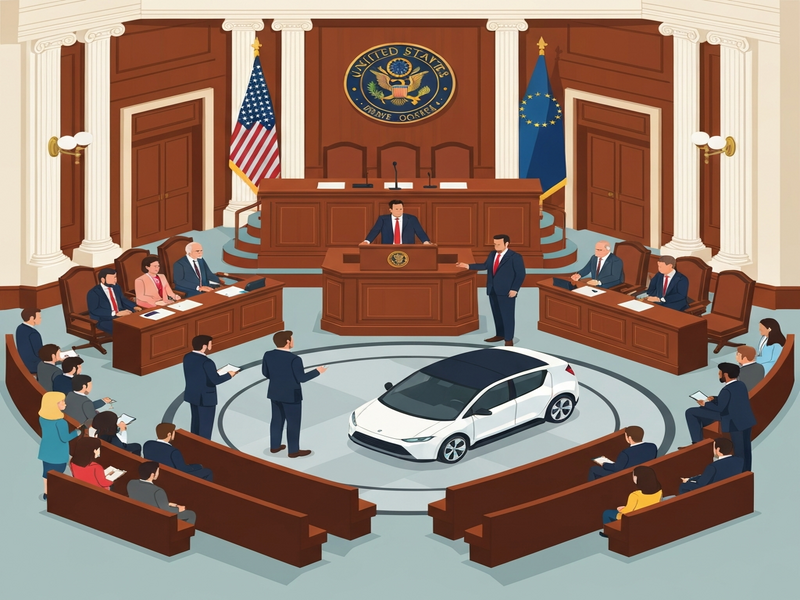
On February 3, 2026, the Senate Commerce, Science and Transportation Committee convened a two‑hour hearing to examine the state of autonomous vehicles (AVs) in the United States. Executives from industry leaders Waymo and Tesla testified before a panel of senators, each pushing for a clear regulatory framework that would allow their robotaxi services to scale while addressing mounting safety and liability concerns. The hearing also spotlighted geopolitical anxieties, especially the risk of the United States falling behind China in the race to dominate self‑driving car technology.
For technology enthusiasts, policymakers, and investors, the session offered a rare glimpse into the friction between rapid innovation and the slower gears of legislation. Below, we break down the most compelling moments, the legislative backdrop, and what the outcomes could mean for the broader Enterprise AI platform by UBOS and other AI‑driven mobility solutions.
Key Testimonies from Waymo and Tesla Executives
Waymo’s Safety Narrative
Mauricio Peña, Waymo’s Chief Safety Officer, opened with a data‑rich overview: the company logs millions of autonomous miles each year, with a safety record that “continues to improve as we ingest more edge‑case scenarios.” Peña emphasized that Waymo’s robotaxis have successfully navigated thousands of school‑bus interactions without incident, despite recent high‑profile mishaps that have drawn media attention.
When pressed about two incidents—one in Austin where a Waymo vehicle failed to stop behind a school bus, and another in Santa Monica where a low‑speed collision with a child occurred—Peña highlighted ongoing software updates and a commitment to “real‑time learning” from each event. He also clarified that Waymo’s next‑generation robotaxi platform will be built on a chassis supplied by a Chinese manufacturer, but all autonomous software will be installed domestically, with no data leaving U.S. borders.
Tesla’s Regulatory Push
Lars Moravy, Vice President of Vehicle Engineering at Tesla, framed the discussion around “regulatory inertia.” He argued that existing vehicle standards, many of which date back to the 1970s, are ill‑suited for modern electric drivetrains, over‑the‑air updates, and advanced driver‑assistance systems (ADAS). Moravy warned that without a federal framework, “the United States risks ceding leadership to foreign competitors.”
Senators grilled Moravy on Tesla’s decision to remove radar sensors from its latest models, a move he defended as “a calculated risk that improves sensor fusion and reduces cost.” He also addressed concerns about “binding arbitration” clauses in Tesla’s terms of service, insisting that the company remains open to litigation when its technology is at fault.
Both executives converged on a single point: a clear, technology‑friendly legislative pathway is essential for the United States to stay ahead of China’s aggressive AV investments. As Senator Jeff Farrah of the Autonomous Vehicle Industry Association warned, “Without decisive action, we may watch a foreign power set the global standards.”
Legislative Context and Safety Concerns Raised
Current Legislative Landscape
The hearing was chaired by Senator Ted Cruz (R‑TX), who suggested that the pending UBOS pricing plans for autonomous vehicle infrastructure could be folded into the upcoming Surface Transportation Reauthorization Act. The bill aims to allocate federal funds for highway upgrades, transit modernization, and, crucially, a national framework for AV testing and deployment.
However, bipartisan disagreement persists. While Democrats like Senator Maria Cantwell (D‑WA) demand stricter oversight of marketing claims—citing Tesla’s “Autopilot” branding—Republicans such as Senator Bernie Moreno (R‑OH) caution against over‑regulation that could stifle innovation. The result is a legislative stalemate that leaves the industry in a regulatory limbo.
Safety: The Dominant Theme
Safety dominated the dialogue. Senators asked both companies to detail their incident‑response protocols, data‑collection practices, and how they plan to mitigate risks in mixed traffic environments. Cantwell highlighted the National Highway Traffic Safety Administration’s (NHTSA) staffing cuts, noting a 25 % reduction in personnel and a corresponding dip in recall investigations.
Waymo’s response emphasized its “continuous validation” pipeline, where every software update undergoes simulated and on‑road testing before rollout. Tesla, on the other hand, pointed to its “fleet learning” model, which aggregates data from millions of miles driven by customers worldwide to refine its Full Self‑Driving (FSD) stack.
Liability and Arbitration
The issue of liability surfaced when senators questioned whether victims could sue robotaxi operators. Cantwell made it clear she would oppose any legislation that shields companies behind arbitration clauses. Moreno echoed this sentiment, warning that “long, opaque terms of service erode public trust.”
Both Waymo and Tesla asserted they would accept responsibility for accidents caused by their technology, but the lack of a unified legal standard leaves many gray areas for courts and insurers.
Geopolitical Pressure: The China Factor
The specter of China’s rapid AV advancements loomed large. Waymo’s use of a Chinese‑made chassis sparked a heated exchange, with Senator Markey (D‑MA) demanding transparency about foreign‑based remote operators. Peña explained that while some remote operators are located abroad, all critical decision‑making software runs on U.S. servers, and no data is transmitted to China.
Nonetheless, the concern remains: if the United States does not enact a cohesive policy, Chinese firms could dominate export markets, leaving American companies at a competitive disadvantage.
Implications for the Autonomous‑Vehicle Industry and Future Regulations
- Accelerated Policy Drafting: The hearing’s high‑profile nature is likely to push the Senate Commerce Committee to fast‑track a draft bill within the next congressional session.
- Standardization of Safety Metrics: Expect the emergence of federally endorsed safety benchmarks—similar to the “Safety‑First” framework proposed by the NHTSA—that will become prerequisites for any AV deployment.
- Liability Clarity: Future legislation may define clear fault lines for accidents involving autonomous systems, potentially mandating insurance pools or mandatory disclosures in user agreements.
- Data Sovereignty Rules: New rules could restrict the use of foreign‑manufactured hardware in AVs unless all software is verified as U.S.‑origin, echoing concerns raised about Waymo’s chassis supplier.
- Impact on AI‑Driven Platforms: Companies like UBOS platform overview that enable rapid AI integration will see heightened demand as automakers seek compliant, modular solutions for data handling, safety validation, and regulatory reporting.
For startups, the evolving regulatory environment presents both risk and opportunity. Early adopters that embed compliance into their product roadmaps can differentiate themselves, while those that wait may face costly retrofits. The UBOS for startups program offers a sandbox for building compliant AV services, complete with pre‑approved data pipelines and audit trails.
Mid‑size firms can leverage the UBOS solutions for SMBs to integrate AI‑powered safety analytics without the overhead of building in‑house expertise. Meanwhile, larger enterprises may look toward the Enterprise AI platform by UBOS to orchestrate fleet‑wide monitoring, predictive maintenance, and compliance reporting at scale.
The hearing also underscored the importance of AI‑enhanced content and communication tools. As legislators grapple with technical jargon, platforms like AI marketing agents can translate complex safety data into digestible briefs for policymakers and the public.
What Stakeholders Can Do Now
- Stay Informed: Follow the Senate Commerce Committee’s updates and subscribe to policy newsletters.
- Audit Your AV Stack: Use tools like the AI SEO Analyzer to evaluate compliance gaps in your software documentation.
- Leverage Ready‑Made Templates: Jump‑start compliant workflows with UBOS templates for quick start, which include pre‑built safety reporting modules.
- Integrate Conversational AI: Deploy the ChatGPT and Telegram integration to provide real‑time support for drivers and fleet managers navigating new regulations.
- Plan for Future Costs: Review the UBOS pricing plans to budget for scaling compliance tools as legislation solidifies.
By taking proactive steps today, industry players can turn regulatory uncertainty into a competitive advantage, positioning themselves as the safest and most trustworthy providers in the emerging robotaxi market.
Conclusion
The Senate hearing on autonomous vehicles highlighted a pivotal moment in U.S. transportation policy. While Waymo and Tesla championed rapid, safety‑first legislation, deep‑seated concerns about liability, data sovereignty, and foreign competition kept consensus out of reach. The outcome will shape not only the future of robotaxi services but also the broader AI ecosystem that underpins them.
For innovators, the message is clear: align your technology with emerging standards, invest in transparent safety practices, and leverage platforms like UBOS homepage to accelerate compliance. The road ahead may be complex, but with the right tools and a proactive stance, the United States can reclaim its leadership in autonomous mobility.
Read the full original coverage on The Verge for additional context: Senate hearing on autonomous vehicles – The Verge.