

- Updated: February 3, 2026
- 7 min read
Varaha Secures $20 Million Funding to Accelerate Carbon Removal in India and the Global South
Varaha has secured $20 million in a Series B funding round led by WestBridge Capital to accelerate carbon‑removal projects across the Global South.
Funding Overview: $20 Million Raised
On February 3 2026, Indian climate‑tech startup Varaha announced a fresh infusion of $20 million. The round marks the first tranche of a planned $45 million Series B, with WestBridge Capital acting as lead investor. Existing backers RTP Global and Omnivore also participated, reinforcing confidence in Varaha’s growth trajectory.
The capital will be deployed to expand Varaha’s footprint in South‑ and Southeast‑Asia, deepen its existing operations in India, Nepal, Bangladesh, Bhutan, and Ivory Coast, and accelerate the rollout of its Industrial Partners Program.
Varaha’s total equity raised now stands at roughly $33 million, complemented by $35 million in project financing and $0.5 million in grants. This financial foundation positions the company to become a low‑cost, high‑integrity supplier of verified carbon‑removal credits.
Key Investors and Their Rationale
- WestBridge Capital – First climate‑tech investment for the firm, attracted by Varaha’s execution‑focused model and the cost advantage of operating in the Global South.
- RTP Global – Continues to back Varaha after its seed round, citing the startup’s ability to generate verified credits at a fraction of European costs.
- Omnivore – Supports agritech‑centric climate solutions; sees Varaha’s regenerative agriculture and biochar pathways as scalable.
Investors collectively view Varaha as a strategic bridge between burgeoning carbon‑demand from tech giants and the untapped removal potential of emerging economies.
Mission‑Driven Carbon Removal Technology
Varaha’s mission is simple yet ambitious: scale affordable, verified carbon removal from the Global South to meet corporate climate commitments worldwide. Rather than chasing proprietary hardware, Varaha leverages four proven pathways:
- Regenerative Agriculture – Enhances soil carbon sequestration through cover crops, reduced tillage, and optimized nutrient management.
- Agroforestry – Integrates trees into farming systems, delivering long‑term carbon storage and biodiversity benefits.
- Biochar – Converts agricultural waste into stable carbon that can be returned to soils, improving fertility while locking away CO₂.
- Enhanced Rock Weathering – Spreads finely ground silicate rocks on croplands to accelerate natural mineral carbonation.
These pathways are executed at scale with smallholder farmers and industrial partners, ensuring that carbon removal is both socially inclusive and economically viable.
Varaha’s verification framework aligns with leading registries such as Puro.earth, Verra, Gold Standard, and the Switzerland‑based Carbon Standards International, guaranteeing that each credit meets rigorous international standards.
Market Implications and Industry Context
The $20 million raise arrives at a pivotal moment for climate tech:
- Cost Pressure on Carbon Credits – As corporations like Google and Microsoft increase demand, price sensitivity rises. Varaha’s lower‑cost model directly addresses this pressure.
- Geopolitical Shift Toward the Global South – Emerging markets offer cheaper land, abundant biomass, and a ready labor pool, making them attractive for large‑scale removal projects.
- Regulatory Momentum – New carbon‑pricing mechanisms in Asia and Africa are creating a supportive policy environment for verified removal.
- Technology Convergence – Integration of AI, remote sensing, and data analytics (areas where platforms like UBOS platform overview excel) accelerates monitoring and verification, reducing transaction costs.
Analysts predict that by 2030, the Global South could supply up to 40% of the world’s verified carbon removal credits, reshaping the market dynamics that have historically favored Europe and North America.
Strategic Partnerships and Expansion Plans
Varaha’s growth strategy hinges on two complementary levers:
Industrial Partners Program
The program invites industrial operators—steel producers, agribusinesses, and waste‑to‑energy firms—to generate biochar‑based credits using Varaha’s measurement, reporting, and verification (MRV) toolkit. Early adopters in West Africa and India have already begun piloting the model.
Geographic Expansion
Funding will finance entry into Vietnam, Indonesia, and additional sub‑Saharan markets. The company plans to replicate its farmer‑onboarding framework, leveraging local NGOs and extension services to reach an estimated 200,000 additional smallholders.
These initiatives echo the broader trend of “platform‑enabled climate solutions,” where technology firms provide the digital backbone for decentralized, asset‑light operations—a niche where Workflow automation studio can play a pivotal role.
Financial Performance and Outlook
Varaha reported revenue of ₹430 million (≈ $4.76 million) in the last fiscal year, driven by the sale of verified credits. The company projects revenue to climb to nearly ₹2 billion (≈ $22 million) this year, maintaining profitability after tax.
Long‑term offtake agreements with tech giants (Google, Microsoft) and insurers (Swiss Re, Capgemini) provide a stable demand pipeline. The new capital will fund:
- Scaling of existing projects across 1.7 million acres.
- Development of new biochar and rock‑weathering sites in Southeast Asia.
- Investment in AI‑driven monitoring tools, such as satellite‑based carbon accounting.
Given the current trajectory, Varaha is poised to become a leading low‑cost supplier of verified carbon removal, potentially reshaping pricing benchmarks for the entire industry.
Expert Insight
“If carbon credit is a cost on a company’s balance sheet, not a CSR token, then price efficiency becomes a survival factor. Varaha’s execution‑first approach gives it a decisive edge in a market that’s rapidly moving toward cost parity.” – Madhur Jain, CEO of Varaha
Jain emphasizes that the competitive advantage lies not in proprietary tech but in the ability to mobilize local resources efficiently—a principle that resonates with the broader “execution over invention” narrative in climate entrepreneurship.
Broader Climate‑Tech Landscape
Varaha’s funding story dovetails with a surge of capital flowing into climate‑tech startups worldwide. According to the startup funding analysis on UBOS, global climate‑tech investment reached $45 billion in 2025, with a notable shift toward solutions that combine scalability with measurable impact.
The rise of AI‑enabled platforms—such as AI marketing agents and the Enterprise AI platform by UBOS—is accelerating data‑driven verification, reducing the cost of MRV, and opening new financing models for projects like Varaha’s.
For startups seeking to replicate Varaha’s model, the UBOS templates for quick start provide pre‑built workflows for carbon‑credit accounting, while the Web app editor on UBOS enables rapid prototyping of farmer‑engagement portals.
Implications for Investors and Sustainability Professionals
Investors now have a clearer pathway to allocate capital toward high‑impact, cost‑effective carbon removal. Varaha’s model demonstrates that:
- Geographic diversification reduces exposure to regulatory risk.
- Asset‑light partnerships lower capital intensity.
- Verified credits from emerging markets can meet corporate net‑zero targets at 30‑50% lower cost.
Sustainability officers can leverage Varaha’s credits to meet Science‑Based Targets (SBTi) while preserving budgetary flexibility, a crucial factor as ESG reporting standards tighten globally.
Related Resources
For a deeper dive into the technical underpinnings of AI‑driven climate solutions, explore the climate tech article on UBOS. It outlines how machine learning, remote sensing, and blockchain converge to create transparent carbon markets.
If you’re interested in the broader funding environment, the startup funding piece provides a comprehensive overview of capital trends across the sustainability sector.
External Reference
The original announcement was reported by TechCrunch, which details the investors, financials, and strategic outlook.
Visual Summary
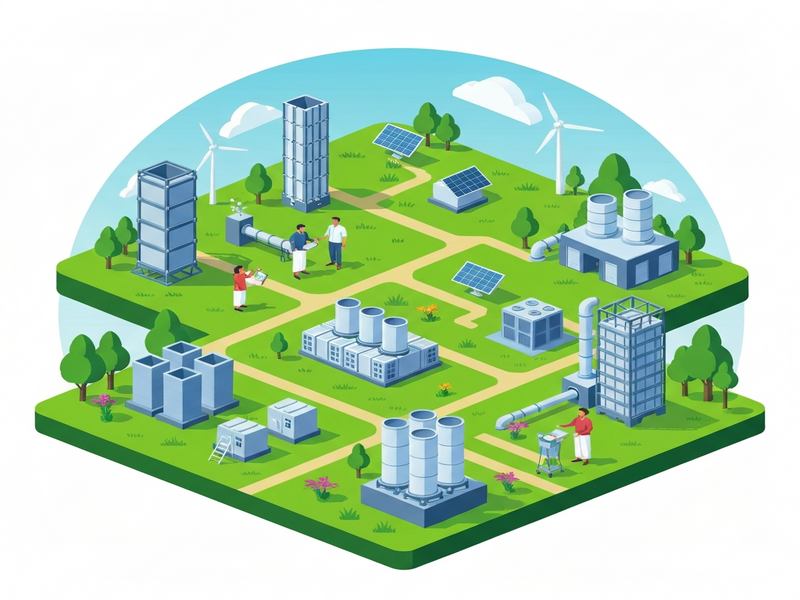
Illustration depicting Varaha’s $20 million funding and its impact on carbon removal pathways.
Closing Summary
Varaha’s $20 million Series B injection not only fuels its expansion across the Global South but also signals a broader market shift toward cost‑effective, verification‑first carbon removal. By marrying execution excellence with AI‑enabled monitoring, Varaha is poised to become a cornerstone of the emerging low‑cost carbon credit ecosystem, offering investors and corporates a scalable route to genuine climate impact.
As the climate‑tech sector continues to attract capital, startups that prioritize operational efficiency, transparent verification, and strategic partnerships—mirroring Varaha’s playbook—will likely dominate the next wave of climate solutions.
ChatGPT and Telegram integration
OpenAI ChatGPT integration
Chroma DB integration
ElevenLabs AI voice integration
UBOS homepage
About UBOS
UBOS partner program
UBOS solutions for SMBs
UBOS for startups
UBOS portfolio examples
AI SEO Analyzer
AI Article Copywriter
AI Video Generator
AI Chatbot template
Andrii Bidochko
CTO UBOS
Andrii Bidochko is an AI entrepreneur and researcher focused on AI agents, reinforcement learning, and autonomous systems. He writes about the technologies shaping the future of machine intelligence, from frontier models and agent architectures to real-world AI applications.