

- Updated: February 3, 2026
- 5 min read
Apple Xcode Integrates OpenAI and Anthropic AI Agents for Smarter Coding
Apple Xcode now integrates OpenAI’s Codex and Anthropic’s Claude agents, enabling developers to write, refactor, and run code — all from within the IDE.
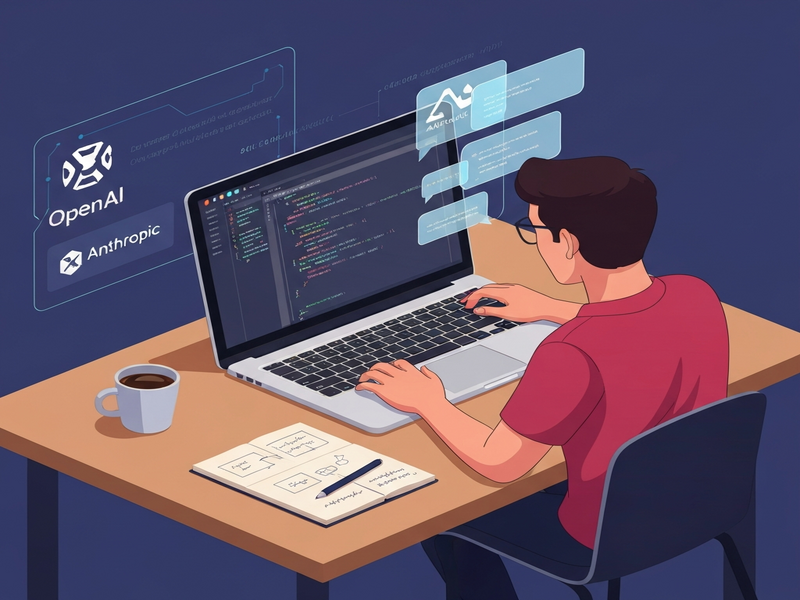
Xcode’s New AI Assistants: OpenAI & Anthropic Join the Apple Ecosystem
Apple announced that Xcode 26.3 now ships with built‑in AI agents from OpenAI and Anthropic. The move transforms the classic development environment into a collaborative partner that can generate code snippets, update project settings, and even query Apple’s documentation on demand. For developers entrenched in the Apple ecosystem, this is the most significant productivity boost since the introduction of SwiftUI.
The integration is part of Apple’s broader “Model Context Protocol,” an open‑source standard that lets third‑party AI services plug directly into Xcode. By exposing a unified API, Apple ensures that future agents—whether from startups or enterprise AI platforms—can be added without rewriting the IDE.
How OpenAI’s Codex and Anthropic’s Claude Work Inside Xcode
Both agents appear as side‑panel tools in the Xcode workspace. Codex, trained on billions of lines of public code, excels at generating syntactically correct Swift, Objective‑C, and even SwiftUI markup. Claude, on the other hand, brings a conversational style that is better at interpreting ambiguous natural‑language requests and offering design‑level suggestions.
- Code Generation: Prompt the agent with a description (“Create a table view that loads JSON from an API”) and receive a ready‑to‑run Swift file.
- Refactoring: Ask Claude to “rename all instances of `oldVar` to `newVar` across the project” and watch the changes propagate instantly.
- Documentation Search: Type “How do I use Combine with URLSession?” and the agents pull the relevant Apple Docs snippet directly into the editor.
- Project Configuration: Codex can add new build phases, update Info.plist entries, or toggle entitlements without leaving Xcode.
Because the agents run inside the IDE, they can also trigger UI previews, run unit tests, and even submit pull requests to a remote Git repository—all with a single voice command or keyboard shortcut.
Why This Matters to Developers
The integration addresses three pain points that have haunted iOS/macOS developers for years:
- Context Switching: No more juggling between Xcode, a browser, and a separate AI chat window. The agents live where you code.
- Speed of Prototyping: Generate boilerplate code in seconds, freeing time for UI/UX polish and performance tuning.
- Learning Curve Reduction: Newcomers can ask “How do I implement Core Data relationships?” and receive a step‑by‑step guide without leaving the project.
For teams, the impact is amplified. Imagine a CI pipeline that automatically runs a Codex‑generated test suite after each commit, or a design sprint where Claude drafts SwiftUI views based on wireframes. The possibilities line up with the capabilities of other AI‑first platforms such as the Enterprise AI platform by UBOS or the AI coding tools offered in the UBOS ecosystem.
Xcode vs. Competing IDEs: A Quick AI Feature Matrix
| Feature | Xcode 26.3 | Visual Studio Code | JetBrains Fleet |
|---|---|---|---|
| Native OpenAI/Anthropic agents | ✅ Codex & Claude (in‑IDE actions) | ✅ Extensions (GitHub Copilot) | ✅ Plugins (CodeWhisperer) |
| Model Context Protocol (open‑source) | ✅ Allows any AI service | ❌ Proprietary API only | ❌ Limited to JetBrains ecosystem |
| One‑click UI preview of AI‑generated SwiftUI | ✅ Integrated with Canvas | ❌ Requires manual copy‑paste | ❌ No native SwiftUI preview |
While VS Code’s Copilot remains a strong contender, Xcode’s deep integration with Apple’s own toolchain (Interface Builder, Instruments, TestFlight) gives it a decisive edge for native development. Moreover, the open Model Context Protocol means that future agents—like those built on Chroma DB integration or ElevenLabs AI voice integration—can be added without waiting for an App Store update.
What The Verge Said
“Apple is building OpenAI and Anthropic’s AI‑powered coding agents directly into Xcode. New integrations in Xcode 26.3 will give developers the ability to call upon Anthropic’s Claude Agent and OpenAI’s Codex to write and edit code, update project settings, search documentation, and more.” – The Verge
Future‑Proofing the Apple Development Stack
The integration is more than a convenience; it signals a strategic shift toward AI‑first development on Apple platforms. Here are three trends to watch:
- AI‑Driven CI/CD: Expect Apple to expose Xcode’s build pipeline to AI agents, enabling automated test generation and performance profiling.
- Cross‑Platform AI Agents: With the Model Context Protocol, developers could run the same Claude or Codex agents inside Web app editor on UBOS or even in a Workflow automation studio, creating a unified AI‑assisted workflow across cloud and native environments.
- Marketplace of AI Extensions: UBOS’s templates marketplace already hosts dozens of AI‑powered utilities (e.g., AI SEO Analyzer, AI Article Copywriter). A similar marketplace could emerge for Xcode extensions, letting developers sell custom prompts or domain‑specific agents.
For startups, the UBOS for startups program demonstrates how early‑stage teams can leverage AI to accelerate product cycles. Apple’s move gives iOS‑centric startups a comparable advantage without leaving the Apple ecosystem.
Take the Next Step with AI‑Enhanced Development
If you’re already a member of the Apple Developer Program, Xcode 26.3 is available today and will appear on the App Store shortly. For teams looking to extend AI capabilities beyond Apple’s native agents, explore the UBOS platform overview and its partner program. You can prototype a custom Claude‑style assistant, integrate a proprietary LLM, or even connect voice‑enabled workflows using the AI coding tools that already support OpenAI and Anthropic APIs.
Ready to supercharge your code? Dive into the UBOS pricing plans for a flexible, pay‑as‑you‑grow model, or start with the free tier to experiment with the AI marketing agents that can auto‑generate release notes and app store copy.
Embrace the future of development—let AI write, test, and ship your apps faster than ever before.
Andrii Bidochko
CTO UBOS
Andrii Bidochko is an AI entrepreneur and researcher focused on AI agents, reinforcement learning, and autonomous systems. He writes about the technologies shaping the future of machine intelligence, from frontier models and agent architectures to real-world AI applications.