

- Updated: February 3, 2026
- 6 min read
Avalanche Energy Secures $29 Million Funding to Accelerate Compact Fusion Power Innovation
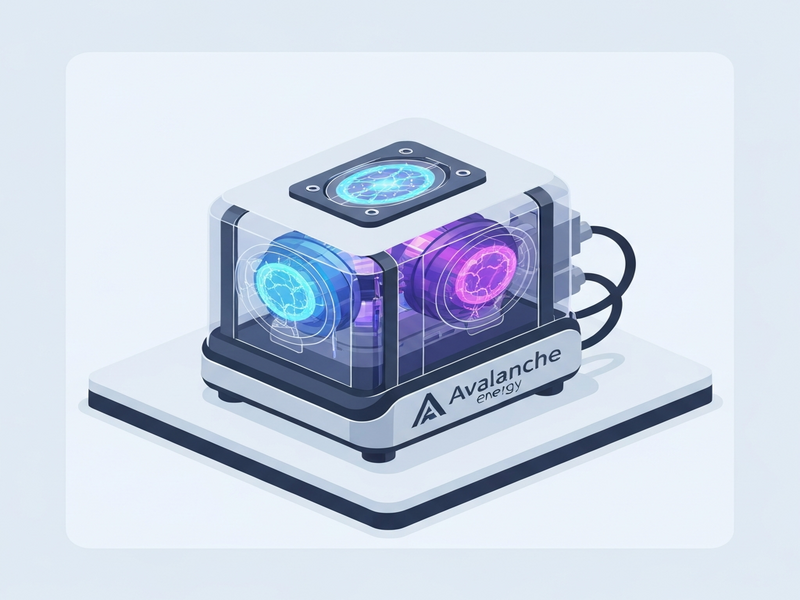
Avalanche Energy has just closed a $29 million Series B funding round, accelerating its pursuit of a compact, desktop‑scale fusion reactor that could deliver clean power at a fraction of the size and cost of traditional fusion projects.
Avalanche Energy Raises $29 M to Power the Future of Small‑Scale Fusion
On February 3, 2026, the startup announced the new capital injection led by R.A. Capital Management, with participation from 8090 Ventures, Congruent Ventures, Founders Fund, Lowercarbon Capital, Overlay Capital, and Toyota Ventures. The fresh funds bring Avalanche’s total financing to $80 million, positioning the company among the most promising clean‑energy ventures targeting a market that has historically demanded billions of dollars.
Funding Round Details and Investor Landscape
The $29 million round was structured as a mix of equity and strategic partnership capital. Key points include:
- Lead investor: R.A. Capital Management – a firm known for backing deep‑tech breakthroughs.
- Strategic investors: Toyota Ventures (automotive & energy synergy) and Lowercarbon Capital (clean‑tech focus).
- Existing backers such as Founders Fund and Congruent Ventures reaffirmed confidence by participating in the round.
- Overall capital raised to date: $80 million, modest compared with multi‑billion‑dollar fusion programs but sufficient for rapid prototyping.
For investors tracking the sector, this round signals a shift toward “lean‑fusion” models that prioritize speed, iteration, and cost‑efficiency over massive infrastructure.
Avalanche’s Small‑Scale Fusion Approach Explained
Traditional fusion concepts—tokamaks, laser‑driven inertial confinement, or massive stellarators—rely on large magnets, high‑energy lasers, and sprawling facilities. Avalanche Energy flips the script by embracing a compact, high‑voltage electric‑current method:
- Electrode‑Driven Plasma Orbits: A high‑voltage discharge creates a plasma sheath that spirals around a central electrode, forming a tight orbit.
- Magnetic Stabilization: Small auxiliary magnets keep the plasma channel stable, but they are far less powerful than those in a tokamak.
- Self‑Compression: As the plasma current intensifies, the orbit contracts, increasing particle collision rates and enabling fusion events.
This method, sometimes called “Z‑pinch‑lite,” allows the reactor to fit on a tabletop—currently a 9 cm diameter device, with a next‑generation 25 cm version slated to reach ~1 MW output. The smaller footprint translates into faster design cycles: Avalanche reports testing new configurations “twice a week,” a cadence impossible for multi‑meter reactors.
Timeline, Milestones, and Market Implications
Key upcoming milestones for Avalanche Energy:
| Quarter | Milestone |
|---|---|
| Q3 2026 | Commission 25 cm prototype at FusionWERX facility. |
| Q4 2026 | Secure tritium handling license; begin fuel‑cycle tests. |
| 2027 | Demonstrate Q > 1 (net‑energy gain) in a controlled environment. |
| 2028‑2029 | Scale to commercial pilot plants; target early‑stage power‑grid integration. |
Achieving a net‑energy‑positive reaction by 2027 would place Avalanche alongside heavy‑weight rivals such as Commonwealth Fusion Systems and Helion, but with a dramatically lower capital requirement. This could open doors for UBOS for startups and other agile innovators to partner on data‑analytics, AI‑driven control systems, and remote monitoring solutions.
Why Fusion Power Remains a Hot Topic for Clean‑Energy Investors
Fusion power promises virtually limitless, carbon‑free electricity. Unlike solar or wind, it does not depend on weather and can provide baseload generation. The fusion energy narrative has attracted billions in venture capital, government grants, and corporate R&D budgets. Avalanche’s “think smaller” philosophy aligns with the growing investor appetite for startup funding that can demonstrate rapid progress without the overhead of multi‑billion‑dollar facilities.
Moreover, the clean‑tech investments landscape is shifting toward modular, scalable solutions that can be deployed in existing industrial parks or near demand centers. Avalanche’s compact reactors could be co‑located with data centers, desalination plants, or remote mining operations, delivering clean heat and electricity where it’s needed most.
How UBOS Technology Can Accelerate Fusion Commercialization
Beyond capital, Avalanche will need sophisticated software to monitor plasma dynamics, predict instabilities, and optimize control loops. The UBOS platform overview offers a low‑code environment that integrates real‑time data streams with AI models, enabling engineers to iterate faster.
For example, the AI marketing agents can automate outreach to potential industrial partners, while the Workflow automation studio helps synchronize sensor data, safety protocols, and reporting dashboards.
Startups looking for rapid prototyping can leverage the UBOS templates for quick start, which include pre‑built modules for data ingestion, anomaly detection, and cloud deployment. The Web app editor on UBOS lets developers create custom control panels without writing extensive front‑end code.
Companies interested in a partnership can explore the UBOS partner program, which provides co‑selling opportunities, technical support, and joint‑go‑to‑market strategies—ideal for a fusion startup seeking to scale its solution globally.
Pricing transparency is also crucial. The UBOS pricing plans are tiered to accommodate early‑stage ventures, midsize firms, and enterprise customers, ensuring that even a capital‑intensive project like fusion can keep software costs predictable.
Real‑World Use Cases: From AI Voice to Data Integration
Fusion reactors generate massive telemetry. Integrating Chroma DB integration enables vector‑based similarity search across historical plasma events, helping engineers spot patterns that precede disruptions.
For on‑site alerts, the ElevenLabs AI voice integration can broadcast audible warnings in multiple languages, improving safety compliance in multinational facilities.
Communication with remote operators can be streamlined via the Telegram integration on UBOS, while the ChatGPT and Telegram integration offers AI‑driven troubleshooting assistants that answer technical queries in real time.
Finally, the OpenAI ChatGPT integration can generate predictive maintenance schedules, reducing downtime and extending component lifespans.
Showcasing Success: UBOS Portfolio Examples
UBOS’s UBOS portfolio examples include AI‑enhanced manufacturing lines, autonomous drone fleets, and predictive analytics platforms for energy grids—all of which share a common need for high‑frequency data processing, a capability that aligns perfectly with Avalanche’s real‑time fusion monitoring requirements.
Looking Ahead: The Promise of Compact Fusion
With fresh capital, a clear technical roadmap, and a growing ecosystem of AI‑powered tools, Avalanche Energy is poised to prove that “thinking smaller” can indeed deliver big results. If the company reaches net‑energy gain by 2027, it could catalyze a wave of modular fusion plants that democratize clean power, attract further startup funding, and accelerate the global transition to carbon‑free electricity.
Investors, clean‑energy enthusiasts, and technology watchers should keep a close eye on Avalanche’s progress, as its success may redefine the economics of fusion and open new avenues for AI‑driven industrial innovation.
Source: TechCrunch article on Avalanche Energy